

Why Saudi Arabia cut oil production?
The decision to cut oil production today by OPEC reportedly made as a “precautionary measure” to prevent any instability in the global oil market. Or Opec rhetoric for “we want higher prices!”
CNN reported; “
Saudi Arabia and other OPEC+ oil producers on Sunday announced voluntary cuts to their production, with Riyadh saying it would cut output by 500,000 barrels per day, or bdp, from May until the end of 2023, state media reported.
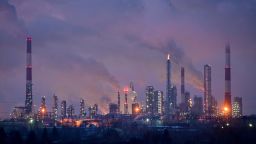
Russia will keep cutting oil output through June
Russia’s deputy prime minister also said Moscow would extend a voluntary cut of 500,000 barrels a day until the end of 2023. The United Arab Emirates, Kuwait, Iraq, Oman and Algeria said they would voluntarily cut output over the same time period.
The UAE said it would cut production by 144,000 bpd, Kuwait announced a cut of 128,000 bpd while Iraq said it would cut output by 211,000 bpd and Oman announced a cut of 40,000 bpd. Algeria said it would cut its output by 48,000 bpd.
OPEC producers announce voluntary oil output cuts | CNN Business
The Organization of the Petroleum Exporting Countries, or OPEC, is a global organization consisting of fourteen countries that account for over 40% of the world’s oil production and hold 73% of the world’s “proven” oil reserves. OPEC’s founding members were Iran, Iraq, Kuwait, Saudi Arabia, and Venezuela, who met in Baghdad in September 1960 to form the organization. The purpose of OPEC was to coordinate and unify the petroleum policies of its members and to ensure the stabilization of oil markets in order to secure an efficient, economic, and regular supply of petroleum to consumers.
Throughout its history, OPEC has used production cuts as a tool to influence oil prices and boost its member countries’ profits. The first significant instance of this occurred in the 1970s when the oil embargo of 1973 led to a quadrupling of oil prices in just a few months. This was the result of OPEC’s decision to cut production by 25% in response to the ongoing Arab-Israeli conflict and to protest the support of the United States for Israel. The price increase had a significant impact on the global economy and contributed to the stagflation of the 1970s.
In the 1980s, OPEC’s power became challenged by falling oil prices. And competition from non-OPEC producers such as the North Sea and Alaska. As a result, OPEC attempted to regain its control over oil prices by cutting production. This led to a series of price fluctuations throughout the decade, with prices reaching their lowest point in 1986 when OPEC’s market share had dropped to 30%.
In the 1990s, OPEC continued to use production cuts to control oil prices. In 1998, prices had fallen to $10 a barrel, the lowest in a decade, prompting OPEC to agree to a production cut of 1.7 million barrels a day. This decision was effective in raising prices to around $20 a barrel, but the subsequent increase in production by non-OPEC countries such as Russia and Mexico led to a collapse in prices again in 1999.
In the early 2000s, OPEC continued to use production cuts to manage oil prices, with cuts of 2.2 million barrels a day in 2002 and 1.7 million barrels a day in 2008. In 2008, prices reached a record high of $147 a barrel, prompting OPEC to increase production to meet demand. However, the global financial crisis of 2008 led to a significant drop in demand, and prices fell sharply once again.
In recent years, OPEC has continued to use production cuts to manage oil prices. Furthermore, in 2016, OPEC agreed to cut production by 1.2 million barrels a day. In order to reduce oversupply and boost prices, a decision that was supported by non-OPEC countries such as Russia. This was followed by further production cuts in 2017 and 2018. More recently, in April 2020, OPEC+ (OPEC and non-OPEC countries) agreed to a historic cut of 9.7 million barrels a day, in response to the COVID-19 pandemic, which had significantly reduced demand for oil.
In conclusion, OPEC’s use of production cuts to manage oil prices has been a defining feature of its history. While these cuts have been effective in boosting profits for its member countries. They have also had significant impacts on the global economy. And led to price fluctuations. Fluctuations that affected consumers and businesses around the world. As the world continues to transition to renewable energy sources, it remains to be seen how OPEC’s role in the global energy market will evolve in the coming years.
Why Saudi Arabia cut oil production?


