

Why is Rembrandt so famous?

The Prodigal Son in the Brothel, a self-portrait with Saskia van Uylenburgh (c. 1635)
Rembrandt – fAFXpfS8tdF_Eg — Google Arts & Culture
Rembrandt Harmenszoon van Rijn. Moreover, widely regarded as one of the greatest painters and printmakers in European art history!

Rembrandt lived at Amstel river almost next to Kloveniersdoelen where the Night Watch was exhibited for years; painting by Jan Ekels the Elder (1775)
Jan Ekels the Elder – http://hdl.handle.net/11259/collection.38813
Born in the Dutch Republic in 1606. Rembrandt’s use of chiaroscuro was heavily influenced by Caravaggio, an Italian Baroque artist, who was known for his dramatic use of light and shadow. This paper will explore Rembrandt’s connection to Caravaggio and how he used chiaroscuro to achieve his unique style.

Rembrandt – -gHQe8vbiHn2xw at Google Cultural Institute maximum zoom level
Furthermore, Rembrandt became heavily influenced by Caravaggio’s use of chiaroscuro. As a result, this influence can become seen in many of his early works. In his painting “The Anatomy Lesson of Dr. Nicolaes Tulp,” Rembrandt uses chiaroscuro to create a sense of drama and emotion, much like Caravaggio did in his religious paintings.

Rembrandt – The Anatomy Lesson of Dr Nicolaes Tulp
Rembrandt – Mauritshuis online catalogue.
The painting depicts a public dissection. With the figures in the foreground lit by a strong beam of light. One hat illuminates their faces and hands. While the background finds itself shrouded in darkness. This creates a sense of depth and movement, drawing the viewer’s eye towards the central figure.

A Polish Nobleman (1637)
Rembrandt – National Gallery of Art, Washington, D. C., online collection
Rembrandt’s use of chiaroscuro was not limited to his paintings, as he also used the technique in his prints. In his famous etching “Christ Preaching,” Rembrandt uses a combination of etching and drypoint techniques to create a sense of depth and movement, with the figure of Christ illuminated by a strong beam of light that contrasts with the darkness of the background.
As a result, this creates a dramatic effect that draws the viewer’s eye towards the central figure.

Despite his early influences, Rembrandt developed his own unique style, using chiaroscuro to achieve a sense of depth and emotion in his paintings and prints. His use of chiaroscuro was particularly effective in his portraits, such as “Self-Portrait with Two Circles,” where the contrast between light and dark emphasizes the subtle nuances of the subject’s expression.

In conclusion, Rembrandt’s connection to Caravaggio and his use of chiaroscuro were significant influences on his artistic style. While he was heavily influenced by Caravaggio‘s dramatic use of light and shadow, Rembrandt developed his own unique style, using chiaroscuro to achieve a sense of depth and emotion in his paintings and prints. His legacy continues to be felt in the art world today, with artists continuing to experiment with chiaroscuro and its ability to create a sense of drama and realism in their work.

Rembrandt’s house at Jodenbreestraat by Cornelis Springer (1853); in the back the Zuiderkerk where his children were buried.
Cornelis Springer – http://beeldbank.amsterdam.nl/afbeelding/010001000785
Why is Rembrandt so famous?
Michelangelo Merisi da Caravaggio (1571 – 1610) | National Gallery, London
Caravaggio Paintings, Bio, Ideas | TheArtStory
Caravaggio – Paintings, Artworks & Death (biography.com)
What is a chiaroscuro in art? (rebellionresearch.com)
Who Was Caravaggio? 4 Characteristics of Caravaggio’s Work – 2023 – MasterClass
What is Caravaggio most known for?
Why is Rembrandt so famous?
What is Caravaggio most known for?
Society

Caravaggio – Metropolitan Museum of Art
Caravaggio, born Michelangelo Merisi, is a renowned Italian artist who is considered one of the most influential figures of the Baroque period. His distinct style, characterized by his use of intense contrasts of light and dark, realism, and dramatic composition, revolutionized the art world of the late 16th and early 17th centuries. Despite his artistic success, Caravaggio’s personal life was plagued by violence, scandal, and controversy. This paper will examine Caravaggio’s artistic legacy and the impact of his troubled personal life on his work.
Caravaggio’s Artistic Legacy

Caravaggio – Own work, user:Lafit86
Caravaggio’s art was rooted in the Baroque style, which emphasized drama, emotion, and the use of light and shadow to create a sense of depth and movement. His paintings were characterized by their stark realism, with everyday objects and people depicted in an almost photographic style.

Caravaggio and one more author – Personal image
One of the most notable aspects of Caravaggio’s work was his attention to detail, particularly in his depictions of textures and surfaces. For example, his still-life paintings feature realistic depictions of fruit, vegetables, and other objects, with intricate details such as the veins on a leaf or the folds in a piece of cloth.

Additionally, another hallmark of Caravaggio’s style was his use of chiaroscuro. Moreover, a technique that involves the use of strong contrasts between light and dark to create a sense of drama and depth. This technique was particularly effective in his religious paintings, where the use of light and shadow emphasized the emotional intensity of the scenes depicted.

One of Caravaggio’s most famous works is “The Calling of St. Matthew,” painted in 1599-1600 for the Contarelli Chapel in Rome. The painting depicts the moment when Jesus calls Matthew, a tax collector, to become one of his disciples. Caravaggio’s use of chiaroscuro creates a sense of drama and intensity, with the figures illuminated by a strong beam of light that streams in from the left side of the painting.
Caravaggio’s Troubled Personal Life

Caravaggio – Self-scanned
While Caravaggio’s artistic legacy is well-known, his personal life was fraught with scandal and controversy. He was known for his violent temper and was involved in numerous fights and brawls throughout his life.

Caravaggio – Self-scanned
In 1606, he became involved in a fight that resulted in the death of a man. As a result, he became forced to flee Rome to avoid prosecution. He spent the next several years moving from city to city. Furthermore, frequently getting into trouble with the law.

The Lute Player (Hermitage version), c. 1600. Hermitage Museum, Saint Petersburg. (commissioned by Francesco Maria del Monte)
Caravaggio – The Yorck Project (2002) 10.000 Meisterwerke der Malerei (DVD-ROM), distributed by DIRECTMEDIA
Caravaggio’s personal life also had an impact on his art. His tumultuous relationships with women, including a prostitute named Fillide Melandroni, are reflected in his paintings, which often depict women in an unflattering light.
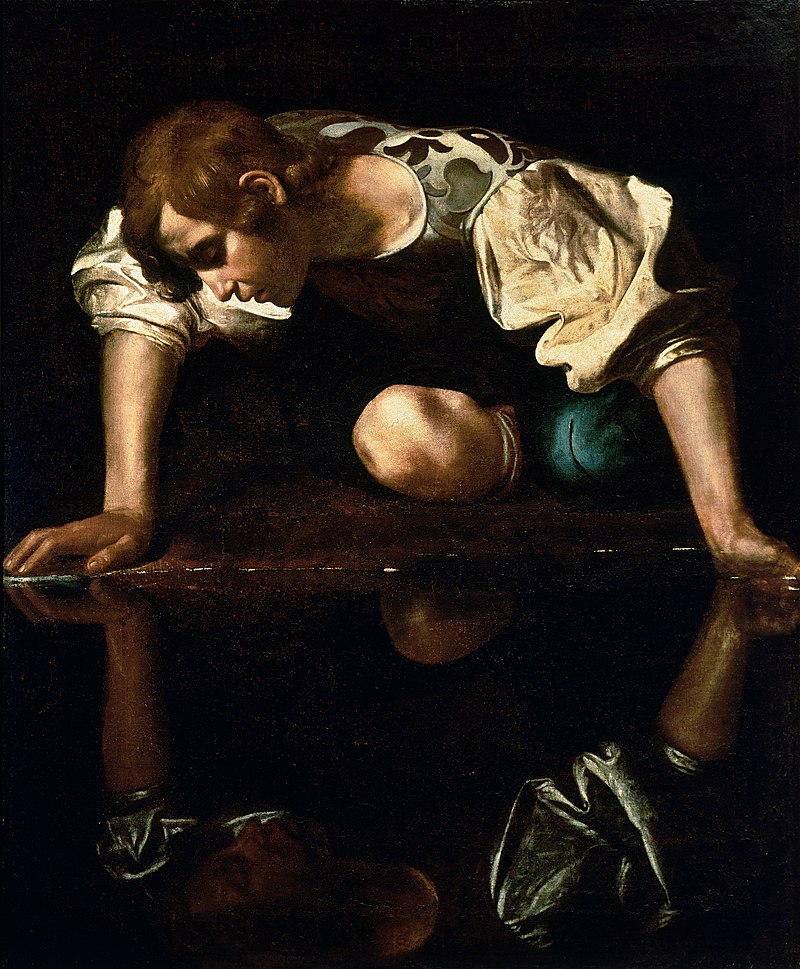
Caravaggio – Self-scanned
For example, his painting “Judith Beheading Holofernes” features a gruesome depiction of a woman decapitating a man, which has been interpreted as a reflection of Caravaggio’s conflicted feelings about women and his own violent tendencies.

Caravaggio – scan
Conclusion
In conclusion, Caravaggio’s artistic legacy has had a lasting impact on the world of art, with his style and techniques influencing artists for centuries after his death. However, his troubled personal life has also had an impact on his work, with his violent tendencies and tumultuous relationships with women reflected in his paintings.

Caravaggio – FAFPqU12CekL8Q — Google Arts & Culture
Despite his personal flaws, Caravaggio remains a significant figure in the history of art, known for his innovative style and contributions to the Baroque period.
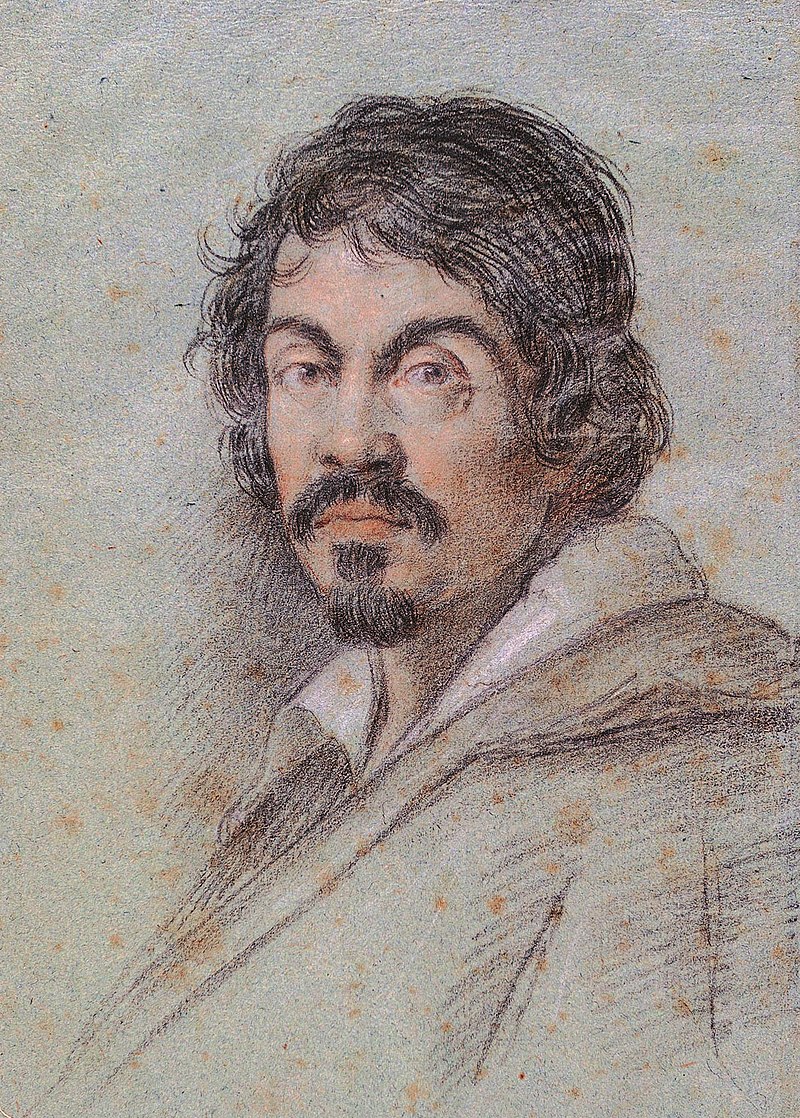
Ottavio Leoni – milano.it
What is Caravaggio most known for?
Michelangelo Merisi da Caravaggio (1571 – 1610) | National Gallery, London
Caravaggio Paintings, Bio, Ideas | TheArtStory
Caravaggio – Paintings, Artworks & Death (biography.com)
Who Was Caravaggio? 4 Characteristics of Caravaggio’s Work – 2023 – MasterClass
Caravaggio Biography With All Details | caravaggio-foundation.org


