

Why does random forest perform worse than decision tree?
The Intricacies of Model Validation: A Deeper Dive into Decision Trees and Random Forests
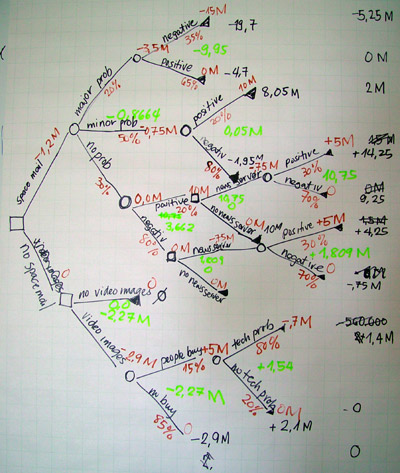
A manually drawn decision tree diagram drawn on a flip chart.
In the world of data science, the validation of predictive models is a critical step that separates robust findings from flimsy assumptions. For those who’ve ventured down the path of using Decision Trees or Random Forests to dissect their datasets, a single iteration of training and testing may seem sufficient. Yet, such an approach scratches only the surface of the dataset’s potential, leaving the door open to unreliable accuracy levels. Let’s explore why the seemingly steadfast results from a lone iteration of cross-validation may, in fact, be as shaky as a leaf in the wind.
Cross-Validation: More than a One-Time Affair
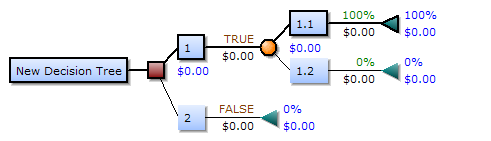
Elements of a decision tree
Cross-validation is a fundamental practice in machine learning, essential for assessing how the results of a statistical analysis will generalize to an independent dataset. Common wisdom, echoed by prominent authors in the field, suggests that a solitary round of training-set and test-set cross-validation is hardly enough. To achieve stable estimates of model predictive accuracy, a multitude of iterations—some argue for as many as 10,000—are recommended. Although this figure might seem daunting, it underscores the importance of repeated measures to ensure that the term “cross-validation” holds its weight in statistical rigor.
Random Forests: A Myriad of Trees in the Winds of Variability

Decision tree for classical allocation of lifeguards on beaches
The Random Forest algorithm, with its ensemble approach, might appear to stand on firmer ground, promising a more reliable estimate due to the collective decision-making of its many trees. Yet, without a sufficient number of cross-validation iterations, even this forest can be swayed by the unpredictable gusts of data variability. A single iteration simply cannot capture the full spectrum of uncertainty inherent in model training and testing.
Decision Trees: Single Yet Unyielding Without Support
The Decision Tree model, often the underdog due to its singular nature, faces even greater challenges. With only one iteration of validation, its accuracy levels are as uncertain as a sapling’s fate in a storm. To truly understand its predictive power, one must not rely on a lone validation cycle but rather embrace a repetitive process that tests and retests the model’s mettle.

Random Forest Model Space
Beyond 50-50 Splits: Embracing K-Fold and Data Reduction
There is more to model validation than the classic 50-50 data split. K-fold cross-validation techniques offer an alternative, allocating a larger portion of data to the demanding task of model building—perhaps 70-90%—and reserving a smaller slice for testing. This method is particularly pertinent in scenarios where numerous variables must be considered, each with its own ordinal or nominal nature that requires ample data to inform prediction.
In cases with a vast number of predictors—say, 45 variables with only 1,962 observations—the challenge intensifies. Populating each combination of variables to establish a prediction foundation becomes a herculean task. To navigate this complexity, data reduction techniques or other methodological strategies may be necessary to distill the number of predictors to a more manageable figure.
One of the most famous quants on the planet Dr. Joseph Simonian remarked;
“The article does an excellent job of articulating the challenges faced in applying machine learning and finance. While the challenges are not insurmountable, investors need to great care in ensuring that their machine learning applications a couched in a robust investment process.”
We will be reviewing Dr. Simonian’s book soon, we recommend you pick one up for your library’s shelf!
Conclusion: Navigating the Forest of Model Validation
In the quest for accurate predictive models, whether through Decision Trees or Random Forests, it is crucial to recognize the importance of rigorous validation. Single iterations of cross-validation are but a cursory glance at a model’s capabilities. Only through repeated trials, thoughtful data partitioning, and perhaps some pruning of variables can we hope to attain a level of confidence in our models that is as steadfast as the deepest roots of the oldest trees.


