

Why did Athena Curse Medusa?
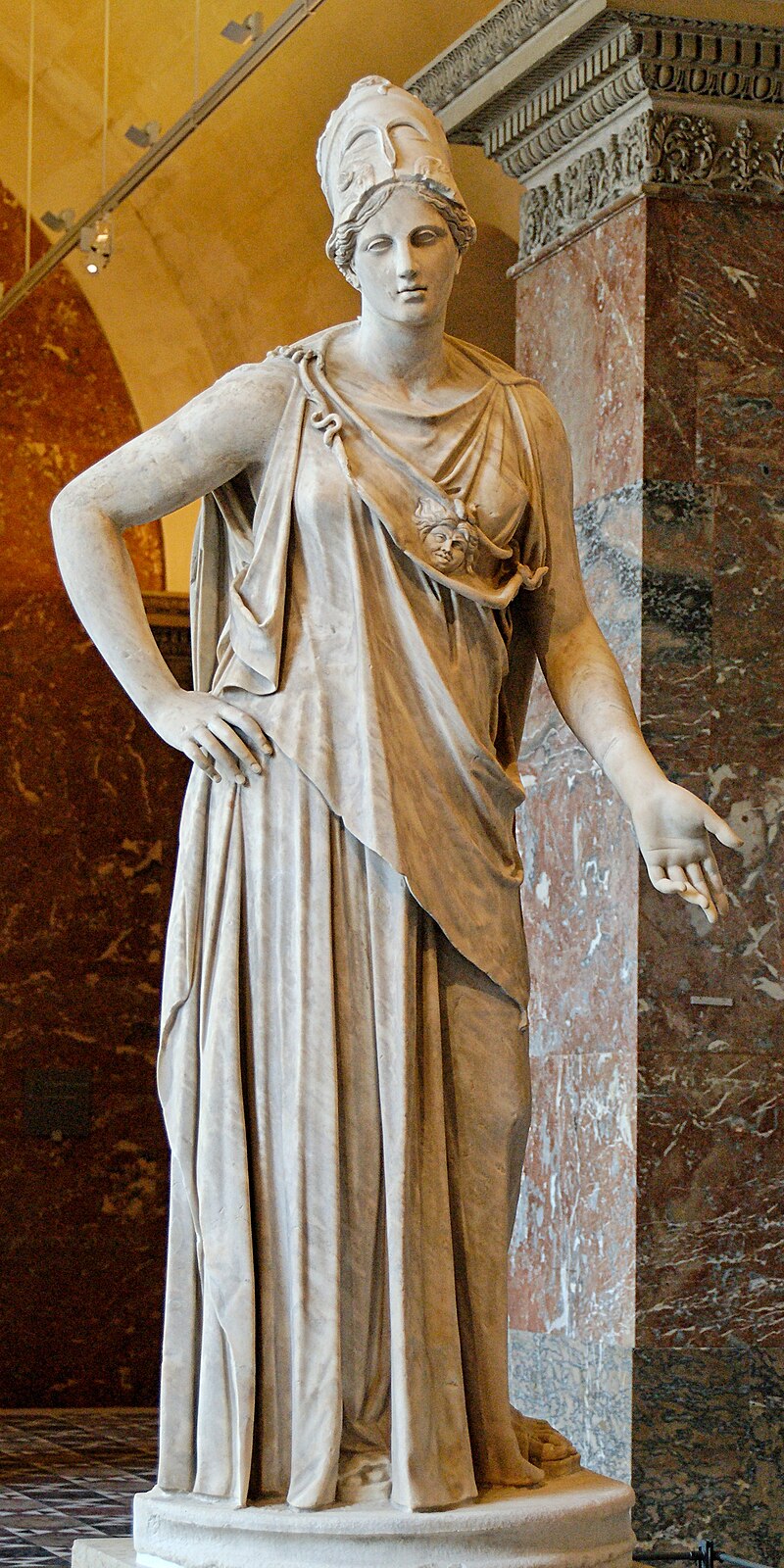
Mattei Athena at Louvre, Roman copy from the 1st century BC/AD after a Greek original of the 4th century BC attributed to Cephisodotos or Euphranor.

Medusa by Arnold Böcklin, circa 1878.
The myth of Medusa’s transformation by Athena is a compelling tale woven with themes of desecration, vengeance, and divine retribution, found within the tapestry of Greek mythology. Medusa, initially a stunning maiden with lustrous hair and captivating beauty, served as a devoted priestess in the consecrated temple of Athena, the esteemed virgin goddess of wisdom, warfare, and strategic skill.
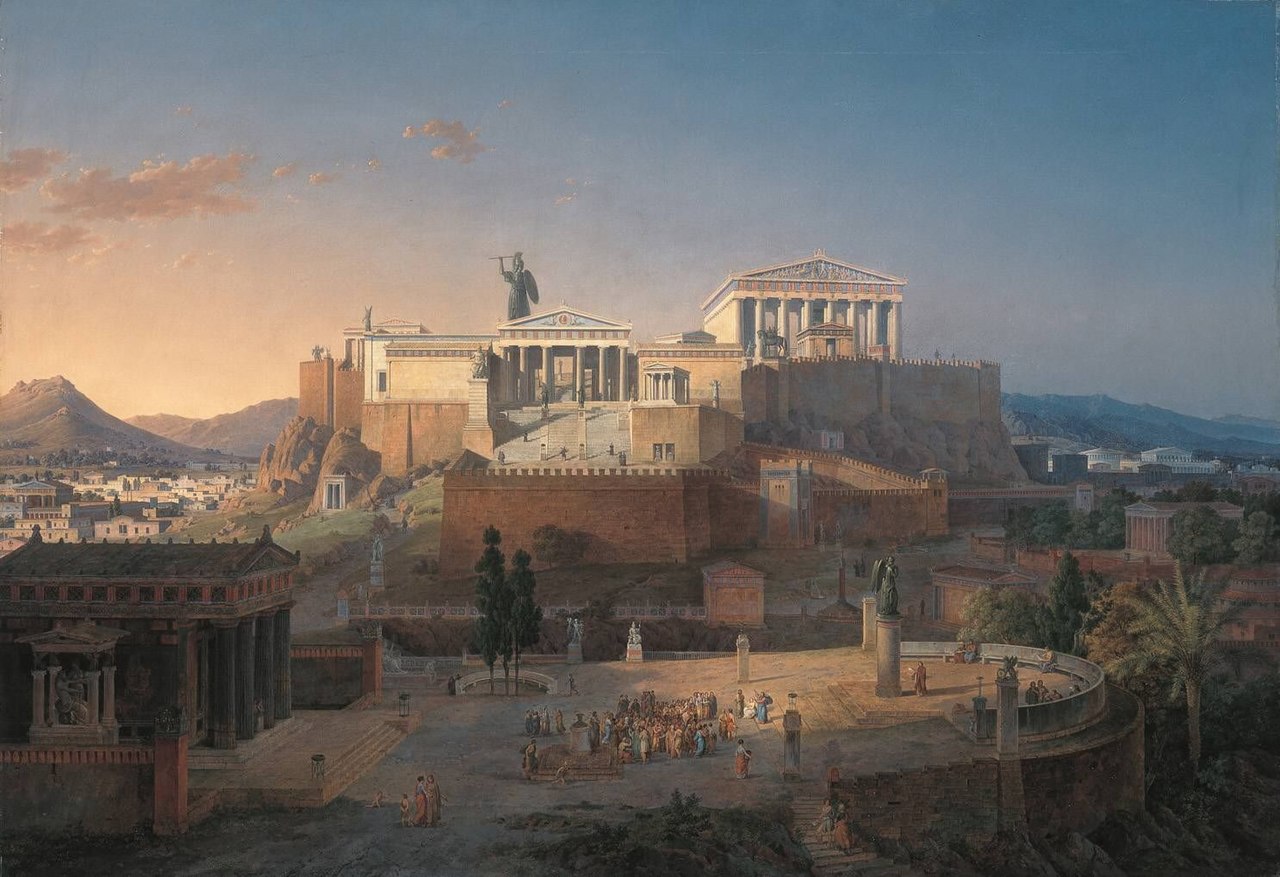
The Acropolis at Athens (1846) by Leo von Klenze. Athena’s name probably comes from the name of the city of Athens.[5][6]
Medusa’s enchanting allure drew the gaze and adoration of numerous suitors, all vying for her affection. However, it was the formidable Poseidon, the Olympian god of the sea, earthquakes, and horses, who succeeded in wooing her.

Medusa image in a historical caricature of the Reign of Terror during the French Revolution.
Consumed by passion, their clandestine union unfolded within the sacred confines of Athena’s temple, a place of purity and worship. This act was not only a profound desecration of a divine sanctuary but also a direct affront to the goddess Athena, known for her chastity and strategic wisdom.

Pallas Athenas (1657) by Rembrandt, which recalls her attributes as the Goddess of warfare.
Infuriated by this blatant disrespect and violation of her sacred space, Athena, in her wrath, meted out a severe punishment. She transformed the beautiful Medusa into a fearsome Gorgon, a creature with venomous snakes for hair and a countenance so terrifying that a mere glance would turn any onlooker to stone.
This curse was both a form of retribution and isolation, rendering Medusa a figure of fear and alienation, banished to a remote island away from civilization.
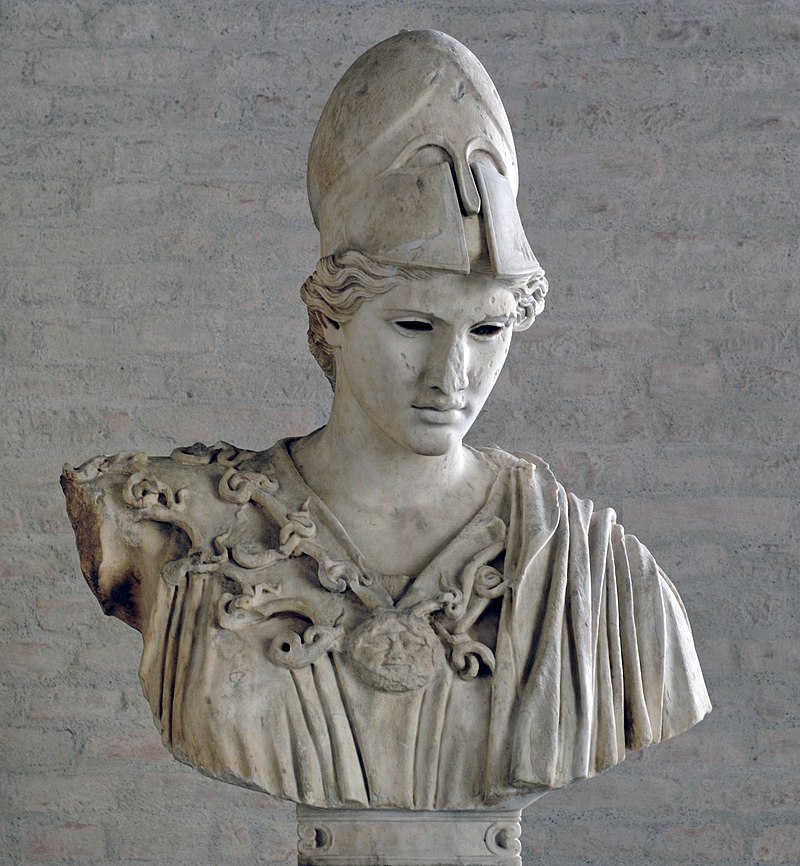
Bust of Athena, type of the “Velletri Pallas” (inlaid eyes are lost). Copy of the 2nd century CE after a votive statue of Kresilas in Athens (ca. 430–420 BC).
Medusa’s transformation and subsequent life encapsulate her tragic isolation and the consequences of divine wrath. She lived in solitude, ostracized by all who feared her petrifying gaze, her only company being her fellow Gorgon sisters, Stheno and Euryale. Her existence was marked by avoidance and fear until she encountered the hero Perseus, who, armed with divine gifts and guidance, managed to sever her head and use it as a weapon, harnessing the power of her petrifying gaze.
The story of Athena cursing Medusa invites varied interpretations and reflections on the themes embedded within the myth. Some view the tale as a cautionary story about hubris, vanity, and the repercussions of desecrating the divine. Others perceive it as an emblematic narrative illustrating the societal norms of the time. Moreover, focusing on victim-blaming. Furthermore, the objectification of women. In addition, the severe consequences faced by those who transgressed divine and societal boundaries.
Regardless of the interpretation, the myth of Medusa’s transformation by Athena remains an enduring and captivating tale in Greek mythology, symbolizing the multifaceted nature of divine interactions with mortals and the intricate relationships between beauty, punishment, and transformation.

Cult statue of Athena with the face of the type of Carpegna Athena. Pink alabaster (draping, aegis), basalt (hair, gorgoneion), Luna marble (gorgoneion, right foot) and plaster (face), late 1st century BC–early 1st century CE. Lastly, from the Piazza dell’ Emporio (Rome), 1923.
Why did Athena Curse Medusa? Why did Athena Curse Medusa?
Sources:
The Curse of Medusa From Greek Mythology (thoughtco.com)
The Curse of Medusa in Greek Mythology – (theoi.com)
The Real Story Behind Medusa’s Appearance (ancient-literature.com)
Double Trouble: Medusa and Embodied Paradoxes | Breezes from Wonderland (harvard.edu)


