

Who controls American foreign policy?
Modern Military

Under the Constitution, the President of the United States determines U.S. foreign policy. The Secretary of State, appointed by the President with the advice and consent of the Senate, is the President’s chief foreign affairs adviser.
In The Four Ages of American Foreign Policy, Michael Mandelbaum argues that the United States foreign policy process is highly democratic, particularly with regards to the decision to engage in military conflict.
While it may be true that the United States government’s foreign policy is somewhat more receptive to public opinion than that of autocratic regimes, the U.S. is by no means “unusually democratic”, as Mandelbaum suggests (371). The American government has repeatedly acted out of alignment with democratic principles when taking military action. Additionally, even if a hypothetical government’s foreign policy calculus was strictly democratic, this might not even serve the country’s best interests, as democratic decision-making can be inefficient and often inconsistent.
At a high level, Mandelbaum’s claim about democratic American foreign policy holds true.
Throughout history, old European powers typically determined foreign policy actions based on the decisions of a monarchy or aristocracy. Even in more recent history such as the Cold War, leaders of countries like the Soviet Union did not have to answer to any body of elected representatives when choosing to escalate conflict. In contrast, the United States has “an unusually wide range of groups, individuals, [that have] been able to exert influence on the policymakers… especially in the matter of war” (Mandelbaum 15).
While there may always be a large number of groups and individuals that become engaged. Moreover, the American political process cannot become considered democratic if the participating agents lack complete information.
Mandelbaum acknowledges that all U.S. presidents have “the problem, common to all American presidents in wartime, of securing and sustaining public support for the war” (Mandelbaum 165). In order to sustain this public support, the American government has often restricted the public’s access to information during wartime. For example, during World War 1, the government passed the Espionage and Sedition Acts, which targeted publications that were critical of the war, and hiked their postal service rates to prohibitively expensive levels. This undemocratic practice was not an exception. In later conflicts such as the Korean War, General MacArthur ordered mandatory media censorship in order to prevent the depiction of any emotional toll or psychological trauma on the warfront.1
Military officials believed that the communication of soldiers feeling frightened or demoralized would drastically reduce public support for the war at home.2
Thus, when journalists in Korea would dictate their messages on the phone to offices in Japan, the U.S. Army Signal Corps who operated the telephone system would delete any information they wanted.3
If democratic processes drive our decisions to engage in wars, they should also drive our decision to remain and remove ourselves from them. Preventing people from accessing information or expressing ideas is at its core undemocratic.
Perhaps an even more extreme violation of free access to information, the US government enlisted CIA operatives who detained enemy combatants at black sites across the world during the War on Terror and aimed to fully suppress any news regarding these covert operations that often involved significant human rights violations. Mandelbaum briefly references media censorship in World War 1 and these covert CIA operations, but seems to brush past them and fails to recognize the true severity of these violations of democratic principles.
Perhaps the most explicitly undemocratic policy decision involved engaging in war without congressional consent.
During the Korean War, President Truman sent troops to Korea without congressional authorization because any delay would have increased the strategic risks of the military operations.
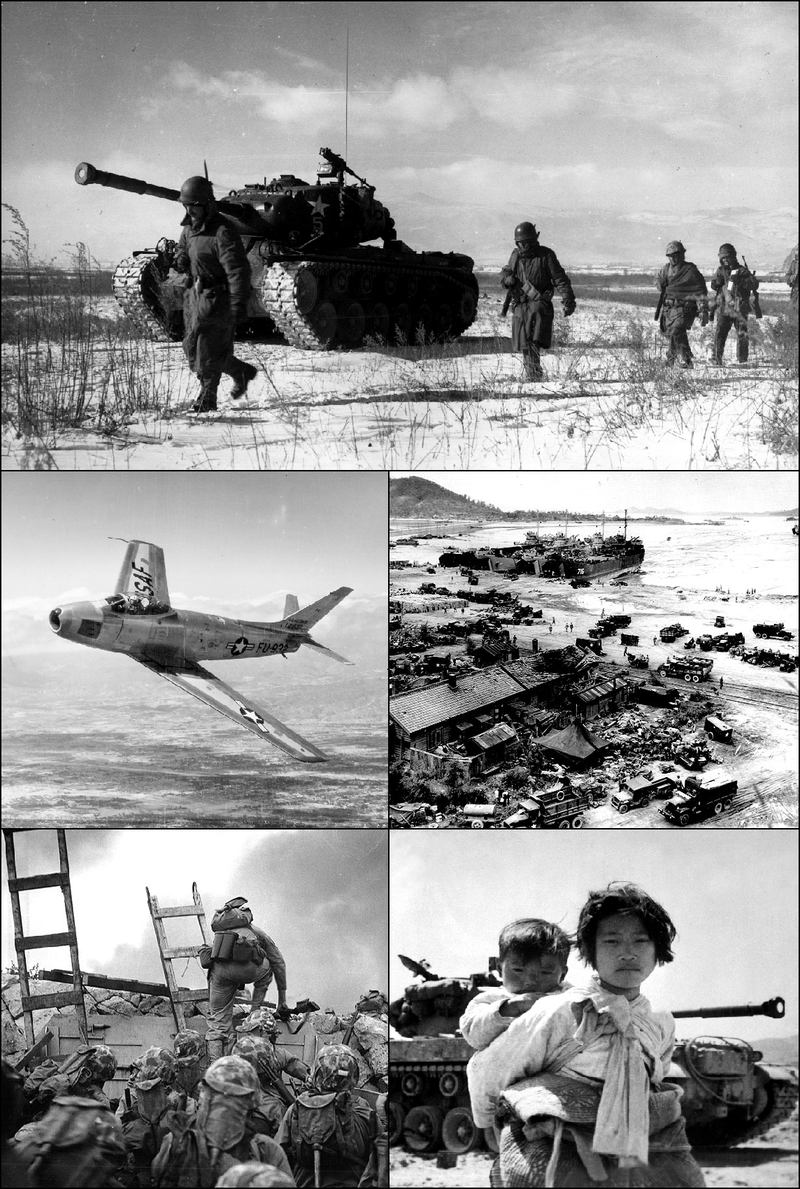
Even more importantly, after American troops arrived, the Truman administration still neglected requesting formal Congressional approval (Mandelbaum 270).
In addition, the underlying premise that democratic foreign policy processes are superior is also unsound. The basis for America’s republic relies upon elected officials representing the interests of their constituents. Unfortunately, this model of government can lead to officials pandering for votes, in hopes of securing their opportunity for reelection. Mandelbaum explains that while the United States was cognizant of Russia’s aversion to a NATO expansion, the American government’s justification for pursuit was “hollow at best and disingenuous at worst” (Mandelbaum 402). Indeed, Mandelbaum suggests that:
“[President] Clinton’s real motive for expansion seems to have involved domestic politics. He hoped that it would earn him the votes of Americans with ancestral ties to Poland, Hungary, and Czechoslovakia” (Mandelbaum 403).
Rather than prioritize the safety of the general American public. President Clinton chose to provoke a world superpower in Russia, largely out of self-interest — a strategy born out of our democratic system.

Not only does this “democracy” cloud our leaders’ judgment and lead us into war for the wrong reasons, but its inefficiency can also put us at a strategic disadvantage. In Vietnam, President Johnson chose to expand troop deployment gradually in order to avoid “alarming the American public … which allowed the enemy to adjust to the increasing powerful force it faced” (Mandelbaum 300). American military tactics were hamstrung by hopes of preserving public approval and sustaining interest in the war, only further endangering our troops and creating a war even less palatable to the public.
Similarly, in World War 2, while the American public was strongly opposed to engaging in Europe’s war, President Roosevelt was eager to support Britain and France. Moreover, he chose not to out of respect for the public resistance and resorted to providing informal military support for allies. A “vivid illustration of the singularly democratic character of American foreign policy,” Mandelbaum considers this restraint the ideal model of governance (Mandelbaum 147).
It is impossible to determine whether an earlier United States entry into World War 2 would have significantly altered its outcome.

However, it is logical to assume that a more unified Allied front, backed by greater military support from the United States, would at least have created the possibility of reducing Polish, French, and British casualties that bore the brunt of the war’s early stages.
Lastly, public opinion simply lacks the resilience to support any military initiative.
In many of the Cold War conflicts (Korea, Vietnam, Iraq), the American public initially supported military intervention, but quickly reversed their posture. In Iraq, before the invasion, “sixty-three percent of the public approved of intervening” and President Bush’s approval rating grew substantially. However, when the 2006 midterm elections rolled around, “fifty-six percent disapproved … [and] public opinion ultimately forced the government to withdraw its troops from the country” (Mandelbaum 421). The change in heart regarding the war in Iraq may be completely valid, but the inconsistency that is associated with basing decisions around public opinion potentially leaves the United States vulnerable to future military engagements.
All this considered, Democratic processes are far from our worst option. Leaving leaders to act autonomously creates situations such as the aforementioned CIA operations during the war on terror — democratic processes are necessary in order to maintain accountability. Throughout the text, Mandelbaum consistently builds a narrative of optimism and American exceptionalism around this democratic system. However,
Mandelbaum gives the U.S. government too much credit. As it has often strayed from these principles by restricting the public’s access to information and subsequently their ability to make informed decisions, and also chosen to enter military conflicts without standard congressional approval.
In conclusion, regardless of how democratic the American government’s foreign policy decisions truly are, Mandelbaum’s rosy description of democratic decision-making masks the unfortunate reality that taking action based on public opinion can be highly inefficient and is far from the ideal solution.
Written by Mitchel Wang
Modern Military

Works Cited beside Mandelbaum
THE FOUR AGES OF AMERICAN FOREIGN POLICY | Kirkus Reviews
https://www.utimes.pitt.edu/archives/?p=3014
Council on Foreign Relations (cfr.org)
Who controls American foreign policy?


