

Where is the best place to catch tuna?
Society

For my whole life, I have lived in two different worlds. Growing up in New York City, the concrete jungle, nine months out of each year have revolved around school, baseball, and the bustling city, only walking among nature as I cross the park each morning; I live on an island, yet fishing never seems to cross my mind. However, when June rolls around, my life, the atmosphere in which I live, changes entirely. My parents, both growing up in the south, have bestowed upon me a love for nature, providing me with the opportunity to live a life on the water as we travel down to the Outer Banks of North Carolina each summer. Fishing, swimming, and sailing on Bogue Sound, I am able to fully immerse myself in every aspect of life in North Carolina’s salt marshes–except one.
In my mind, there are few better ways to spend a day in the Outer Banks than to go offshore fishing.
Making the ride out to the Gulf Stream, the sun rising at our back as we head out to the deep, the anticipation does–and always will–send my nerves into overdrive, making me feel as though it were my first time going each time we leave the dock. Trolling baits behind the boat at six or seven knots, the catch adds to the fun; mahi mahi, wahoo, and tuna are usually on the menu when we reach home, these pelagic fish making wonderful table fare.
However, while the summer months provide excellent fishing for the former two species, the tuna are hit or miss. While there are three types of tuna that reside in North Carolina’s waters–bluefins, yellowfins, and blackfins–the latter, the smallest and least tasty of the bunch, make up the vast majority of tuna caught from the Outer Banks in June, July, and August. These fish, schooling up by the thousands, can turn a slow day into chaos, sending each rod into a deep bend in seconds. However, each year as I touch down at LaGuardia with the school year ahead of me, I know that there is one component of life in the Outer Banks that I will inevitably miss: the run of the bluefins.
With cooler temperatures coming in the fall, baitfish called Menhaden make their trip South from Maine, staging along the East Coast before they eventually reach South Florida; however, they do not travel alone.

Cruising close to the beach–at times ten or fifteen yards from the breakers–exists a beast: the bluefin tuna. Clearing the water as they prey on the Menhaden, these tuna travel south with the bait, inevitably stopping by North Carolina as they follow their next meal. Each year–beginning in December and ending in about March–bluefin tuna fishermen from around the world flock to Morehead City, North Carolina to try their luck at tagging a bluefin, a fish that can be commercially sold for upwards of forty dollars per pound. North Carolina’s coast is a critical staging ground for bluefin tuna, exposing anglers to a thousand-pound quarry that can swim just fifty feet from shore; however, does it provide the best tuna fishing in the world?
North Carolina undeniably holds pristine grounds for tuna fishing, regularly boasting a greater annual catch of yellowfin tuna than any other state in the US.
With the state’s geography leaving certain parts of the Outer Banks within thirty miles of the Gulf Stream, anglers do not have to travel far to reach the warm, tropical water that flows North from the Caribbean, an oasis that houses prime fishing ground. Cape Hatteras, the hub of North Carolina’s offshore fishing culture, provides anglers with world-class yellowfin tuna fishing in the late Spring, a fleet of experienced charter boats regularly returning to the docks with twenty or thirty sizable fish.
Travel South about seventy miles and you reach the aforementioned Morehead City, a beach town engulfed by bluefin tuna fishermen from early fall to early Spring.
With multiple staging points for different species along its coast, it seems that the tarheel state would be hard to beat in the realm of tuna fishing; however, there exist a few key issues that deter me from arguing on the side of North Carolina as I tackle the following question: Where is the best place to catch tuna?
To begin, I would like to touch on a key focus point that will remain evident throughout this paper: climate.
As has been mentioned, North Carolina is home to two different, equally-productive tuna fisheries: yellowfins in the Northern Outer Banks and bluefins further South. Both, like the vast majority of tuna populations around the globe, are migratory species, relying on weather patterns to trigger their trip South.
However, with ever-increasing risk of climate change, the movement of these species become subject to change.

Mary Hollinger, NODC biologist, NOAA. – NOAA Photo Library: line0697
Menhaden, and thus Atlantic bluefin tuna, are inclined to follow water temperatures in the mid-sixty degree range, a range that, in 2022, was only present in North Carolina’s waters for about three months out of the year. Further, their yellow-finned counterparts follow water with a temperature in the low seventies, generally present in North Carolina’s waters in May and June.
With unusually high temperatures in 2016, for example, Captains located in Cape Hatteras experienced what they called a “tuna drought.”
Water temperature reached the mid-seventies in April and left summer fishermen with no quarry to chase. These fish, staging in fairly narrow temperature ranges, follow the Atlantic coast to chase the water they desire, bypassing North Carolina if it means finding what is “just right.” North Carolina’s tuna fishery is completely reliant on an uncontrollable variable: temperature. For this reason, it is difficult for me to argue that this state houses the best tuna fishing in the world.
To continue, the publicity of North Carolina’s bluefin tuna fishery through shows like “Wicked Tuna: Outer Banks” has given the industry a nationwide presence, with growing popularity contributing to a loss of sportsmanship and respect for the culture surrounding the sport. Admittedly, I have watched the show many times before, representing the brawlic, high-energy side of tuna fishing that enthralls the public; in its debut, for example, over one million viewers tuned in. However, a representation as an entertaining way to make “quick cash” has been destructive to fisheries all over the world, especially that in the crystal coast. North Carolina’s annual quota, capping the amount of bluefin tuna that anglers may harvest each year, is generally filled by the end of March, at times even spanning into the beginning of April.
However, this year, the quota of 2.3 metric tons was filled by February 13th, with a record number of fishermen providing “a joke of a season” to local captains.
With an age-old tradition at risk, the respect for the sport is going as well. Although North Carolina will always hold a special place in my heart, a combination of uncontrollable factors and a rapid increase in popularity make it clear that the state does not provide the best tuna fishing in the world.
Known as the “Tuna Capital of the World,” California’s coast provides world-renowned fishing for pelagic species that dwell in millenia-old offshore canyons.
Known for its populations of migrating albacore, yellowfin, and bluefin tuna that peak in the summer months, warmer weather provides hot action that gives vacationers a chance at the fish of a lifetime. Trolling baits, pursuing schooling fish as they feed on the surface, or chasing the pods of purposes behind which the tuna trail, these fish make for action-packed days on the Pacific Ocean. However, as was seen in the waters of North Carolina, there are certain factors, weather being the primary, that can affect the success seen by the region’s anglers.
To begin, it is important to look at a key factor that impacts tuna fishing in almost every region of the world: climate. Spawning further offshore in the Pacific Ocean, nearing even the Sea of Japan in their journey West, bluefin and yellowfin tuna remain offshore until California’s coastal waters warm, closing the gap beginning in the late Spring. Favoring water temperatures of sixty to seventy-two degrees Fahrenheit, warmer winters favor earlier–and longer-lasting–tuna migrations, providing anglers with a prolific quarry. 2019, for example, brought some of the hottest temperatures ever to California, warming waters early and providing a record tuna catch: over thirty metric tons from San Diego alone. (see figure 1)
However, there will always exist this variable, an environmental factor that can sway California’s tuna fishing one way or another. With cooler years coming with the phenomenon “La Niña,” water temperatures are not conducive to a notable catch.

In 2010, for example, water temperatures in San Diego barely topped seventy-five degrees in the heat of August, dropping below sixty in the early fall. With this weather pattern came a strong decrease in overall tuna catch, and the worst year that captains from San Diego’s Dana Landing Marina could remember when interviewed in August of 2011. The success of anglers off of the coast of California fluctuates with annual weather patterns, providing the region with fishing conditions that are constantly changing; however, another outside factor has the ability to cut tuna populations out completely: the ever-increasing problem of overfishing.
The market for tuna in Japan was valued at an astounding $11.6 billion in 2012.

Author is User:Fisherman.
With prices per pound continuing to drop with an ever-increasing catch; with more fishermen producing more quantity, the demand for the fish has inevitably gone down.
However, despite this decrease in value, Japan, in recent years, has sought to increase the quota that caps the tuna catch each year by as much as 20%. Standing at a massive 3,483 metric tons in 2021, Japan raised the quota by 257 metric tons in 2022, decisions that have all led tuna populations to decline to 5% of what they were in the 19th and early 20th centuries.
With the mid-Pacific Ocean existing as a critical breeding ground for bluefin and yellowfin tuna, producing the fish that populate California’s waters each spring and summer, loosened regulations will only bring harm to the fishery now available along the United States’ Pacific coast. This issue, a persistent block in Pacific tuna numbers, is a factor that will soon leave California’s tuna fishery a fraction of what it once was; however, is there a way to get around this obstacle? Well, moving southwest from California, the Revillagigedos Archipelago exists as an isolated group of islands, completely protected from external pressure.
A seven-day trip from Mexico’s Cabo San Lucas, the Revillagigedo Islands provide a mecca for the dedicated angler, with warm and coral-rich flats sharply dropping into the deep just a few hundred yards from shore.

NASA – http://earthobservatory.nasa.gov/Newsroom/NewImages/images.php3?img_id=17128
These islands, due to their connection to the Pacific Ocean, experience little fluctuation in either air or water temperatures, with the high heat capacity of H2O leaving the surrounding ocean between sixty-five and eighty degrees year-round. Further, with no native inhabitants, the problem of overfishing is non-existent, leaving a healthy tuna population that only continues to grow.
However, despite there only being a few hundred anglers who make the journey every year, the Mexican Government decided to close off a whopping 54,700 square miles of ocean surrounding the islands from both recreational and commercial harvest in 2007, a proposal that would be expanded by 96.7% in 2017.
The islands, once holding recognition for consistently producing “the world’s largest yellowfin tuna,” have since been turned into over 100,000 square miles of Marine Protected Area, an oasis in which yellowfin tuna populations can not only live year-round without migration but also are completely protected from the plague of overfishing. Anglers may still catch and release these massive tuna, but the inability to take home their quarry has driven many away from these pristine islands: Cabo San Lucas’s long-range fishing ventures, trips that make the journey to the archipelago, saw mere dozens of individuals willing to make the week-long trek in 2022 as compared to hundreds before the 2007 legislation, even as their catch doubled per client. A decrease in pressure, logically, has left the region’s wildlife to flourish.
There is no way to determine with certainty the best location to catch tuna in the world; myriad outside factors continuously change, and so do the patterns of tuna populations that inhabit different regions of the world.
However, the Revillagigedo Islands, lying southwest of Mexico’s Cabo San Lucas, have been the sole location that, from what I have seen, is able to avoid the impact of outside factors on its fishery.
With fish that do not need to migrate, as water temperatures remain from sixty-five to eighty degrees Fahrenheit throughout the year, and are increasingly-protected from practices of overfishing, I feel that this pristine location will only continue to grow its population of tuna in years to come. These islands may not be the ideal fishing location for the angler who wants seared tuna for dinner; however, I would confidently say that the Revillagigedo Islands are home to the best tuna fishing in the world.
Written by Thomas Heath

More work by Thomas Heath:
Why are people passionate about fishing?
Figure 1: Greene, Beth. El Nino Event, 2014. Global Temp. Effect: Phenomena. NOAA, 2016. https://upload.wikimedia.org/wikipedia/commons/a/a8/NOAA-CPC-NWS-NOAA_SST_Anoms_2015.jpg.
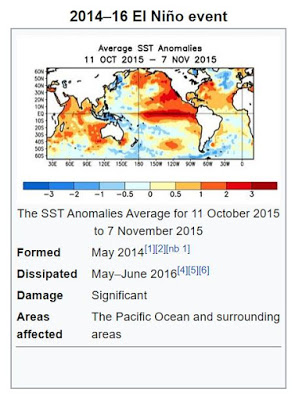
Figure 2: Ferrini, Vicki. Morehead City Yearly Average Water Temperature (F). Morehead City Water Temp. NOAA Marine Division, 2022. https://www.seatemperature.org/north-america/united-states/morehead-city.htm.

References:
Blackwell, Steven. “Physical Address.” Yellowfin Tuna | NC DEQ. NC Division of Marine Fisheries, 2014. https://deq.nc.gov/about/divisions/marine-fisheries/public-information-and-education/species-profiles/yellowfin-tuna.
Ferrini, Vicki. Morehead City Yearly Average Water Temperature (F). Morehead City Water Temp. NOAA Marine Division, 2022. https://www.seatemperature.org/north-america/united-states/morehead-city.htm.
Ramsey, Randy. “Fisherman’s Post: July 2016.” Web log. Hatteras: July Report (blog). Fisherman’s Post, July 14, 2016. https://www.fishermanspost.com/hatteras-july-7-2016/.
Umstead, R. Thomas. “Nat Geo Draws ‘Wicked’ Ratings.” Multichannel News, April 2, 2012. https://www.nexttv.com/news/nat-geo-draws-wicked-ratings-new-reality-series-360721#:~:text=National%20Geographic%20Chan%20its%20Sunday%20night%20debut.
Vrattos, Joey. “Recreational Giant Bluefin Tuna Season Comes to a Close after Quota Met.” Island Free Press, March 10, 2023. https://islandfreepress.org/fishing-report/recreational-bluefin-tuna-season-comes-to-a-close-after-quota.
Ramsey, Randy. “Fisherman’s Post: March 2023 Web log. Morehead City: March Report (blog). Fisherman’s Post, March 14, 2023. https://www.fishermanspost.com/hatteras-march-14-2023/.
Skylar, Eric. “Pacific Bluefin Tuna: Species at a Glance.” CA Marine Species Portal, 2020. https://marinespecies.wildlife.ca.gov/pacific-bluefin-tuna/false/.
Woods, Chad. “Fisherman’s Landing: Report.” Fisherman’s landing fish counts, 2019. https://www.fishermanslanding.com/fishcounts/bightsportfishing.php.
Lorne, David. “San Diego, CA 10-Day Weather Forecast – The Weather Channel.” The Weather Channel, 2010. https://weather.com/weather/tenday/l/San+Diego+CA?canonicalCityId=cb5c473781cc06501376639dce8f
Massey, Steve. “Sportfishing San Diego – Blackjack Fishing Charters.” Black Jack Charters – BlackJack fishing charters located Dana Landing https://www.blackjackcharters.com/.
Isaacson, Jim. “The Global Bluefin Tuna Trade.” Lord K2, 2023. https://www.lordk2.com/the-global-bluefin-tuna-trade.
Kurtenbach, Elaine. “Japan Seeks to Boost Catch Limits of Prized Bluefin Tuna.” AP NEWS. Associated Press, October 7, 2020. https://apnews.com/article/business-japan-fish-overfishing-07b0fb73c6d0e9e1eb892e513ed49814.
Society, NAT GEO. “Revillagigedo Islands.” National Geographic Society, 2020. https://www.nationalgeographic.org/projects/pristine-seas/expeditions/revillagigedo-islands/.
Centre, UNESCO World Heritage. “Archipiélago De Revillagigedo.” UNESCO World Heritage Centre, 2021. https://whc.unesco.org/en/list/1510/.
Wallen, Jim. “Where Tourism and Tuna Overlap: How Global Fishing Watch Is Informing Policy Discussions.” Global Fishing Watch, August 19, 2022. https://globalfishingwatch.org/impacts/policy-compliance/tourism-tuna-policy-discussions/.
Levy, Ben. “Cabo San Lucas.” Picante Sportfishing, January 7, 2023. https://www.picantesportfishing.com/.
Greene, Beth. El Nino Event, 2014. Global Temp. Effect: Phenomena. NOAA, 2016. https://upload.wikimedia.org/wikipedia/commons/a/a8/NOAA-CPC-NWS-NOAA_SST_Anoms_2015.jpg.


