

What Was The Cause Of The Tenerife Airport Disaster?
Auto, Aviation & Transportation

The Tenerife airport disaster the worst and deadliest accident in commercial aviation history, claiming the lives of 583 passengers and crew members. Occurring on March 27, 1977, at Los Rodeos Airport (now known as Tenerife-North Airport) on the Spanish island of Tenerife, one of the Canary Islands, the tragedy shocked the world at the time.
Background
The Canary Islands are a popular tourist destination, and in the 1970s, they were experiencing a surge in air traffic. On March 27, 1977, a bomb exploded at Gran Canaria Airport, which caused all flights to be diverted to Los Rodeos Airport on Tenerife, including two Boeing 747 jumbo jets from Pan Am and KLM.
At the time, Los Rodeos was a small airport with limited facilities and only one runway. The airport was not equipped with modern navigational aids, such as radar, which made it challenging for air traffic controllers to manage the sudden influx of aircraft. Additionally, the visibility was poor due to heavy fog, which further compounded the difficulties for the air traffic controllers. Furthermore, the total parking space available at the airport was equivalent to the parking area of an average US grocery store. In addition, because it was a Sunday, the air traffic control office wasn’t fully staffed. Leaving only two men to park all of these airplanes on such a tiny space.

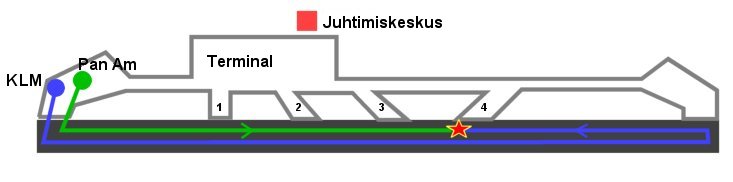
In fact the Pan Am plane ended up becoming parked behind the KLM plane. So when they finnally received the green light for takeoff from the tower, the Pan Am could not disembark until the KLM plane moved. The captain of the KLM plane had elected to take on additional fuel. Which caused a delay for both planes.

Cause
As the fog worsened, the air traffic controllers were struggling to communicate with the pilots, and several aircraft were taxiing on the runway. The KLM flight, carrying 234 passengers and crew, became cleared for takeoff. While the Pan Am flight, carrying 396 passengers and crew, became instructed to taxi down the runway and exit at the third intersection. However, due to the poor visibility, the Pan Am crew missed the third turnoff and continued down the runway, the Pan Am crew reported visibility of just a few meters.
At the same time, the KLM crew became instructed to turn left on the runway. And taxi to the end to prepare for takeoff.

However, the KLM captain misinterpreted the instructions and thought he had clearance for takeoff.
The KLM captain then accelerated the aircraft, while the Pan Am flight was still on the runway. With only a few seconds to spare, the KLM plane attempted takeoff to avoid the Pan Am jumbo. But, ended up taking out the complete upper section. The two jumbo jets collided. Killing everyone on board the KLM flight. And the majority of passengers and crew on the Pan Am flight.
The Pan Am crew shouted at the KLM plane over the radio. They could see the plane coming towards them!
“There he is!”
Pan Am captain Victor Grubbs yells!
“Look at him! Goddamn, that son of a b**ch is coming!”
Taken from the publicly available cockpit voice recording.
Many point blame at the KLM captain for this decision. The KLM captain was one of several factors that contributed to the Tenerife airport disaster, but he was definitely not solely to blame for the tragedy.
The cause of the accident became attributed to a combination of factors. Including miscommunication between the air traffic controllers and the pilots, poor visibility due to heavy fog. And a lack of modern navigational aids at the airport. The KLM captain’s decision to take off without clearance was also a significant contributing factor to the disaster.
The KLM captain made a critical error when he decided to take off without proper clearance from air traffic control. However, it is important to note that he was under significant time pressure and believed he had clearance to take off, as a result of a miscommunication with the air traffic controller.
Furthermore, the KLM captain was operating under a hierarchical culture that was prevalent in aviation at the time. This culture placed a great deal of emphasis on the authority of the captain, which made it difficult for other crew members to question his decisions.
As a result, the KLM co-pilot, who may have had reservations about the takeoff; did not speak up and challenge the captain’s decision.
Lessons Learned
The Tenerife airport disaster prompted significant changes in aviation safety practices. The accident highlighted the importance of clear communication between air traffic controllers and pilots, even in adverse weather conditions. It also led to improvements in airport infrastructure. Including the installation of modern navigational aids and the construction of additional runways to handle increased air traffic.
In conclusion, the Tenerife airport disaster was a tragic event that resulted from a combination of factors, including miscommunication, poor visibility, and inadequate infrastructure. The accident prompted significant changes in aviation safety practices and infrastructure, which have contributed to a safer and more efficient air transportation system.
Lastly, one fact to note is that had the KLM captain took on more fuel than he needed. Had he taken only the amount that was necessary it is possible that his plane could have avoided colliding with the Pan Am flight.


Auto, Aviation & Transportation
What Was The Cause Of The Tenerife Airport Disaster?


