

What was health like in the Soviet Union?
Science News

Ethnographic map of the Soviet Union, 1941
What was health like in the Soviet Union?
Unveiling the Health and Happiness Expectancy in Former Soviet Countries
A Groundbreaking Study on Health Expectancy in Russia and Central Asia

More details. Lenin, Trotsky and Kamenev celebrating the second anniversary of the October Revolution. L.Y. Leonidov – http://belregnews.ru/wp-content/uploads/2012/08/im.2012.08.11-10.07.31.jpg

Standing portrait of Vladimir Lenin (1870–1924), leader of Soviet Russia and the Soviet Union from 1917 to 1924.
Researchers from Japan have undertaken a pivotal study comparing health expectancy in Russia and Central Asian nations, revealing surprising insights that challenge conventional wisdom. Published in the journal Population Research and Policy Review, the study provides a nuanced understanding of health and happiness in these regions, especially amid the ongoing Russia–Ukraine conflict.
Background of the Study

One of the many impacts of the approach to the environment in the USSR and post-Soviet states is the Aral Sea.
Since the dissolution of the Soviet Union in 1991, former Soviet countries have experienced vast political, economic, and societal upheavals, impacting their healthcare systems and overall quality of life. While extensive research has been done on the “post-Soviet mortality crisis,” this study breaks new ground by focusing on both the negative and positive aspects of health.
Methodology and Findings
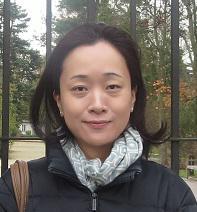
Associate Professor Yuka Minagawa of Sophia University

Yasuhiko Saito, PhD – Nihon University & USC Leonard Davis School of Gerontology
Associate Professor Yuka Minagawa of Sophia University and Professor Yasuhiko Saito of Nihon University led this research. They employed a theoretical framework by Dutch sociologist Dr. Ruut Veenhoven to analyze two types of health expectancy! Healthy life expectancy (LE) and happy LE. The former measures life spent in good health, while the latter gauges life spent in a happy state.
Contrary to expectations, the study found that populations in Central Asian countries, including Kazakhstan, Kyrgyzstan, and Tajikistan, exhibit significantly higher healthy and happy LE compared to Russia. This is despite their lower levels of socioeconomic development. For instance, Central Asian men can expect to live approximately 38 years in a happy state and 65 years in good health. While Russian men’s figures stand at 33 and 45 years, respectively.
The study challenges traditional definitions of health!

More details. T-80 tank on Red Square during the August Coup
Moreover, emphasizing the need to consider both positive and negative dimensions. This approach aligns with the World Health Organization’s broader definition of health. Moreover, the Russia–Ukraine conflict’s potential impact on Russian public health highlights the urgency of strengthening welfare policies in the region.
This research offers a fresh perspective on health and happiness in post-Soviet countries, prompting a reevaluation of health metrics and welfare policies. As these nations continue to navigate their post-Soviet journeys, studies like this provide valuable insights for shaping healthier, happier societies.
- Link to the news story: Sophia University Press Release

More details. Five Marshals of the Soviet Union in 1935. Only two of them—Budyonny and Voroshilov—survived the Great Purge. Blyukher, Yegorov and Tukhachevsky were executed.
RELATED READING:
- Can Russia Fund A Superpower’s Military?
- Future Of Russia’s Submarine Fleet
- Where is the Russian Army?
- is Sophia University good?


