

What was general Grant famous for? Turning The Tide

Grant as a young officer, c. 1845–1847
The Musical Chairs of Union Leadership: The Pre-Grant Era
The American Civil War was an intricate tapestry of military strategy, political maneuvering, and societal change. One of the most striking narratives of this war is the continual shuffle of Union leadership in the early years of the conflict. The Northern Army, with its superior resources and numbers, struggled against a seemingly outmatched Confederate Army.

Battle of Shiloh by Thure de Thulstrup,
Moreover, this disparity in performance was, in part, due to the frequent change of commanders within the Union Army until the emergence of Ulysses S. Grant. The period before Grant’s ascendancy highlighted a Union leadership fraught with indecision, political intrigue, and missed opportunities.

The 18th President of the United States Ulysses S. Grant.
A Carousel of Commanders
The war’s initial stages saw the Union Army helmed by a succession of commanders. It began with Irvin McDowell, who suffered a defeat at the First Battle of Bull Run in 1861. This loss, apart from being a tactical misstep, was also a psychological blow to the Union, shaking their confidence in a swift victory.

Portrait of Maj. Gen. Irvin McDowell.
Following McDowell, George B. McClellan took command. A skilled organizer, he did transform the Army of the Potomac into a formidable fighting force!
However, McClellan’s extreme caution on the battlefield, notably during the Peninsula Campaign, cost the Union valuable time and opportunities. His reluctance to pursue the Confederate Army after the Battle of Antietam and his contentious relationship with President Lincoln led to his dismissal. For further reading: Battle Of Antietam : America’s Deadliest Day.
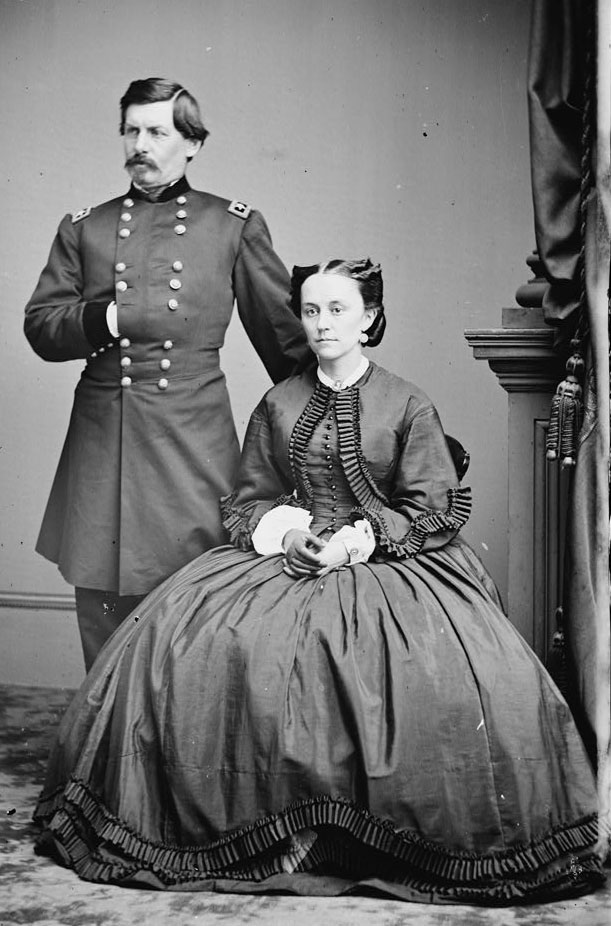
George B. McClellan and Mary Ellen Marcy (Nelly) McClellan
Ambrose Burnside succeeded McClellan, but his tenure became short-lived after the disastrous Battle of Fredericksburg.

Battle of Chancellorsville.
He was replaced by Joseph Hooker, who, despite initial success, was defeated at the Battle of Chancellorsville by Robert E. Lee’s audacious tactics.
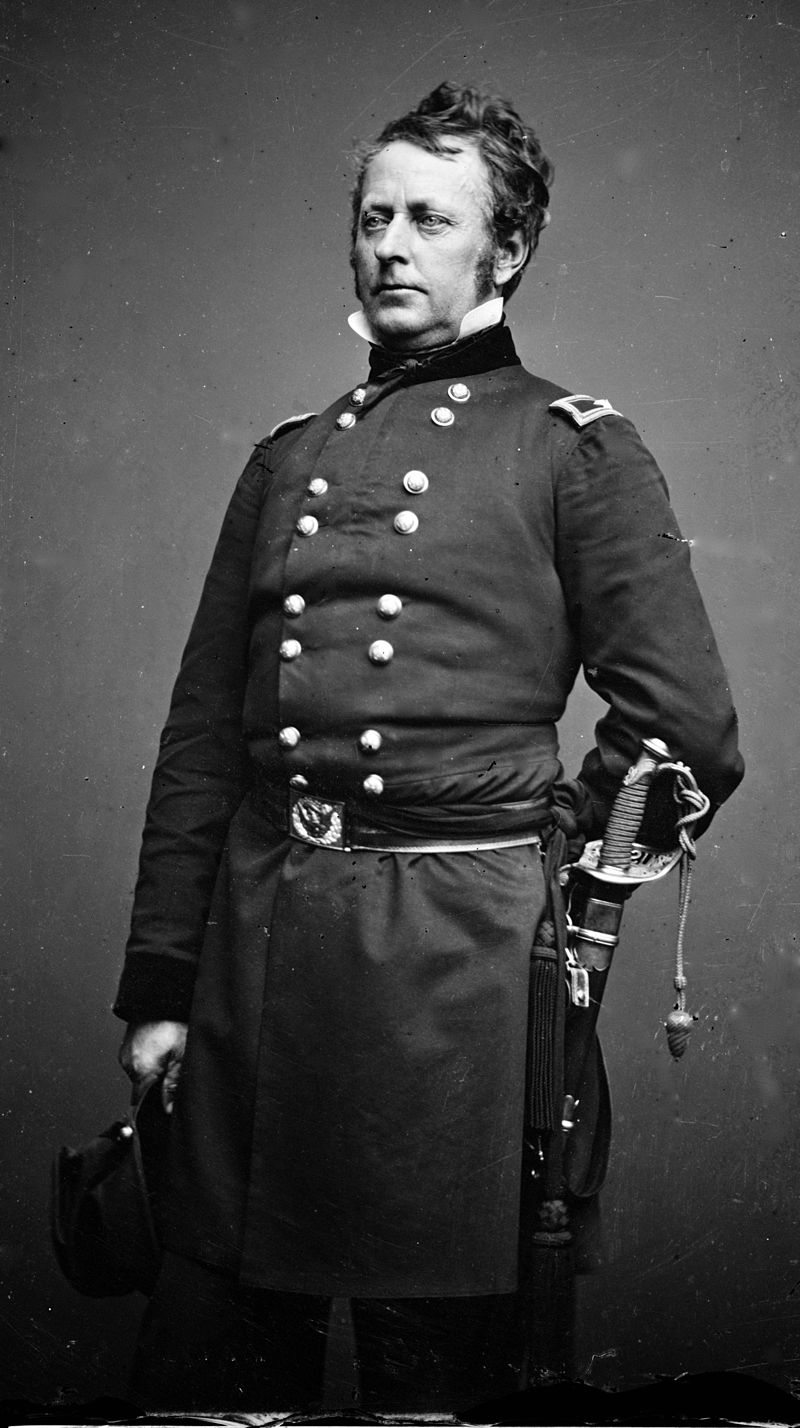
Brig. Gen. Joseph Hooker.
As a result, George G. Meade took over shortly before the Battle of Gettysburg. While he secured a Union victory, his failure to pursue and decisively crush the retreating Confederate Army was a missed strategic opportunity.
A Tumultuous Northern Home Front
The frequent change in leadership reflected deeper issues within the Union’s war machinery. There were rifts between the military commanders and the political leadership, primarily President Lincoln. Additionally, the Union’s strategy oscillated between conciliation and hard war, leading to inconsistent directives.
Furthermore, this lack of a clear, sustained strategy allowed the Confederates, under the more stable leadership of General Lee, to punch above their weight, leveraging interior lines and deep knowledge of the terrain to their advantage.
The Southern Phoenix: Confederate Success Against the Odds

The Battle of Monterrey which Grant saw military action in his early years during the Mexican–American War.
Despite being outmatched in terms of industrial capability, manpower, and resources, the Confederacy’s early successes becomes attributed to several factors. Their commanders, like Robert E. Lee, Stonewall Jackson, and James Longstreet, seasoned military tacticians. Furthermore, the Confederacy’s motivation to protect their homeland and way of life gave them a psychological edge.
Grant: The Turning Point
Ulysses S. Grant’s ascendancy marked a watershed moment for the Union. His victories in the Western theater, especially the capture of Vicksburg, showcased his tactical acumen and aggressive pursuit. Grant’s leadership style contrasted sharply with his predecessors’. He was tenacious, willing to bear significant casualties for strategic gains, and collaborated effectively with Lincoln. Under Grant, the Union Army adopted a comprehensive strategy, focusing on total war, which targeted not just the Confederate military but also its economic and infrastructural backbone.
The early years of the American Civil War, with the Union’s ever-revolving door of commanders, epitomized the challenges of waging war amidst political interference and unclear strategic objectives. The Confederacy, with fewer resources but more consistent leadership, capitalized on this disarray. It was only with the arrival of Ulysses S. Grant, with his clarity of purpose and unwillingness to let opportunities slip, that the Union’s superior resources were effectively channeled, turning the tide of the war in their favor.
Of course, Grant had his mistakes!
Ulysses S. Grant’s worst military defeat was at the Battle of Cold Harbor, which took place from May 31 to June 12, 1864.
The Battle of Cold Harbor
The Battle of Cold Harbor was part of Grant’s Overland Campaign, an aggressive push towards the Confederate capital of Richmond, Virginia. After a series of battles against Confederate General Robert E. Lee’s Army of Northern Virginia, Grant and the Union Army of the Potomac attempted to break through Lee’s defensive lines at Cold Harbor, a crossroads northeast of Richmond.
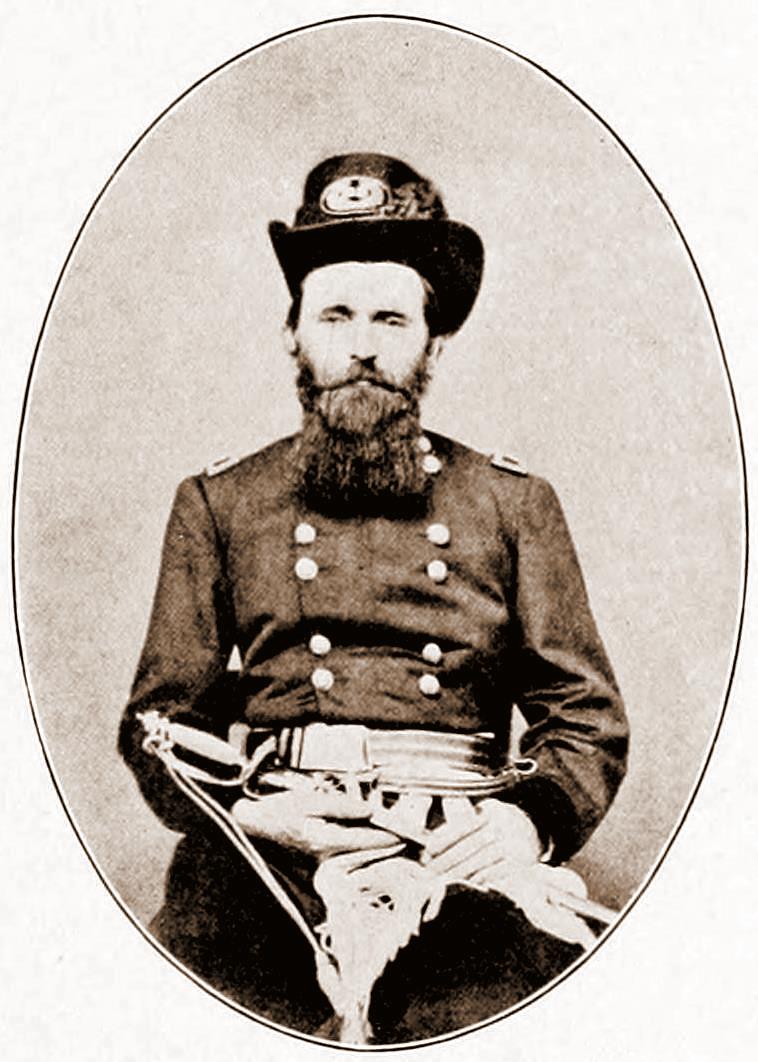
Brigadier General Grant, 1861
On June 3, Grant launched a massive frontal assault against the entrenched Confederate positions. This attack proved to be disastrous for the Union forces. Confederate soldiers were well-entrenched behind elaborate fortifications, and they easily repelled the Union onslaught. Union troops were mowed down by fierce Confederate fire, suffering heavy casualties within a very short time.
The Aftermath
The Union’s losses were staggering. In less than an hour of combat on June 3, the Union suffered approximately 7,000 casualties, compared to the Confederacy’s 1,500. The battle was so one-sided that Confederate soldiers claimed they only had to shoot straight to hit their targets.
Grant would later regret the decision to launch the attack. In his memoirs, he wrote: “I have always regretted that the last assault at Cold Harbor was ever made… No advantage whatever was gained to compensate for the heavy loss we sustained.” It’s a poignant acknowledgment from a general not known for admitting mistakes easily.
Despite this setback, Grant did not retreat. Instead, he continued to engage Lee’s army and eventually shifted his focus to Petersburg, leading to a prolonged siege. The tenacity Grant showed even after such a significant defeat demonstrated his determination to bring the war to an end, regardless of the setbacks he might face.

Cold Harbor
In the larger context of the war, while Cold Harbor was a tactical defeat for Grant, his overarching strategy to continuously engage and wear down Lee’s army remained unchanged. The Battle of Cold Harbor is often remembered not just for its high casualties but also as a testament to the brutal nature of warfare, where strategic decisions can result in significant human cost.
However, Grant would not be remembered for his losses of course! Otherwise we wouldn’t be writing this piece!
Ulysses S. Grant’s greatest military victory was arguably the capture of Vicksburg, Mississippi, on July 4, 1863!
The Siege of Vicksburg: A Pivotal Moment

Fighting at the crater at the Third Louisiana Redan
The city of Vicksburg was strategically located on the Mississippi River, making it a crucial transportation and supply point for the Confederacy. By controlling Vicksburg, the Confederacy effectively controlled the entire Mississippi River, which acted as the “spine” of the South. Grant recognized that capturing Vicksburg would not only be a significant tactical victory but also a strategic blow to the Confederacy, effectively splitting it in two and seizing control of the river for the Union. Further reading: Siege of Vicksburg
The Campaign
The Vicksburg campaign was marked by Grant’s innovative tactics and audacity. Starting in late 1862 and culminating in mid-1863, Grant executed a series of maneuvers to isolate the city and its defenders. This included a daring decision to march his army down the west side of the Mississippi, then cross the river to the south of the city, cutting his own supply lines and living off the land. Once on the east side of the river, Grant moved swiftly, defeating Confederate forces in several engagements and isolating Vicksburg from reinforcement or resupply.
By mid-May 1863, Grant had the city surrounded and began a siege. After 47 days of continuous bombardment and with supplies running critically low, the Confederate garrison, led by General John C. Pemberton, surrendered to Grant on July 4, 1863.
Significance of the Victory
The fall of Vicksburg was a turning point in the Civil War. With the Mississippi River now in Union hands, the Confederacy was effectively split in two, isolating Texas, Arkansas, and Louisiana from the rest of the South. The victory bolstered the North’s morale and cemented Grant’s reputation as one of the Union’s most capable generals. His successful strategy and leadership in the Vicksburg campaign eventually caught the attention of President Abraham Lincoln, who later promoted him to command all Union armies.
Interestingly, the Vicksburg victory came on the same day as the Union victory at Gettysburg, making July 4, 1863, a pivotal day in the Civil War and a major turning point in favor of the Union. Grant’s capture of Vicksburg demonstrated not only his military prowess but also the importance of combined operations, utilizing both naval and land forces, in achieving victory.
Ulysses S. Grant and the Strategy of Economic Chokehold
While the American Civil War, often remembered for its brutal battles and dramatic moments. however, a broader perspective reveals that the most decisive factor in the Union’s victory was not a single engagement but rather a comprehensive strategy. This approach, championed by General Ulysses S. Grant, focused on crippling the Southern economy and undermining the Confederacy’s ability to sustain its war effort. More than any single battle, it was this overarching strategy, accentuated by General William Tecumseh Sherman’s infamous march, that accelerated the North’s path to victory. For more reading see our piece: Sherman’s March To The Sea
Grant’s Strategic Insight
From the outset of the war, the Confederacy was at a distinct disadvantage. The South was largely agrarian, lacking the industrial infrastructure of the North. While the Southern economy depended on cash crops, especially cotton, for its foreign exchange and financing, the North had a diversified economy, a larger population, and a more extensive railway network.
Recognizing these disparities, Grant devised a strategy that targeted the very heart of the Confederate economy. Instead of focusing solely on pitched battles, he emphasized the importance of seizing key transportation nodes, blockading Southern ports, and disrupting the Confederate supply chain. This multi-pronged approach aimed to strangle the Southern economy, making it increasingly difficult for the Confederacy to finance its armies, let alone maintain civilian morale.
Sherman’s March: Symbol and Substance
General William Tecumseh Sherman’s March to the Sea in 1864 epitomized this strategy. Setting off from Atlanta in November, Sherman’s troops blazed a trail of destruction across Georgia. More than just a military campaign, the march was symbolic, showcasing the Union’s might and the futility of the Confederate resistance. Sherman’s forces destroyed railroads, warehouses, and farms, leaving a trail of devastation in their wake. This was not mere wanton destruction; it was a calculated move to cripple the Southern war machine.
This scorched-earth policy not only deprived the Confederacy of vital supplies but also demoralized its populace. The psychological impact of Sherman’s march was profound. The very heart of the Confederacy became laid bare and defenseless, thus, underscoring the economic hopelessness of the Southern cause.
Conclusion
While individual battles like Gettysburg and Antietam garnered significant attention, it is crucial to recognize that the Civil War was not won by singular victories alone. Grant’s strategic insight, focusing on the economic chokehold, fundamentally altered the trajectory of the war. By targeting the Confederate economy and infrastructure, the Union eroded the South’s ability to continue the fight. Sherman’s march was the most vivid embodiment of this strategy, symbolizing the Union’s dominance and the impending doom of the Confederate cause. In the grand tapestry of the Civil War, it was this combined approach—economic, psychological, and military—that ensured the Union’s ultimate victory.


