

What is the Z list at Harvard?
The Z-List at Harvard is a special admissions category for a small group of applicants who were not initially accepted but are offered deferred admission for the following year.
How Does the Z-List Work?
- Students admitted to the Z-List do not start in the fall immediately after high school. Instead, they must take a gap year and enroll the following year.
- The Z-List is not publicly advertised, and Harvard does not release data on how many students are admitted this way. Estimates suggest it is around 50–100 students per year.
- Z-List students have already been accepted—they just start a year later than traditional admits.
Who Gets on the Z-List?
- Legacy students (children of Harvard alumni) often make up a significant portion of the Z-List.
- Students with strong applications but slightly weaker academics compared to regular admits.
- Candidates from wealthy or well-connected families who may not qualify under Harvard’s strict academic admissions but are still desirable.
- Applicants who Harvard sees as a good fit, but there isn’t enough space in that year’s class.
Why Does Harvard Use the Z-List?
- It allows Harvard to admit certain students while managing class size limitations.
- It helps maintain strong alumni and donor relations, as many Z-List students are legacies.
- It gives students who might benefit from an extra year a chance to gain experience before starting college.
Is Z-List Admission Easier?
- The Z-List is still highly selective—students must be strong candidates, just not at the very top of the applicant pool.
- It is not a guaranteed way to get into Harvard but does serve as an alternative path for certain applicants.
Final Verdict
The Z-List is a little-known but real part of Harvard admissions. It mostly benefits legacy applicants and well-connected students, but it still requires a strong application. If you are placed on the Z-List, you will attend Harvard—just a year later than everyone else.
Comprehensive Review of Harvard University

Harvard University, established in 1636, is the oldest institution of higher education in the United States.

Langdell Hall
Over nearly four centuries, it has evolved into one of the world’s most prestigious universities, known for its academic excellence, influential research, and notable alumni.
Reputation and Prestige
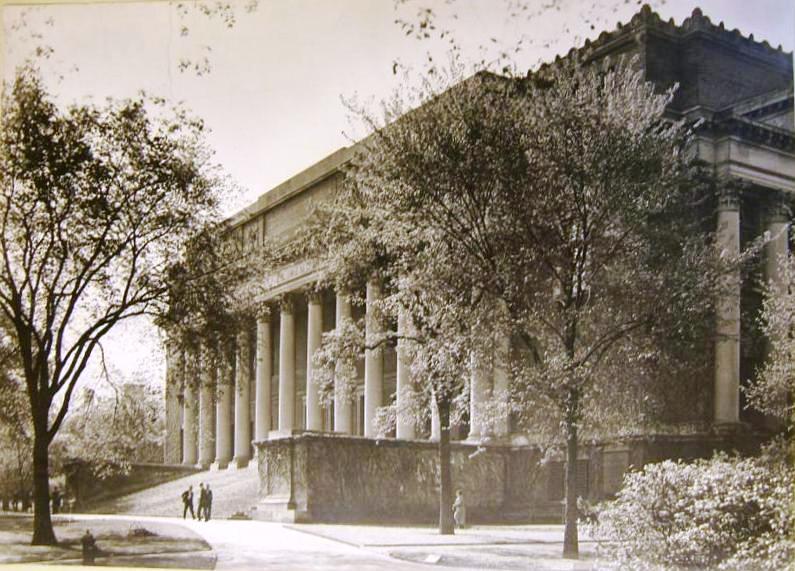
Widener Library http://mrmhadams.typepad.com/blog/2012/03/a-night-to-remember-titanics-monument-to-
Harvard consistently ranks among the top universities globally, recognized for its rigorous academic programs and distinguished faculty.

Houghton Library
Moreover, alumni include U.S. presidents, Nobel laureates, and leaders across various fields, underscoring its significant impact on both national and international stages.
Academic Excellence

Eliot House
Harvard Professor Alan Dershowitz Sits Down With Rebellion Research
The university offers a comprehensive range of programs across disciplines such as law, business, medicine, humanities, and sciences. Notably, its Department of History frequently cited as one of the premier institutions for the study of history.
Campus Culture and Political Climate

Arthur M. Sackler Museum
Harvard’s campus culture has become described as predominantly liberal.
Furthermore, a survey indicated that 82% of faculty identify as liberal or very liberal, while only 1% identify as conservative.
This ideological leaning has sparked discussions about the university’s commitment to free speech and diversity of thought!
In 2024, Harvard received an “Abysmal” rating for its speech climate, with students reporting discomfort in expressing controversial political views.
Recent Challenges

Fogg Museum
In 2023, Harvard faced criticism over its handling of campus protests related to the Israel-Hamas conflict. Thus, the administration’s response led to a significant drop in donations. As a result, contributions decreased by nearly 15% compared to the previous year.
These events have prompted internal discussions about the university’s communication strategies and its role in fostering inclusive dialogue.
Advantages of Attending Harvard

Semitic Museum
- Academic Resources: Access to extensive libraries, research centers, and funding opportunities.
- Networking Opportunities: Additionally, a vast and influential alumni network that can open doors in various industries.
- Prestige: A Harvard degree moreover, globally recognized. In addition enhances career prospects.
Potential Drawbacks
- Competitive Environment: The rigorous academic atmosphere can be challenging for some students.
- Cost: Despite substantial financial aid offerings, the cost of attendance remains high.
- Political Climate: The predominantly liberal environment may feel unwelcoming to those with differing viewpoints.
Data Table for Prospective Students
| Category | Data |
|---|---|
| Founded | 1636 |
| Location | Cambridge, Massachusetts |
| Total Enrollment | Approximately 25,000 students |
| Undergraduate Tuition | $57,246 per year (2024-2025) |
| Acceptance Rate | Approximately 3.4% |
| Student-Faculty Ratio | 7:1 |
| Notable Alumni | 8 U.S. presidents, 161 Nobel laureates, numerous industry leaders |
| Campus Size | 5,076 acres |
| Endowment | $53.2 billion (as of 2024) |
In conclusion, Harvard University offers unparalleled academic opportunities and resources. However, prospective students should carefully consider factors such as campus culture, financial commitments. And lastly, the competitive environment to determine if it aligns with their personal and academic goals.
Colleges Ranking Index by Rebellion Research
is Stanford or Berkeley Better?
wsj.com thefire.org .edu en the Har ata Is ha Wh st WH ls on ty l?
Wh ge Wh ty Ha y us Wh re Wh e? ll C? ws ca HE


