

What is scalable deep learning?
Artificial Intelligence & Machine Learning
Waterloo’s Orchid Model Pioneers Efficient, Scalable Deep Learning
May 5, 2024 – Researchers from the University of Waterloo have unveiled a groundbreaking deep learning architecture, Orchid, which significantly enhances the efficiency and scalability of sequence modeling.
This new model is poised to revolutionize tasks across fields such as language processing, genomics, and image analysis by addressing key challenges associated with traditional attention mechanisms.
Orchid’s innovative approach revolves around a unique data-dependent convolution mechanism, specifically designed to tackle the quadratic complexity that plagues existing models. This complexity often limits the processing of long data sequences, which are crucial for understanding context and dependencies in various applications.
The introduction of a data-dependent convolution layer in Orchid allows for dynamic adjustment of its kernel based on the input data, enabled by a conditioning neural network.
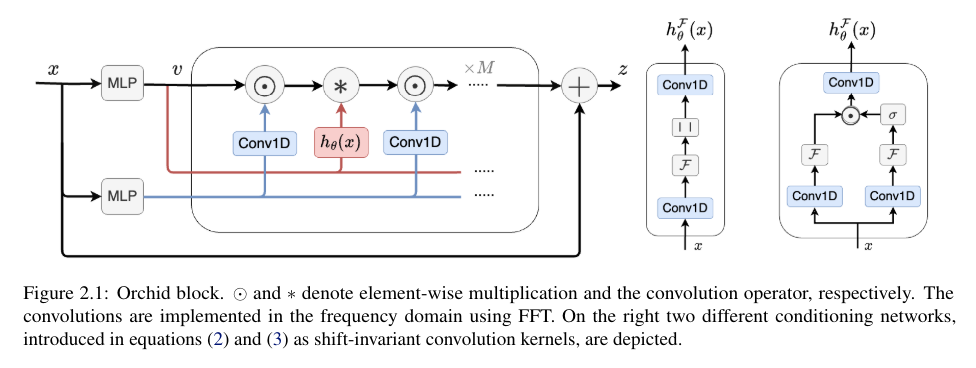
This network becomes carefully crafted to maintain shift equivariance. Thus, ensuring that the convolution operation adapts while preserving the integrity of the data’s structure. This adaptive mechanism not only increases the expressivity of the model but also ensures efficiency and scalability for handling long sequences.
Through rigorous evaluations, the Orchid model has demonstrated superior performance in a variety of domains, including language modeling and image classification. Notably, it outshines traditional attention-based architectures like BERT and Vision Transformers by operating with smaller model sizes and extending feasible sequence lengths beyond the capabilities of dense attention layers. These achievements highlight Orchid’s capacity to perform effectively while managing more complex and larger datasets.
This remarkable advancement in sequence modeling underscores the potential of Orchid to serve as a benchmark for future deep learning models, paving the way for more robust, efficient, and scalable applications in artificial intelligence.
In conclusion, the unveiling of Orchid marks a significant milestone in the development of deep learning technologies. Moreover, promising to enhance the capabilities of AI systems in handling extensive and intricate data sets without the computational drawbacks of previous models.
[2402.18508] Orchid: Flexible and Data-Dependent Convolution for Sequence Modeling (arxiv.org)


