

What is Going on in the Uranium Market?
Uranium’s Value on the Rise

A billet of highly enriched uranium that was recovered from scrap processed at the Y-12 National Security Complex Plant. Original and unrotated.
Nuclear Energy’s Resurgence
In a recent global outlook report, Bank of America’s Dr. Jared Woodard, Head of the Research Investment Committee, and a notable mind in the materials world, spotlighted the burgeoning resurgence of nuclear energy!

Dr. Jared Woodard, Phd in Material Composition and Theory Choice.
Moreover, touted as the “third bull market” for uranium, this revival becomes fueled by a growing consensus on nuclear power’s critical role in securing a sustainable future. The report outlines several factors contributing to this upward trend.
Decarbonization Efforts Boosting Nuclear Demand

Simple diagram of nuclear fission. In the first frame, a neutron is about to become captured by the nucleus of a U-235 atom. In the second frame, the neutron has become absorbed and briefly turned the nucleus into a highly excited U-236 atom. Furthermore, in the third frame, the U-236 atom has fissioned. As a result, two fission fragments (Ba-141 and Kr-92) and three neutrons, all with very large amounts of kinetic energy.
Governments worldwide are increasingly recognizing nuclear energy’s potential to meet aggressive decarbonization targets. With Europe facing a significant emissions reduction shortfall, influential bodies like the International Energy Agency (IEA) and the United Nations now project a substantial increase in nuclear power generation, potentially doubling output by 2050. This shift reflects an urgent need to diversify energy sources while maintaining low-carbon output.
Public Opinion Swings in Favor of Nuclear Energy

Uranium spectrum; 400 nm – 700 nm
Recent opinion polls underscore a dramatic shift in public sentiment toward nuclear power. In the United States, support has reached new heights, with 77% of Americans approving of nuclear energy and a solid majority advocating for the expansion of nuclear facilities. Similar trends are emerging in Japan, with a growing inclination to reactivate idle reactors. Even in traditionally anti-nuclear Germany, public resistance to the shutdown of nuclear plants is dwindling.
Policy Shifts Propel Nuclear Energy Forward
Two significant policy events could further catalyze the nuclear energy sector. First, potential sanctions by the G7 on Russian nuclear production may disrupt the current landscape. As a result, prompting a reevaluation of nuclear fuel sources. Second, the expected affirmation of nuclear power’s indispensability for global decarbonization could redefine energy strategies. These policy developments could tighten supply chains and elevate uranium’s strategic importance.
Mining Sector Poised for Gains
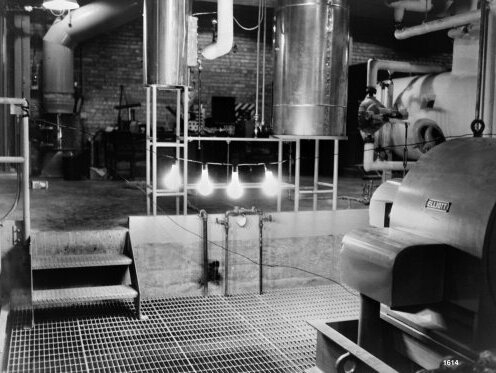
More details. The first production of usable nuclear electricity by Argonne National Laboratory in Idaho occurred in December 20, 1951, when four light bulbs were lit with electricity generated from the EBR-1 reactor. Unknown author – http://www.ne.anl.gov/About/hn/news961220.shtml Argonne National Laboratory
The prospect of strained supply conditions coupled with favorable market pricing positions uranium miners for potential windfalls. Companies like Cameco and Kazatomprom stand at the forefront, ready to capitalize on the increasing demand for uranium.
A Renaissance in Nuclear Investments
As the world grapples with the challenges of climate change and the need for reliable, low-carbon energy, nuclear power is poised to play a pivotal role. With a convergence of policy support, public endorsement, and market dynamics, the stage is set for a renaissance in nuclear energy investments. Uranium’s value, both as a commodity and a linchpin of clean energy, appears set for an upward trajectory, heralding a new chapter in the annals of sustainable energy and investment opportunities.


