

What happened on Volmageddon?
Volmageddon: The 2018 Quant Hedge Fund Crisis
“Volmageddon” refers to a significant market event on February 5, 2018, when volatility in the U.S. stock market spiked dramatically, leading to severe losses for various hedge funds, particularly those employing quantitative strategies. The event is named after the massive surge in the Cboe Volatility Index (VIX), often called the “fear gauge,” which measures market expectations of near-term volatility conveyed by S&P 500 stock index option prices. This spike caused substantial losses for products and strategies betting on low volatility, revealing vulnerabilities in certain market practices and highlighting the risks associated with complex financial instruments.
Lead-Up to Volmageddon
In the years leading up to Volmageddon, the stock market experienced relatively low volatility. Several factors contributed to this environment:
- Extended Bull Market: The U.S. stock market enjoyed a prolonged bull run post the 2008 financial crisis, driven by steady economic growth, low interest rates, and strong corporate earnings.
- Quantitative Easing: Central banks, notably the Federal Reserve, engaged in large-scale asset purchases to stimulate the economy. This injected liquidity into the market, keeping interest rates low and reducing volatility.
- Popularity of Volatility Selling: Hedge funds and other investors increasingly engaged in strategies that involved selling volatility. These strategies profited from the persistently low volatility environment by selling VIX futures or options, betting that volatility would remain subdued.
- Proliferation of Inverse Volatility Products: Financial products like the VelocityShares Daily Inverse VIX Short-Term ETN (XIV) and the ProShares Short VIX Short-Term Futures ETF (SVXY) allowed retail and institutional investors to bet against volatility. These products gained popularity due to their impressive returns during periods of low market turbulence.
The Event
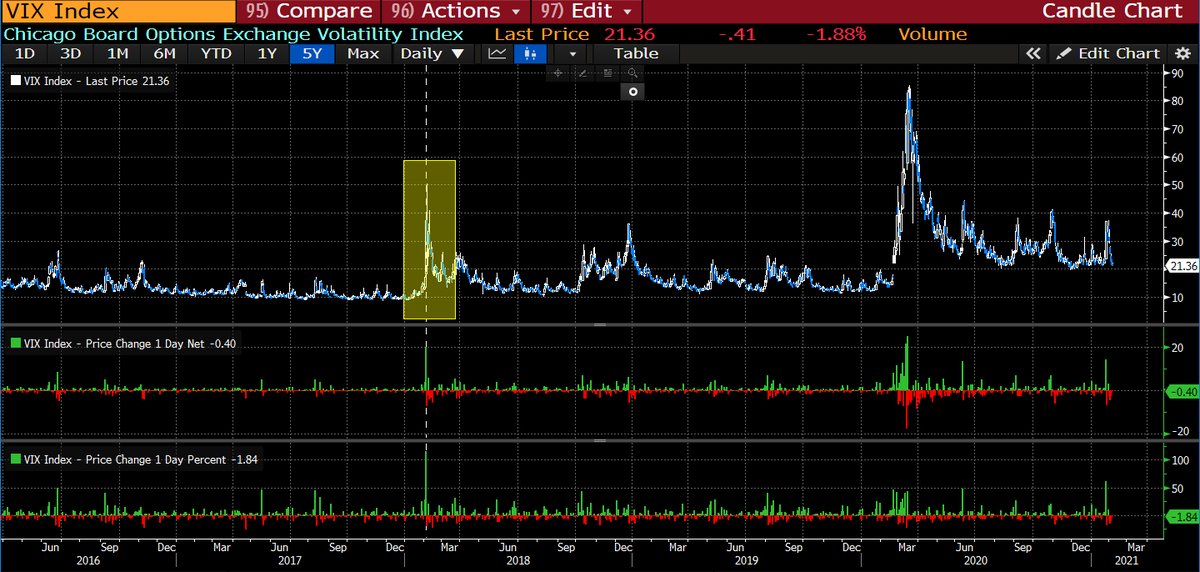
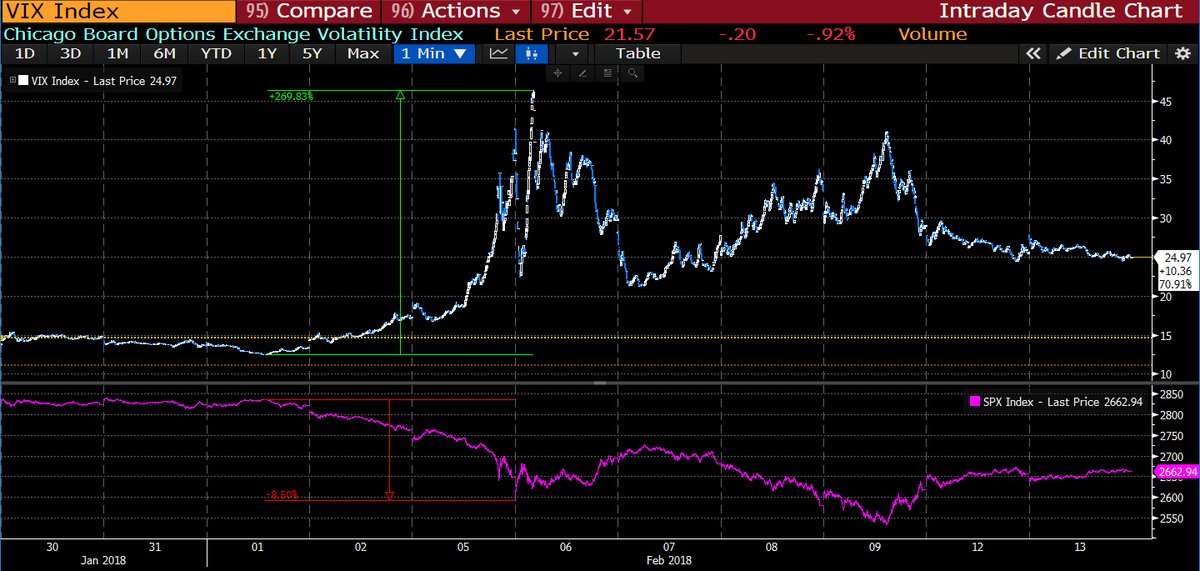
On February 2, 2018, the Dow Jones Industrial Average fell by more than 650 points, a 2.5% drop!
Followed by an even steeper decline on February 5, 2018, when it plunged by nearly 1,200 points, marking the largest point drop in history at the time.
This selloff was partly triggered by inflation fears and rising bond yields. Leading to concerns about tighter monetary policy.
As the stock market plunged, the VIX spiked dramatically, surging from 17.31 to 37.32 in one day – an increase of over 115%.
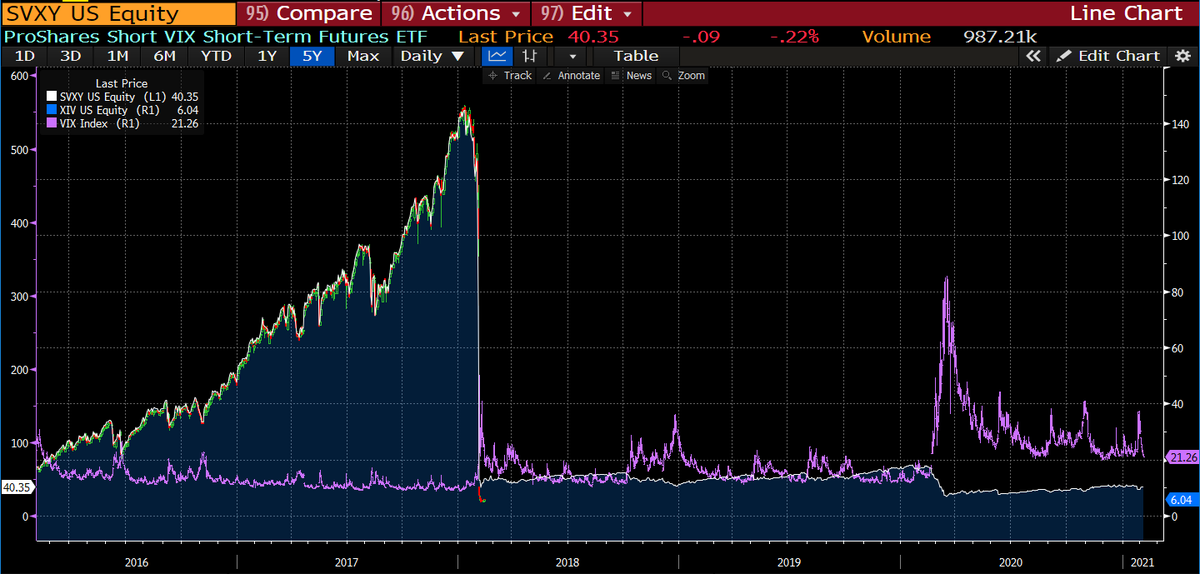
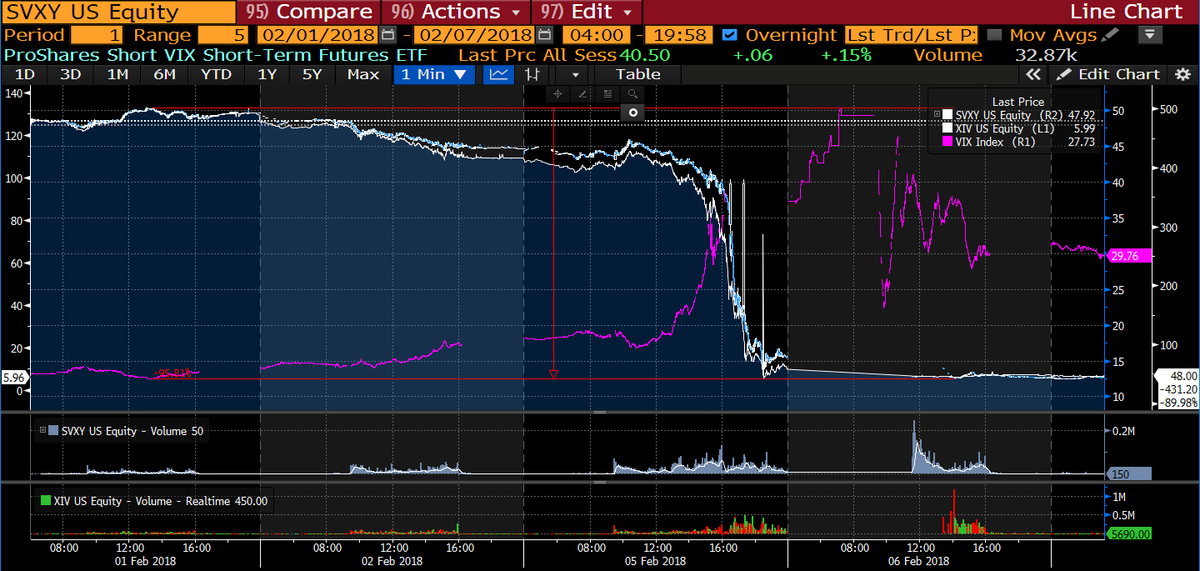
This surge was catastrophic for inverse volatility products and strategies that were short volatility. The XIV, for example, lost over 90% of its value in after-hours trading, leading its issuer, Credit Suisse, to announce the termination of the product.
Why and How It Happened
Several key factors contributed to Volmageddon:
- Market Correction and Inflation Fears: Investors were concerned about rising inflation and bond yields, which suggested that the Federal Reserve might increase interest rates more aggressively. This led to a selloff in equities.
- Feedback Loop: The sharp decline in stock prices caused a spike in the VIX. This, in turn, forced traders who were short volatility to cover their positions, buying back VIX futures and options to limit their losses. This buying activity pushed the VIX even higher, creating a feedback loop.
- Inverse Volatility Products: Inverse volatility products, such as XIV, were particularly vulnerable. These products were designed to provide the inverse daily performance of the VIX futures index. As the VIX spiked, these products had to buy large amounts of VIX futures to rebalance their positions, further exacerbating the volatility surge.
- Structural Vulnerabilities: The strategies and products that bet against volatility were inherently fragile. When volatility spiked, the need for rapid rebalancing created a surge in demand for VIX futures, driving prices up in a self-reinforcing spiral.
Ramifications?
Volmageddon had several significant ramifications:
- Investor Losses: Many investors, particularly those holding inverse volatility products, suffered substantial losses. Retail investors who did not fully understand the risks of these products were hit hard.
- Product Terminations: Following the event, Credit Suisse announced the termination of XIV, one of the most popular inverse volatility ETNs. Other similar products also faced scrutiny and saw reduced interest.
- Regulatory Scrutiny: The event drew attention from regulators concerned about the risks posed by complex financial products and the potential for market disruptions. Highlighted the need for better investor education and risk disclosures.
- Shift in Investment Strategies: Hedge funds and other market participants reevaluated their strategies, particularly those involving short volatility. The event underscored the risks of these strategies and led to a more cautious approach.
- Market Volatility Awareness: Volmageddon served as a stark reminder of the potential for rapid and severe market movements. Thus, prompted investors to pay closer attention to volatility as a market risk factor.
In conclusion, Volmageddon was a hugely significant market event.
However, more importantly one that exposed the risks and vulnerabilities associated with certain financial products and strategies.
Moreover, it underscored the importance of understanding the risks of volatility-related investments and the potential for rapid market changes. Lastly, the aftermath of the event led to greater regulatory scrutiny. Furthermore, a reevaluation of investment practices, ultimately contributing to a more cautious approach to volatility trading.


