

What are the applications of nanoclusters? Showcasing Precision Nanocluster Formation with Molecular Traps
Chiba, Japan – In a groundbreaking study, researchers from Chiba University have achieved a significant breakthrough in nanotechnology by demonstrating the growth of cobalt nanoclusters (NCs) on two-dimensional copper surfaces using an innovative array of ring-shaped crown ether molecules.
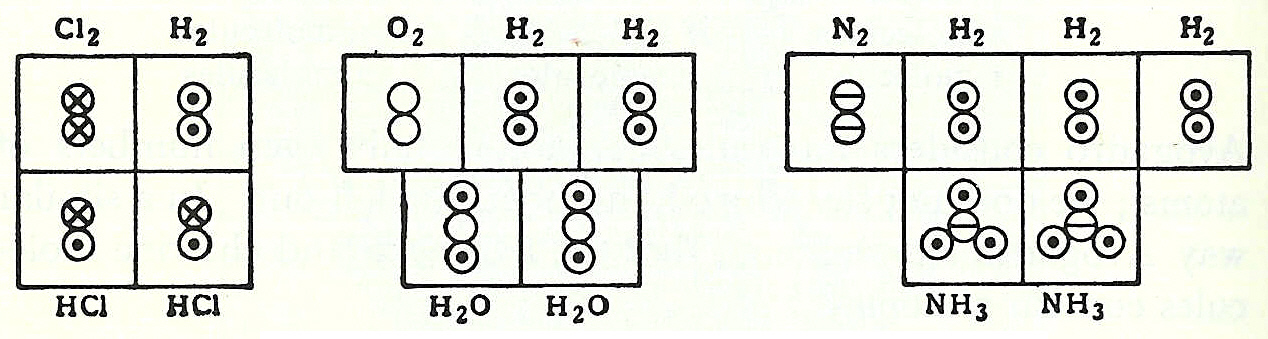
Marc Antoine Auguste Gaudin’s volume diagrams of molecules in the gas phase (1833)
Nanoclusters, especially those composed of transition metals like cobalt and nickel, hold immense potential in fields ranging from drug delivery to water purification. The smaller the clusters, the more enhanced their functionalities become. However, achieving this downsizing has been a complex challenge. The team at Chiba University, however, has made strides in creating functional NCs with unprecedented atomic-scale precision, opening doors to new possibilities in single-atom catalysis and the miniaturization of spintronics.
The study, recently featured in the Journal of Materials Chemistry C, showcases the surface growth of cobalt atoms on molecular ring arrays at room temperature. Dr. Toyo Kazu Yamada, leading the research from the Graduate School of Engineering at Chiba University, emphasized the potential applications of this method in developing highly efficient catalysts and advancing quantum computing.
Crown ethers, ring-shaped molecular structures containing benzene and bromine rings, were utilized by the researchers as traps for growing cobalt NCs on flat copper surfaces. This technique led to the formation of NCs of varying sizes, which were then studied using advanced techniques like scanning tunneling microscopy and spectroscopy, photoelectron spectroscopy, and density functional theory calculations.

A schematic presentation of hybrid orbitals overlapping hydrogens’ s orbitals
The research revealed unique aspects of the interaction between cobalt atoms and crown ethers. Contrary to their usual behavior in solution, these molecules trapped the metal atoms at their edges, influenced by the presence of bromine atoms. This facilitated the formation of stable surface sites for cobalt attachment, acting as nucleation centers for NC growth.
The implications of this study are vast. As Dr. Yamada notes, the approach has the potential to revolutionize areas such as single-atom catalysis and quantum computing, contributing to a more information-driven and environmentally conscious society.
Moreover, the successful demonstration of cobalt NC growth using two-dimensional crown ether molecules on copper surfaces marks a significant advancement in nanotechnology. This method not only deviates from typical molecular interactions but also ensures effective and scalable production of NCs at room temperature.
Lastly, the research was supported by various foundations and grants, including the JSPS KAKENHI, the Murata Science Foundation, and the Toshiaki Ogasawara Memorial Foundation.
Journal: Journal of Materials Chemistry C


