

USS Houston & HMAS Perth : Courage Under Fire

USS Houston & HMAS Perth : Courage Under Fire. This article is dedicated to the hundreds of Sailors of the U.S. Asiatic Fleet, who gave the last full measure of devotion, fighting until the end, even when they knew the odds were hopeless. They were an inspiration to the rest of the Navy during WWII, but have been largely forgotten since.
According to one witness, when the heavy cruiser, USS Houston (CA-30) pulled into Tanjung Priok (port for Batavia (now Jakarta)) Dutch East Indies on 28 Feb 1942, having barely survived the hours-long gunnery duel of the disastrous Battle of the Java Sea the day and night before, the ship’s cat deserted.*
The story is possibly apocryphal, although what is more certain is that the Australian light cruiser, HMAS Perth’s black cat (named Red Lead) attempted to desert in the same way in the same port at the same time.
Along with the cat, went Houston’s luck.

Having survived over 80 days as the largest Allied warship in the Far East, with no air cover and under multiple bombing attacks.
Furthermore, the constant threat from the same kind of Japanese aircraft that had made short work of the British battleship HMS Prince of Wales and battlecruiser HMS Repulse on 10 Dec 41, seriously damaged in one air attack.

In addition, having survived a major surface action, the Houston, in company with Perth, would go into battle that night near the Sunda Strait against overwhelming odds from which neither ship, nor most of their crews would survive.
Within the next couple days, other remaining ships of the U.S. Asiatic Fleet would meet the same fate. In a number of cases, alone, against insurmountable odds, with no survivors.


The skipper of the Houston, Captain Albert C. Rooks, was a hero of mine, long before I joined the U.S. Navy, when I first started reading naval history. A brilliant officer, strategic thinker, and exceptional shiphandler, Rooks was destined for high flag rank, greatly respected by superiors, and most tellingly, revered by his crew for his no-nonsense leadership, and most importantly, his handling of the ship in combat.

In an intense air-raid in the Flores Sea on 4 Feb 1942, Rooks skillfully dodged dozens of accurately aimed bombs from over 50 aircraft.
All but the last bomb from the last plane that came off at an errant angle and through sheer luck destroyed Houston’s after 8″ turret, killing 48 men and reducing her combat power by one third.
Given the option to withdraw his ship from the region for repairs, Rooks declined, because even damaged, Houston was the most capable ship the Allies had.
In a second major air attack, with a new load of 5″ anti-aircraft shells to replace the 75% dud rate of her original load, Houston brilliantly defended a troop ship convoy, downing multiple Japanese aircraft with no loss to the convoy.

On the night of 28 February-1 March 1942, while executing pre-planned orders to withdraw from the Java Sea, the Houston and the Perth attempted to exit through the Sunda Strait.

With Perth in the lead, her skipper, the legendary Captain Hec Waller, was senior.


The two unescorted cruisers encountered a Japanese blocking force, and in the initial exchange of gunfire discovered that they were unexpectedly in the midst of the main Japanese invasion force for Java.

Although already critically low on ammunition, low on fuel, previously damaged, and with exhausted crews. Both cruiser skippers chose to turn and attack towards the dozens of Japanese troop transports along the shore. Which was the reason both ships had gone back into the Java Sea a week earlier.
Although the chance of escape was slim, Captain Rooks placed duty over survival. Moreover, decided to sacrifice his ship dearly in an attempt to thwart the landing.

In the hours-long night close-quarters melee that followed. Both ships were surrounded on all sides by two Japanese heavy cruisers and numerous destroyers and smaller patrol craft, which fired 87 torpedoes at Houston and Perth.
The Allied cruisers avoided numerous torpedoes, several of which hit and sank Japanese troop transports, including the one with the Japanese commander of the invasion force embarked (LTG Imamura), who survived his swim ashore.
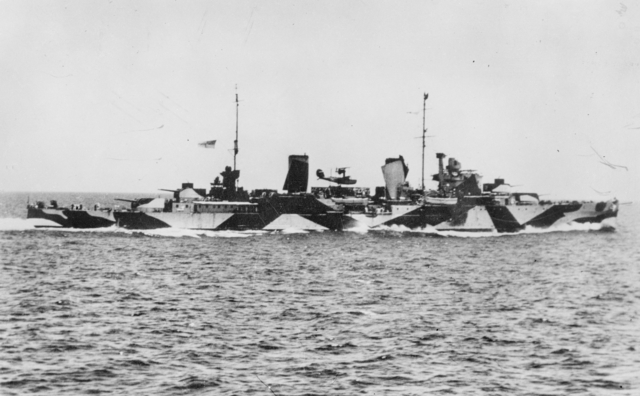
Both Allied cruisers were eventually hit by multiple torpedoes and countless shells. Yet they still damaged numerous Japanese ships, fighting until they were out of ammunition.
Perth went down first. And Houston fought on alone for over 30 minutes, as Japanese ships closed to within machine gun range.
Both Waller and Rooks were killed by enemy shellfire after finally giving the order to abandon ship.
A Marine in Houston’s forward anti-aircraft platform fired his .50 cal machine gun at the enemy until the ship slipped beneath the surface, her national ensign still flying high.

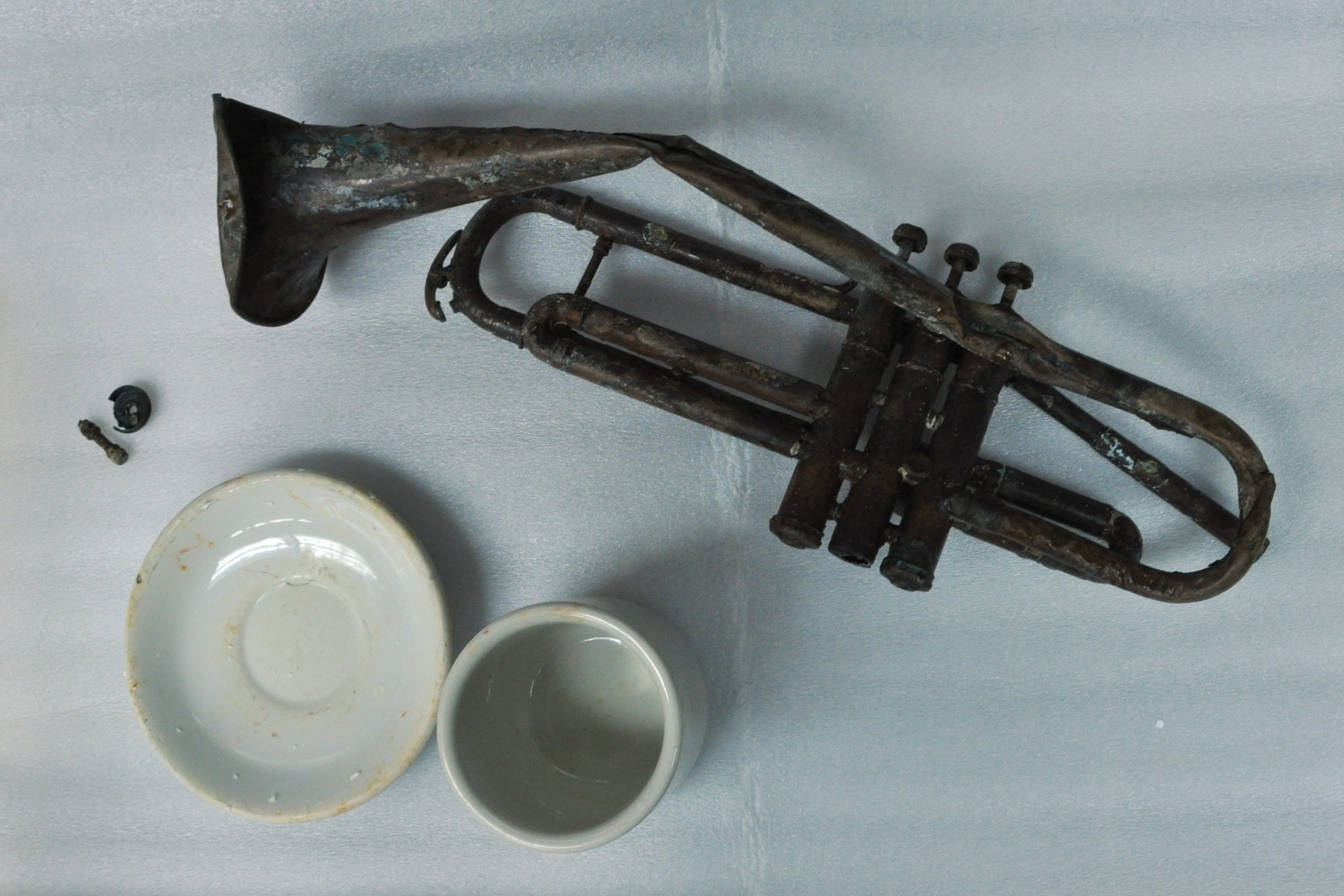
Of Houston’s crew of 1,168 men, only 368 survived the battle. And until only 291 survivors emerged from Japanese captivity at the end of the war. No one in the U.S. really knew what happened in the Sunda Strait.

Captain Rooks was awarded a Medal of Honor while in missing-in-action status during the war. For his actions in the Battles of the Flores Sea and the Java Sea; the period of action did not cover the Battle of Sunda Strait. Houston was awarded a Presidential Unit Citation after the war.
USS Houston & HMAS Perth : Courage Under Fire Written by USN Admiral Sam Cox


