

UN Mission Set to Enter Artsakh Amidst Reports of Mass Displacement and Skepticism

Territory controlled by Artsakh up to 19 Sept 2023 shown in dark green; territory claimed but not controlled shown in light green; Lachin corridor shown in white.
Amidst alarming reports of the forceful displacement of over 100,000 Armenians from their ancestral lands in Artsakh, the United Nations has declared its intent to dispatch a mission to assess the situation. The announcement, however, has become met with deep skepticism and concerns about the underlying motivations and the potential effectiveness of such a mission under the prevailing circumstances.

Stephane Dujarric, Spokesperson for the UN Secretary-General, emphasized the mission’s importance, stating:
“We haven’t had access there in about 30 years. It’s vital that we gain entry now. The objective is to assess the on-ground reality and ascertain the humanitarian needs of those who remain and those displaced.”
Yet, many wonder about the true purpose of this expedition, given the current state of Artsakh.

Flag of Artsakh
As vast segments of the Artsakh population have already been forcefully displaced, questions arise about the genuine aims of this UN initiative. Observers are asking if the mission will merely document empty homes and vacant markets. The glaring issue of ethnic cleansing in the region has been apparent, and concerns about the prolonged inaction of international bodies like the UN are becoming increasingly vocal. Despite the distressing reports emerging for nine months about Armenians facing dire circumstances in Artsakh, the UN’s response has been notably absent.

Mountain view in Martakert region.
It’s noteworthy to mention that the UN’s entry into Artsakh is contingent upon the approval of the Aliyev regime. There are growing apprehensions that the Aliyev administration will stage-manage the mission’s visit, showcasing a facade of order and stability, while obscuring the grim reality of the ground situation. Such orchestrated displays could raise inevitable questions about the whereabouts of the local Armenian population. Answers might be conveniently evasive, attributing the absence to voluntary migrations.
Adding to the complexity of the situation are the geopolitical nuances involving nations like Russia and Azerbaijan. Pointed questions raised about Russia’s role and its treaty obligations towards Armenia. While internal Armenian political dynamics also play a role in the unfolding crisis, external powers like Russia and Turkey cannot become ignored.

The so called “Peace Operations” conducted by the UN in the Post Cold-War period (1990–99.)
However, amidst this intricate geopolitical web, a more cynical perspective is emerging. Moreover, some argue that this UN mission might be a mere tokenistic gesture, an attempt to placate international sentiments without genuine intent to intervene or make a substantial difference. The motivations of international players are being questioned, with critics suggesting that oil and gas interests, strategic positioning against Iran, and intricate geopolitical games with Russia might be overshadowing the genuine humanitarian crisis in Artsakh.
In the face of these mounting challenges and complexities, the resilience and contributions of the Armenian community to global civilization, evident in fields ranging from science to arts, stand as a stark reminder.
In conclusion, the ongoing crisis in Artsakh poses not just a test for Armenia but for the collective conscience of the international community. The world watches, hoping that humanity will prevail over political expediency.
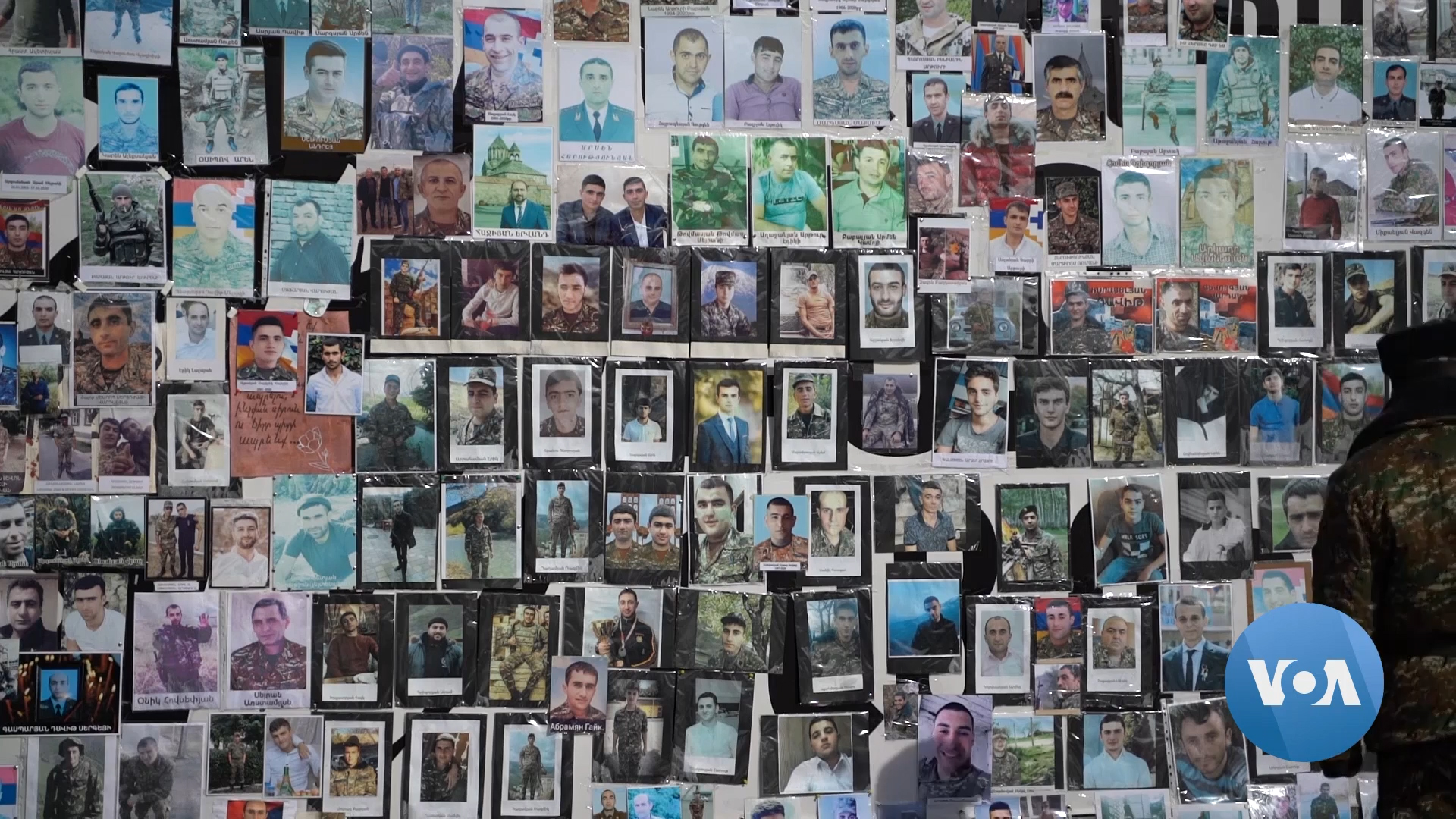
Lastly, wall with images of fallen Armenian soldiers during the Second Nagorno-Karabakh War, VoA – https://www.voanews.com/episode/after-big-election-victory-armenias-leader-calls-reconciliation-4726401.


