

SEO Fails: 15 Ways Businesses Aren’t Taking Google Seriously

SEO or Search Engine Optimization should be a big deal for you if you’ve got a website.
That’s because it helps bring visitors to your online home from search engines, and with Google being the most popular of them all, good SEO practices ensure your site is Google-friendly.
The trouble is that many businesses aren’t taking SEO seriously and often complain that they aren’t getting many visitors. Plus, the people that do visit their site are mostly going to buy elsewhere.
That’s not good if you’re trying to sell products or services on the Web, but how big of a problem is this for small, medium, and large enterprises?
Recently, CNET has purged a lot of “old” content from its site to “game” Google’s search algorithms. But if it took Google more seriously, it would have realized there’s no need to resort to such unorthodox SEO tactics.
Take a look at the following 15 ways businesses of all sizes aren’t taking Google seriously and are, unsurprisingly, not getting the online growth they’ve expected:
#1: Not Understanding The Importance Of Google
There’s no escaping from the fact that Google is the world’s most popular search engine. The latest statistics suggest that the “Big G” has a 92% market share, with competitors Bing and Yahoo trailing far behind.
It’s also the default search engine on Android devices, and with Android smartphones and tablets having a 71% market share of the global mobile operating system market, it’s worth taking Google more seriously.
Whether you like using the Google search engine or not, the hard truth is that most of your target audience will be using it – so it makes sense to have a Google-friendly website.
#2: Failing To Have An SEO Strategy
The ugly truth about SEO is that business leaders often need a strategy for it. Some assume that Google will magically find and promote their websites, bringing them many visitors (and customers) in the process.
In reality, a website’s visibility in Google will only happen through the combination of an SEO plan backed up by good old-fashioned elbow grease (i.e., hard work).
According to SEMRush’s recent State of Content Marketing: 2023 Global Report, a whopping 54% of respondents don’t conduct any SEO at all. That is why you need Top SEO Experts in Omaha on your side.
#3: No Backlinks
An essential part of any strategy to make a website Google-friendly (and SEO-friendly) is to have relevant, quality backlinks. One surprising fact about backlinks is how business leaders in specific niches feel it’s pointless or inappropriate to invest time in link building.
Some law firms may decide that backlinks are a waste of time, given how they receive much of their work on a referral basis. According to FATJOE, SEO for the law industry will need link building strategies in place to help boost their client and case numbers.
#4: Forgetting About Mobile Users
Gone are the days when people solely used mobile phones for calls and SMS. Today’s smartphones are like pocket computers; people use them for emailing, going online, playing games, and work-based productivity.
If you think that mobile devices aren’t crucial for firms wishing to take Google seriously, check out the following current statistics and trends:
- 63% of Google searches get conducted on mobile devices;
- 79% of consumers are more likely to revisit sites if they’re mobile-friendly;
- More people search Google on a smartphone or tablet than a desktop or laptop computer.
#5: Not Accepting The Future Of Google Is AI
The future of search is evolving, and it’s something that’s at the forefront of Google’s search engine experience. While it’s true that its competitor Microsoft recently released Bing AI search, Google is busy building and refining its generative AI solution to rival it.
Soon it will be commonplace for Google to answer search queries with relevant answers backed by facts and statistics instead of simply returning a list of relevant URLs.
Businesses must create meaningful content that Google (and other search engines) can use to form generative AI results for queries.
#6: Content That Isn’t Written For Humans
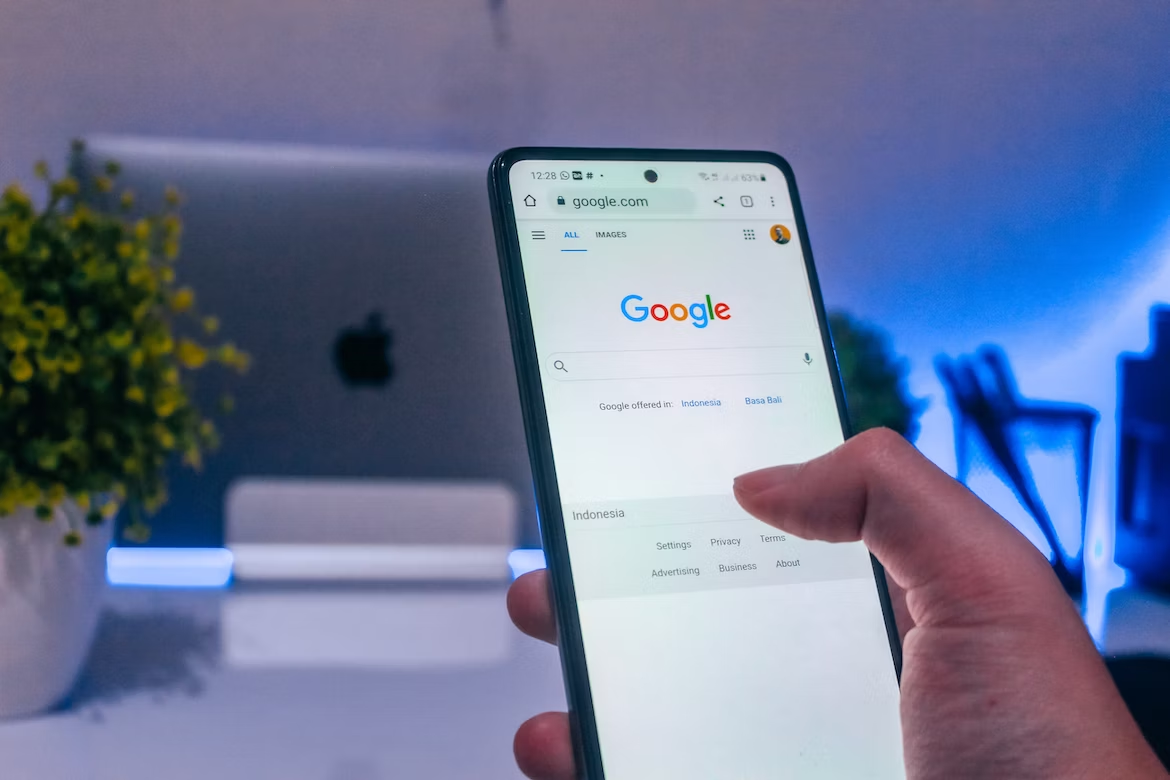
Despite what some business leaders might say, Google is only interested in providing quality, relevant content to its search engine users. After all: no one wants to visit a web page filled with spammy keywords and phrases that aren’t conversational when read aloud!
Businesses that want to get taken seriously by Google must ensure their content is:
- Free of plagiarism – that means no copying and pasting of text from other sites;
- Readable by humans – when read aloud, the content should make sense and not sound robotic;
- Relevant to the page title and description – a page on gardening tools shouldn’t talk about engine upgrades for cars as it’s irrelevant to the page topic.
#7: Google & Word Of Mouth Recommendations
There’s no denying that word-of-mouth referrals to a website can have more weight than clicking a link from a Google search. People want to know that they’re visiting a site or page that’s relevant to their needs and trustworthy.
The thing is that word-of-mouth referrals can take many forms and not just be a literal recommendation from a friend over a cup of coffee. For example, independent review sites like TrustPilot can build consumer confidence.
Google is beneficial for digesting such reviews and displaying them to people searching for a specific brand, product, or service. That’s why firms shouldn’t dismiss Google’s important role in emphasizing user-generated recommendations.
#8: Failing To See What People Search For
Google’s own Analytics platform provides essential data for businesses wanting to learn more about each website visitor’s browsing habits, including where they’ve come from and why they’re visiting. It’s also free, so there’s no reason not to use it.
Unfortunately, around one-fifth of websites aren’t using any tracking system like Google Analytics, meaning the businesses operating them have no insight into their online visitors.
#9: Paying For Questionable SEO Services
There’s a right way and a wrong way of doing anything in life, and this also applies to SEO. Some businesses get fooled by people offering “black hat” SEO services – strategies to improve a site’s standing in Google by resorting to unethical methods.
Google and most other search engines are wise to such strategies and won’t hesitate to penalize websites for using them. Such penalties typically involve lowering a page’s standing for given search terms and removing the entire site from their indices.
#10: No Basic Understanding Of SEO And Google
According to Small Business Trends, a staggering 45% of online business leaders don’t understand SEO or Google.
Business leaders don’t need guru-like knowledge of SEO and how Google operates. However, basic education on the subject will stand them in good stead, especially when delegating SEO tasks to employees or external service providers.
#11: Inconsistent NAP Information
NAP stands for Name, Address, and Phone Number. Those are the three key details all business sites should have for information and regulatory purposes.
The trouble is that NAP details often need to be more consistent across the Internet, with websites showing different information than what gets displayed on social media or other sites. NAP information shouldn’t be contradictory across the Internet.
#12: Unoptimized Google Business Profile
A Google Business profile is an innovative way for businesses to promote local stores and outlets. It allows consumers to see their details on a map alongside other local firms offering similar products and services, and the profile is free for businesses to set up.
Such profiles give consumers contact details, social proof (reviews), and other useful information like opening times. At least 64% of Google users check out Google Business profiles, and they heavily influence their site (and physical store) visit decisions.
#13: Stale Content
While it’s true that most business websites have some static content (like “About Us” pages), they must keep their other content fresh. An article from MOZ suggests some examples of why new content is essential:
- Recent events and trending topics;
- Recurrent events, like financial data or NFL games; and
- The introduction of new products and services.
Businesses can quickly provide fresh content via news or blog sections that employees or external marketers can curate and publish.
#14: No Analytics Data
Some business leaders might not have any analytics tracking solutions on their websites, but others may not realize they aren’t receiving fresh visitor reports.
The cause of such problems is typically down to incorrect page tracking code, but it might be that some fresh new content hasn’t had the code added to its HTML. Analytics data is crucial to creating an effective Google SEO strategy.
#15: Unwilling To Learn About Google Algorithms
Lastly, no one knows precisely how many major and minor algorithm updates Google releases each year, but one thing’s for sure: the search engine giant will keep making algorithm adjustments.
There are some well-known ones that everyone should be aware of, such as the Helpful Content update of 2022, which promotes human-published content that offers a satisfying consumer experience for Google users.
It’s worth researching the topic to learn more about the ones that significantly impact how people find and access websites.


