

Why Is There A Chip Shortage? Semiconductor Industry & COVID-19

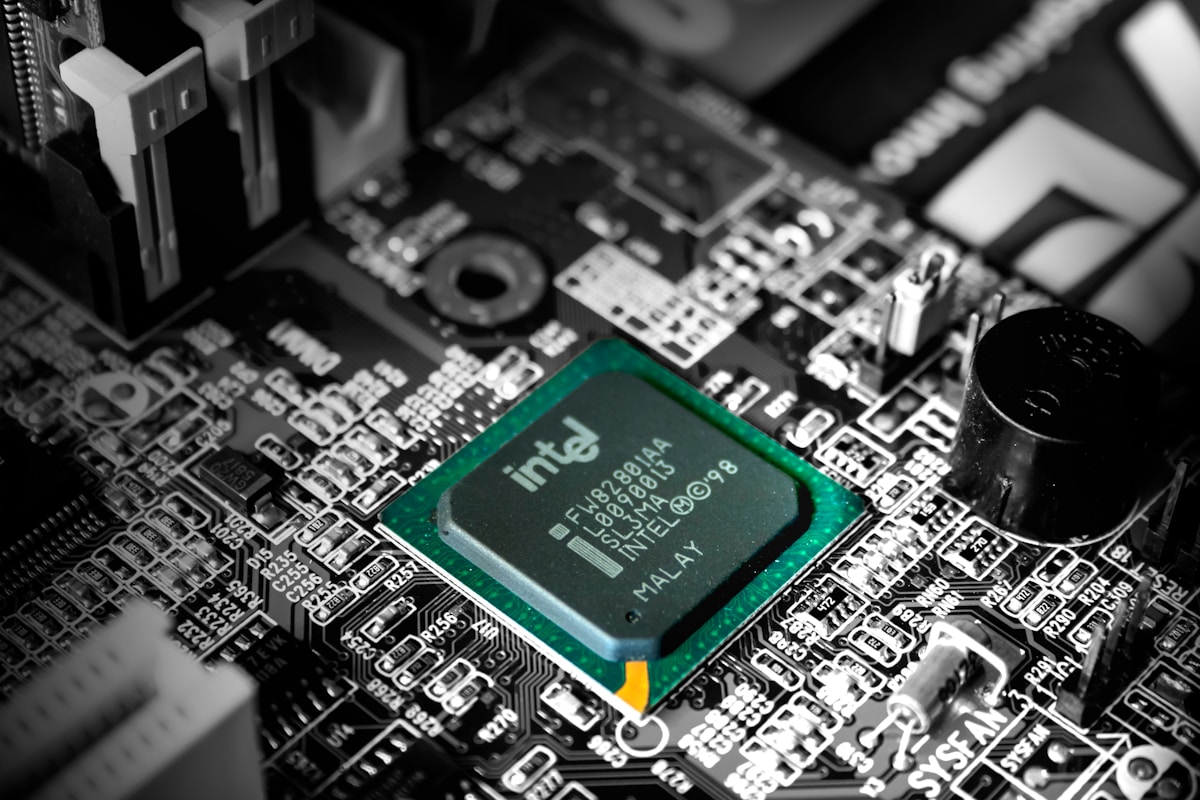
Why Is There A Chip Shortage? COVID-19 has disrupted the US semiconductor industry chain. As a result goods and products both big and small have become hard to acquire for the consumer and prices have risen dramatically. Semiconductors have a delicate global supply chain dependent on a few key players. In, addition they rely on a smooth flow of goods and materials around the world which has not occured.
Clogged Ports
The port of Los Angeles, the largest port in the United States, is under constant pressure from incoming containers. Many dockyard workers became infected with COVID-19. And there was a shortage of labor.
The port is always heavily congested, and cargo piled up, slowing the arrival of large ships.

Slow Factories
In addition, the production of factory goods was severely affected.
A semiconductor consists of several steps: design, manufacture, test, and package. When problems arise with critical suppliers in the industry, the closed-test process can’t guarantee the availability of the chips, so it’s hard to ship them.
Chips affect the entire industrial chain.

Semiconductor supplies in the United States have been hit hard through this crisis. And the COVID-19 pandemic has had a severe impact on trade. The ports of Los Angeles and Long Beach, California, two of the nation’s busiest, saw double-digit growth, setting records.
According to the California Trucking Association (CTA) and the Port Trucking Association of America (HTA), a large number of containers are stranded at Los Angeles and Long Beach. The two major shipping ports have been brought to a near standstill. This standstill has disrupted supply chains as imports surge. Moreover, our supply chains have a limited number of avenues for action. Most countries have a very limited number of ports for supplies.

In addition, there are about one-third fewer dockworkers on hand due to COVID-19 related problems. The workers fell out with the factory over labor. The dockworkers’ union announced a four-day halt to unloading at the port, which has prevented dozens of cargo ships from entering and unloading outside the port, which is believed to be the worst port congestion since 2004.
Suez Canal
Beyond the port of Los Angeles, the blockage of the Suez Canal strained global supply chains.

The Suez Canal accounts for 30% of the world’s daily shipping container traffic according to data from Veiga. The blockage of the Suez Canal has caused a massive loss of global trade. Many ships have been delayed and have incurred additional expenses because they cannot pass.
Some ships circumnavigated the Suez Canal which necessitated longer voyages and associated costs for weeks.

The high price of relying on the Suez Canal affects the flow of goods to European markets. Much of Europe’s furniture and household goods are stuck in the canal. When these problems cannot be solved, prices start to rise.

COVID-19 has made supply chain production and acceptance difficult to resolve.
Taiwan Semiconductor
An outbreak of infections at Taiwan Semiconductor, the largest company in southeast Asia by market cap, also hit global trade. Taiwan Semiconductor makes chips for big tech companies. Taiwan Semiconductor has gigantic customers. Their customers are household names such as Apple and Qualcomm. And could lead to a further global shortage of chips.
Taiwan Semiconductor manufactures more than half of the world’s most advanced chip production.

But hundreds of employees tested positive for the virus. And hundreds of workers needed to be quarantined. Then the company slashed their revenue forecast for the month by a third.
Apple has been hurt by the shutdown. Their entire production line has seen delays. How will they respond?
In addition to Taiwan Semiconductor, other semiconductor companies have also been reported to have large amounts of employees infected with COVID-19.

Taiwan’s Pain
Moreover, the rising number of infections in Taiwan has sent the island’s capitalist markets convulsing. As a result many analysts worry that the chip crisis afflicting the global electronics industry will worsen. Furthermore, Taiwan Semiconductor is responsible for the packaging and for testing part of the chip production. As a result the shutdown of that part of the production has made downstream systems challenging to perform, which has caused massive shortages at large auto companies from Tesla to Ford.
Besides Taiwan, many semiconductor companies in Malaysia are also at risk of bankruptcy.
Moreover, in early June, malls and most businesses in Malaysia began to close, and the country went into lockdown. As one of the world’s semiconductor export centers, dozens of semiconductor companies have invested here over the last few decades. Lastly, Malaysia’s covid blockade has also hit the chip industry hard, with tough exporting procedures in place.
Conclusoin
In conclusion, while the COVID-19 pandemic has sent demand soaring in the electronics industry, the loss of chips has hobbled the entire industry. As a result, both production and supply of chips are struggling to keep up with existing demand.
Why Is There A Chip Shortage? Semiconductor Industry & COVID-19 Written by Yunyi Liang
Why Is There A Chip Shortage? Works Cited
Veiga, Alex. “Suez Canal Blockage Adds to Pressure Points in Global Trade.” AP NEWS. 29 Mar. 2021, https://apnews.com/article/europe-global-trade-egypt-coronavirus-pandemic-sue z-canal-166bc8f21e9705f2921a67ef2dea176c Accessed 23 Aug. 2021.
Why Is There A Chip Shortage?
Why Is There A Chip Shortage?


