

What happens to old cruise ships?

SS France in its avatar of Blue Lady awaits the ship breakers at Alang , August, 2007
aks1189 – Own work
The process of scrapping a cruise ship can be complex and involve multiple parties. When a cruise line decides to retire a vessel, it may sell it to a third-party scrap yard, which will then dismantle and recycle the ship’s materials. Alternatively, the cruise line may choose to dismantle the vessel itself or sell it to another company.
The first step in scrapping a cruise ship is to remove all of its valuable components and materials. This includes everything from electronics and furnishings to the ship’s engines and propellers. These items are often sold separately, as they can be reused or repurposed.
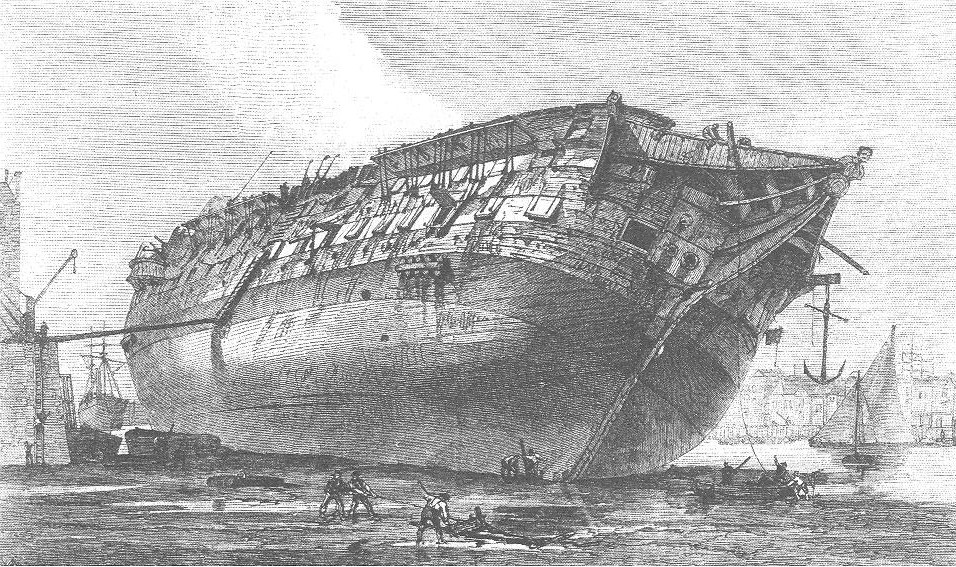
HMS Queen heeled over on the Thames foreshore off Rotherhithe, c. 1871
Frank Watkins (illustrator) – Illustrated London News
Next, the ship is taken to a dry dock or shipbreaking yard, where it is cut apart and dismantled. This process is done using heavy machinery, such as cranes, bulldozers, and plasma cutters. The ship is dismantled piece by piece, and the materials are sorted for recycling.
The process of scrapping a large cruise ship can take several months and require a significant amount of labor and resources.

Planet Labs, Inc. – https://www.planet.com/gallery/alang/ (direct link)
Alang, India March 23, 2017 When one of the world’s ships reaches the end of its useful life, it often ends up on one of three beaches in South Asia—Alang India, Gadani Pakistan, or Chittagong Bangladesh. The ships are grounded at high tide, then slowly disassembled with blowtorches and crowbars. Steel recovered from the ships’ hulls helps feed the construction industry in these developing economies. These four pictures from Planet’s satellites show Alang Beach on March 4, 15, 17, and 23, 2017. The images show old ships vanishing, new ships arriving, and the pace of deconstruction. They may help verify estimates of the amount of steel these activities provide to the local economy.
It can also become very expensive, as the ship must be transported to the scrapping yard and then dismantled.

Removing steel plates from a ship using cranes
Nayeem Noor – Own work
Removing steel plates from ship using cranes in Ship recycling yard in Alang
In some cases, a cruise line may choose to sell its ships to other companies rather than scrapping them. However, this can be difficult for very large ships, as they may be too big for other cruise lines to operate. In such cases, the ship may be sold for use as a hotel or casino, or it may be repurposed for another type of commercial or industrial use.
The decision to retire a cruise ship can be influenced by a variety of factors, including the age and condition of the vessel, changes in consumer preferences, and economic conditions. When a ship is no longer profitable or safe to operate, the cruise line must decide whether to scrap it, sell it, or repurpose it for another use.
Overall, the process of scrapping a cruise ship is a complex and multi-step process that involves the removal and recycling of valuable materials and the dismantling of the ship itself. While it can be expensive and time-consuming, it is an important part of the lifecycle of a cruise ship and ensures that its materials are reused and recycled in an environmentally responsible manner.

Agence Rol – Gallica
The majority of cruise ships are scrapped in South Asia, particularly in India, Bangladesh, and Pakistan. As a result of labor costs in these countries are relatively low, and there is a large demand for scrap metal.
However, the shipbreaking industry in these countries has been criticized for its poor working conditions, lax safety standards, and environmental hazards. Workers often work long hours in dangerous conditions, using manual tools and without proper safety equipment. The process of scrapping a cruise ship can involve hazardous materials such as asbestos, lead, and heavy metals.
Despite efforts to improve safety and environmental standards in the shipbreaking industry, many challenges remain. The International Labor Organization (ILO) has launched a program to promote safe and sustainable ship recycling in South Asia, which aims to improve working conditions, protect workers’ rights, and reduce environmental risks.
Overall, while the shipbreaking industry in South Asia provides a valuable source of employment and raw materials, it is important to ensure that workers are protected, and environmental standards are upheld. Efforts to improve safety and sustainability in the industry are ongoing, and it is important for cruise lines and other stakeholders to support these efforts to ensure that scrapping is done in a responsible and ethical manner.


Missile launch tubes removed from a ballistic missile submarine are eliminated with equipment and services provided by the Department of Defense’s Cooperative Threat Reduction program implemented by the Defense Threat Reduction Agency.
DTRA photo – https://www.flickr.com/photos/dod_dtra/4314558120/in/photostream/
What happens to old cruise ships?


