is Yale Need Blind?
Yes, Yale University is need-blind for both U.S. and international students. This means that Yale does not consider an applicant’s financial situation when making admissions decisions.
1. What Does Need-Blind Mean?
Your financial need does not affect your chances of admission.
Yale admits students based on academic merit, not financial background.
Applies to both U.S. and international students.
2. Does Yale Offer Full Financial Aid?
Yes! Yale meets 100% of demonstrated financial need for all admitted students.
Aid is grant-based (not loans), meaning students do not have to repay it.
Over 60% of Yale students receive some form of financial aid.
Families earning less than $75,000 per year typically pay $0 in tuition.
3. How Yale’s Need-Blind Policy Works
- Step 1: Apply for admission without worrying about financial aid.
- Step 2: If admitted, Yale reviews your financial aid application.
- Step 3: Yale calculates your family’s need and provides aid accordingly.
4. Yale vs. Other Ivy League Schools
| University | Need-Blind for U.S. Students? | Need-Blind for International Students? | Meets 100% of Demonstrated Need? |
|---|---|---|---|
| Yale | ✅ Yes | ✅ Yes | ✅ Yes |
| Harvard | ✅ Yes | ✅ Yes | ✅ Yes |
| Princeton | ✅ Yes | ✅ Yes | ✅ Yes |
| Stanford | ✅ Yes | ❌ No | ✅ Yes |
| MIT | ✅ Yes | ✅ Yes | ✅ Yes |
📌 If you need financial aid, Yale is one of the best universities to apply to because it meets 100% of demonstrated need without considering financial background in admissions.
💡 Bottom Line: Yes, Yale is need-blind for all students, including international applicants, and provides full financial aid based on need.
Comprehensive Report on Yale University for a Prospective Student

Harkness Tower with foliage
Yale University, founded in 1701, is an Ivy League institution located in New Haven, Connecticut. It is consistently ranked among the top universities in the world, known for its strong liberal arts focus, elite law and political science programs, and influential alumni network.

Connecticut Hall, Yale’s oldest surviving building
Yale offers a highly personalized and intellectually stimulating environment, making it a top choice for students interested in law, humanities, social sciences, and interdisciplinary research.
Best Parts of Attending Yale

Kline Biology Tower
1. Prestigious Academics
- Yale is a top-ranked university, offering strong programs across humanities, social sciences, STEM, and the arts.
- The faculty includes Nobel laureates, Pulitzer Prize winners, and top scholars.
- The small student-to-faculty ratio (6:1) ensures students get direct access to professors.
2. Residential College System

Environmental Science Center
- Students are randomly assigned to one of 14 residential colleges, creating a close-knit, supportive community within the larger university.
- Each college has its own dining hall, library, and traditions, fostering camaraderie and mentorship.
3. Global Alumni Network & Career Opportunities

Ingalls Rink
- Yale graduates have access to a powerful network of alumni in politics, business, law, and entertainment.
- Many U.S. Presidents, Supreme Court Justices, Fortune 500 CEOs, and Nobel laureates are Yale alumni.
- Yale’s Office of Career Strategy (OCS) connects students to top employers in law, finance, tech, and academia.
4. Strong Financial Aid

Malone Engineering Center
- Yale offers a need-based financial aid policy that meets 100% of demonstrated need.
- Over 50% of students receive financial aid, with an average award of $65,000 per year.
5. Research and Interdisciplinary Learning

Skull and Bones secret society tomb
- Yale encourages undergraduate research across disciplines, from neuroscience to public policy.
- Interdisciplinary centers like the Yale Institute for Global Affairs and the Yale School of the Environment allow students to explore topics beyond their major.
6. Ivy League Prestige

Scroll and Key secret society tomb
- The Yale name carries immense weight in job markets, grad school admissions, and professional networks worldwide.
Worst Parts of Attending Yale

Yale Law School
1. Competitive Admissions Process
- Acceptance rate is below 5%, making Yale one of the most selective schools in the world.
- Even students with perfect GPA and SAT/ACT scores may not get in as a result of the high emphasis on extracurriculars and essays.
2. High Cost of Attendance

29 ⁄ 54

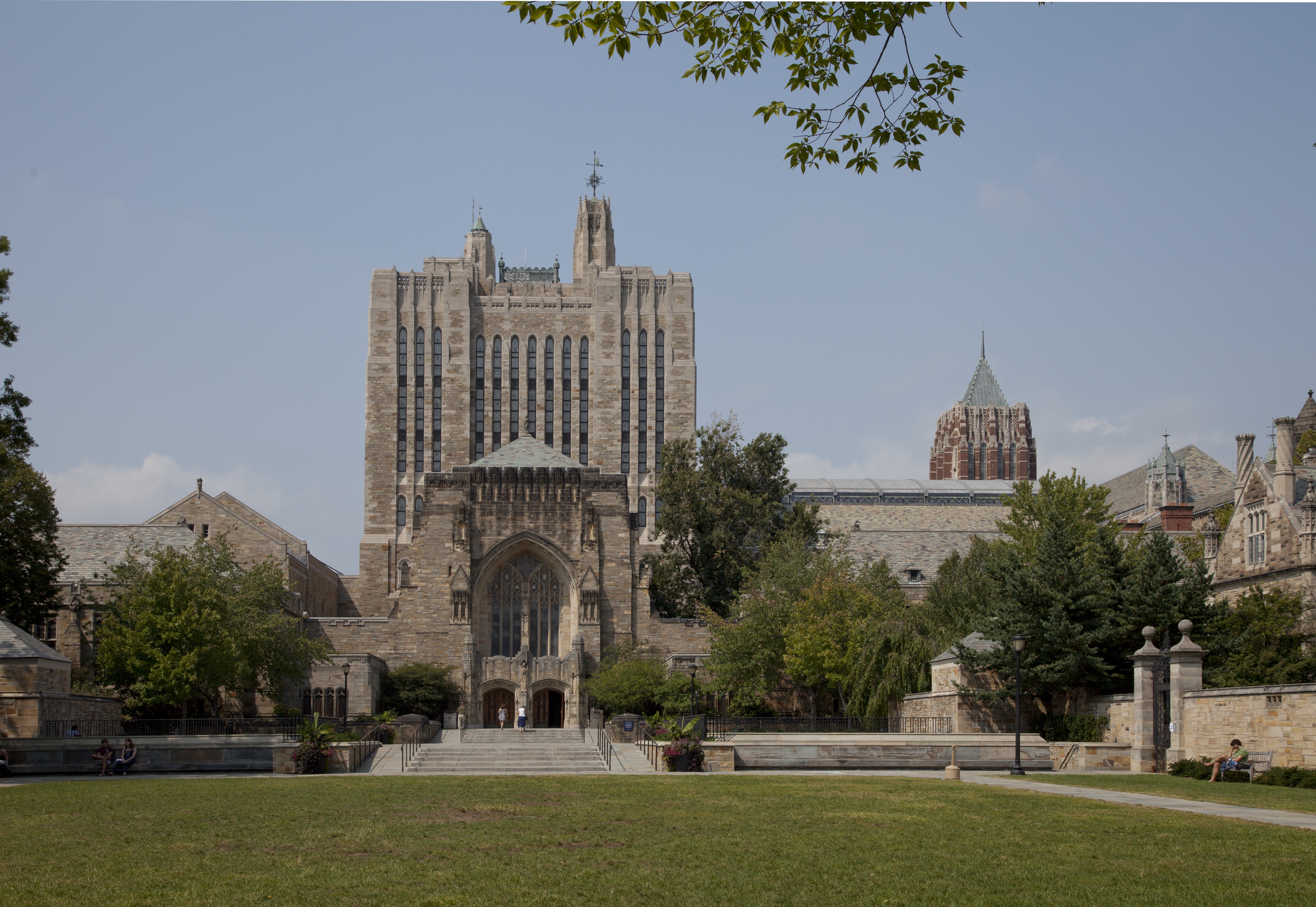
Front of Sterling Memorial Library
- Moreover, while Yale has generous financial aid, the sticker price exceeds $85,000 per year for tuition, room, board, and fees.
- Students from middle-class backgrounds may receive limited aid compared to low-income students.
3. Location: New Haven, Connecticut

The Irving S. Gilmore Music Library, in Sterling Memorial Library
- While culturally rich, New Haven has higher crime rates than other Ivy League towns.
- The city is not as vibrant as Boston, New York, or San Francisco in terms of tech, finance, or startup opportunities.
4. Weaker STEM and Business Presence

Beinecke Rare Book & Manuscript Library
- Yale excels in humanities, social sciences, and law, but engineering and tech programs are not as strong as MIT, Stanford, or Harvard.
- Unlike schools like Wharton (Penn) or Sloan (MIT), Yale does not have a dedicated undergraduate business school.
5. Intense Academic Pressure

The interior of the “Marble Cube,” Yale University’s Beinecke Rare Books and Manuscripts Library
- Furthermore, the rigorous curriculum and competitive environment can lead to high stress levels.
- Many students face pressure to succeed in law, consulting, or finance, even if their passions lie elsewhere.
Key Data Table: Yale University Overview

Cushing-Whitney Medical Library
| Category | Details |
|---|---|
| Location | New Haven, Connecticut, USA |
| Founded | 1701 |
| Ivy League | Yes |
| Acceptance Rate | ~4.5% |
| Total Enrollment | ~14,500 (undergrad + grad) |
| Undergraduate Students | ~6,500 |
| Student-to-Faculty Ratio | 6:1 |
| Most Popular Majors | Political Science, Economics, History, Psychology, Computer Science, Global Affairs |
| Tuition & Fees | ~$64,700 per year |
| Total Cost (w/ Room & Board) | ~$85,000 per year |
| Average Financial Aid Award | ~$65,000 per year |
| % of Students Receiving Aid | ~50% |
| SAT Middle 50% | 1470-1570 |
| ACT Middle 50% | 33-35 |
| Notable Alumni | Bill Clinton, George H.W. Bush, Hillary Clinton, Sonia Sotomayor, Paul Krugman, Meryl Streep, Anderson Cooper |
| Best Known For | Law, Political Science, Humanities, Economics, Global Affairs |
| Research Opportunities | Extensive, including undergrad research grants |
| Campus Setting | Urban, historic, and intellectual |
| Athletics | NCAA Division I (Ivy League) |
| Residential College System | Yes (14 colleges) |
| Graduate School Options | Yale Law, Yale School of Management, Yale School of Medicine |

The Peabody Museum of Natural History
In conclusion, Yale University stands a top-tier Ivy League institution. Moreover, known for its strong academics, world-class faculty, and global reputation. It is an outstanding choice for students interested in law, politics, humanities, economics, and research-driven careers.

Center panel of “Education” (1890), a stained glass window by Tiffany Studios, Linsley-Chittenden Hall
However, students seeking a business-heavy, engineering-dominant, or startup-driven environment may find MIT, Stanford, or Penn better suited to their interests. New Haven’s location and high costs may also be drawbacks for some students.

Lastly, for those who thrive in intellectual, interdisciplinary environments and value academic prestige, elite networking, and a historic liberal arts tradition, Yale remains one of the best choices in the world.

Elihu Yale, university namesake
Colleges Ranking Index by Rebellion Research