

is Dartmouth or Harvard Better?
Dartmouth vs. Harvard: A Comparison
Dartmouth College and Harvard University are both Ivy League schools, but they offer very different experiences in terms of academics, campus life, and prestige.
Academics:
Harvard is known for its global prestige, elite faculty, and vast resources across almost every discipline. It has strong programs in law, business, medicine, government, and the sciences. Dartmouth, while also highly respected, has a liberal arts focus, with an emphasis on undergraduate education. The quarter system (D-Plan) allows for unique academic flexibility, including study-abroad and internship opportunities.
Campus & Location:
Harvard is located in Cambridge, Massachusetts, just minutes from Boston, offering students access to major industries, government institutions, and cultural activities. Dartmouth is in Hanover, New Hampshire, a small town that provides a traditional, rural college experience with strong ties to outdoor activities.
Student Life:
Harvard has a diverse, international student body with access to world-class speakers, networking events, and career opportunities. Greek life exists but is not central to campus culture. Dartmouth, on the other hand, has a tight-knit, community-driven environment, with a strong Greek presence (around 60% participation) and deep-rooted traditions. Outdoor activities, such as skiing and hiking, play a major role in social life.
Prestige & Selectivity:
Harvard is the most prestigious university in the world, with an ultra-low acceptance rate (~4%) and a vast, powerful alumni network in politics, business, and academia. Dartmouth is highly prestigious but smaller in scale, with a slightly higher acceptance rate (~6%) and a strong influence in finance, consulting, and government.
Which is better?
- Choose Harvard if you want access to global opportunities, elite academics, and urban career connections.
- Choose Dartmouth if you prefer a traditional college experience, a close-knit community, and strong liberal arts education.
Data Table: Dartmouth vs. Harvard
| Category | Dartmouth College | Harvard University |
|---|---|---|
| Location | Hanover, New Hampshire (Rural) | Cambridge, Massachusetts (Urban) |
| Founded | 1769 | 1636 |
| Undergraduate Enrollment | ~4,500 | ~7,300 |
| Total Enrollment | ~6,700 | ~31,000 |
| Acceptance Rate | ~6% | ~4% |
| Notable Programs | Government, Economics, Environmental Science, Liberal Arts | Law, Business, Medicine, Government, Engineering |
| Academic Structure | Quarter system (D-Plan), liberal arts focus | Semester system, strong across all disciplines |
| Campus Environment | Rural, tight-knit, outdoor-focused | Urban, international, access to major industries |
| Greek Life | Strong (~60% participation) | Present but not central |
| Social Scene | Close-knit, traditional, outdoor activities | Diverse, global, networking-focused |
| Alumni Network | Strong in finance, consulting, and government | Most powerful alumni network worldwide |
| Prestige & Reputation | Elite liberal arts school, strong alumni ties | Considered the world’s most prestigious university |
| Best For… | Students who want a structured, immersive liberal arts experience | Students seeking global career opportunities and elite academics |
Summary:
- Choose Dartmouth for a traditional, community-driven Ivy League experience with a strong liberal arts focus.
- Choose Harvard for unmatched prestige, international networking, and top-tier academics in nearly every field.
Comprehensive Review of Dartmouth College

History and Reputation

Dartmouth College, founded in 1769, is the ninth-oldest institution of higher education in the United States. Established by Eleazar Wheelock as a school for Native Americans, it evolved into a premier Ivy League college.

Unlike larger Ivies, Dartmouth has a deep focus on undergraduate education while maintaining strong graduate programs in business (Tuck School), engineering (Thayer School), and medicine (Geisel School).

Dartmouth has a long-standing reputation for academic excellence, particularly in government, economics, engineering, and the liberal arts!

Alumni include U.S. senators, Supreme Court justices, top business executives, and even the creator of Dr. Seuss books, Theodor Geisel.

Dartmouth pioneered artificial intelligence in 1956!
Hosting the famous Dartmouth Conference that coined the term “AI.” While it has strong STEM offerings, today, it is often seen as leaning more toward humanities and social sciences rather than being a powerhouse in AI and engineering compared to MIT, Stanford, or even Harvard.
Reputation and Respect in the Academic World

Dartmouth is respected globally. However, compared to Harvard, Yale, and Princeton, it sometimes lacks the same level of name recognition outside of academic and professional circles. Within finance, law, consulting, and government, Dartmouth graduates stand highly valued. The Tuck School of Business consistently ranks as one of the top MBA programs in the world.
Key Data for Prospective Students

Dartmouth Outing Club House
| Category | Data |
|---|---|
| Location | Hanover, New Hampshire |
| Founded | 1769 |
| Acceptance Rate | ~6% |
| Undergraduate Enrollment | ~4,500 students |
| Tuition & Fees (2024-25) | ~$65,000 per year |
| Average Financial Aid | ~$60,000 (for those who qualify) |
| SAT Middle 50% | 1440-1560 |
| ACT Middle 50% | 32-35 |
| Popular Majors | Economics, Government, Engineering, Computer Science, Biology, History |
| Student-Faculty Ratio | 7:1 |
| Greek Life Participation | ~60% of eligible students |
| Endowment | ~$8 billion |
Dartmouth Known For

Dartmouth’s Private ski mountain!

McLane ski lodge at the Dartmouth Skiway.
- Undergraduate Focus: Unlike larger research universities, Dartmouth prioritizes teaching over publishing.
- Liberal Arts Strengths: Government, history, and economics are standout departments.
- STEM Strengths: Engineering, environmental science, and neuroscience are strong, though AI and CS are not as dominant as at MIT or Stanford.

- Tight-Knit Community: Small size leads to strong alumni ties and a unique “Dartmouth experience.”
- Quarter System: Dartmouth operates on a flexible schedule that allows students to take advantage of internships and study abroad programs.
- Outdoor Culture: The Dartmouth Outing Club (DOC) is one of the oldest college outdoor clubs in the country, and students embrace the surrounding mountains, rivers, and forests.
Drawbacks

Photograph of an “old division football” (a form of Medieval football) played on the Green at Dartmouth College in Hanover, New Hampshire. On the image, players run toward the western goal, off the left edge of the photograph.
- Location: Hanover is remote, with few big-city amenities. Boston is over two hours away.
- Winter: Brutal. The snow starts early, temperatures can reach negative digits, and seasonal depression is a real concern. However, students adapt, and skiing is popular.

- Social Scene Reliance on Greek Life: With over half of eligible students participating in fraternities or sororities, non-Greek students can feel left out.
- Limited Diversity in Course Offerings: Compared to Columbia or Harvard, there are fewer niche academic programs.
How Bad Is a New Hampshire Winter?

A football game between the Harvard Crimson and Dartmouth Big Green.
New Hampshire winters are some of the harshest in the Ivy League. Expect months of snow, temperatures dropping below zero, and long, dark nights. The campus adapts, with underground tunnels for some buildings and an active ski culture. Still, if you hate the cold, it will be a challenge.
Is Dartmouth the Safest Ivy?

Yes, Dartmouth is likely the safest Ivy League school. Hanover is a small, quiet town with very little crime. Unlike urban Ivies such as Columbia (New York), UPenn (Philadelphia), and Harvard (Cambridge), there are no major safety concerns. The biggest dangers are icy sidewalks and the occasional wildlife sighting.
How Fun Is Dartmouth’s Campus?

Dartmouth has a strong party culture. Between the Greek scene, winter traditions like the Dartmouth Winter Carnival, and events like Green Key Weekend, there is always something happening.
Moreover, the “Work Hard, Play Hard” mentality is real.

The outdoors also offer endless adventure, from skiing to hiking. However, Hanover’s small size means students create their own fun rather than relying on a city nightlife scene.
Campus Vibe

A photo of the Sherman Fairchild Sciences complex at Dartmouth College in Hanover, New Hampshire, taken from the tower of Baker tower.
Dartmouth students are ambitious but laid-back. The school lacks the cutthroat environment of Harvard or UPenn, and collaboration is common. Outdoorsy, social, and highly engaged in extracurriculars, Dartmouth students love tradition. School spirit is high, and alumni loyalty is stronger than at most Ivies.
Greek Life

Dartmouth’s Greek system dominates the social scene. Around 60 percent of upperclassmen join a fraternity or sorority. Unlike some schools, Greek houses are co-ed, and membership is open to all genders.

Since there are few bars or clubs in Hanover, parties happen at Greek houses, making them central to social life. The Greek system has received criticism for exclusivity, but it remains an essential part of campus culture.
Word on the Street

Dartmouth is known for its legendary alumni network, strong job placement in finance and consulting, and fun but rigorous student life. While it may not have the global prestige of Harvard or Yale, insiders know it is one of the most rewarding undergraduate experiences. Some say it is the “last true college experience” because of its isolated location, school spirit, and tight-knit community.
Is Dartmouth Still a Leading STEM School?

“Eddie Kaw, the speedy left halfback of Cornell, behind spendid interference, skirting the end for thirty-five yards in the third period of the Cornell-Dartmouth game at Ithaca, N. Y., Oct. 29. The Red eleven ran riot over the Green machine, unleashing a terrific running and rushing attack that smothered the Dartmouth line, ripping it wide open from tackle to tackle. The score was: Cornell, 59; Dartmouth, 7.”

While Dartmouth was the birthplace of AI, it has fallen behind in modern AI research. MIT, Stanford, and Carnegie Mellon now dominate the field. However, its engineering program is strong, especially for those interested in sustainability and entrepreneurship. The school still has solid STEM programs, particularly in neuroscience, environmental science, and applied mathematics. However, traditionally seen as more of a liberal arts powerhouse than a leading tech institution.
Final Thoughts

Dartmouth is an Ivy League school that offers an elite education in a rural, tight-knit setting. If you love the outdoors, a small community, and a mix of academic rigor and social tradition, it is an excellent choice. However, desiring an urban experience, cutting-edge AI research, or a school without dominant Greek life, as a result, might not become the best fit.
Would you thrive at Dartmouth? It depends on whether you see a long winter and an isolated campus as charming or challenging.
Colleges Ranking Index by Rebellion Research
Comprehensive Review of Harvard University

Harvard University, established in 1636, is the oldest institution of higher education in the United States.

Langdell Hall
Over nearly four centuries, it has evolved into one of the world’s most prestigious universities, known for its academic excellence, influential research, and notable alumni.
Reputation and Prestige
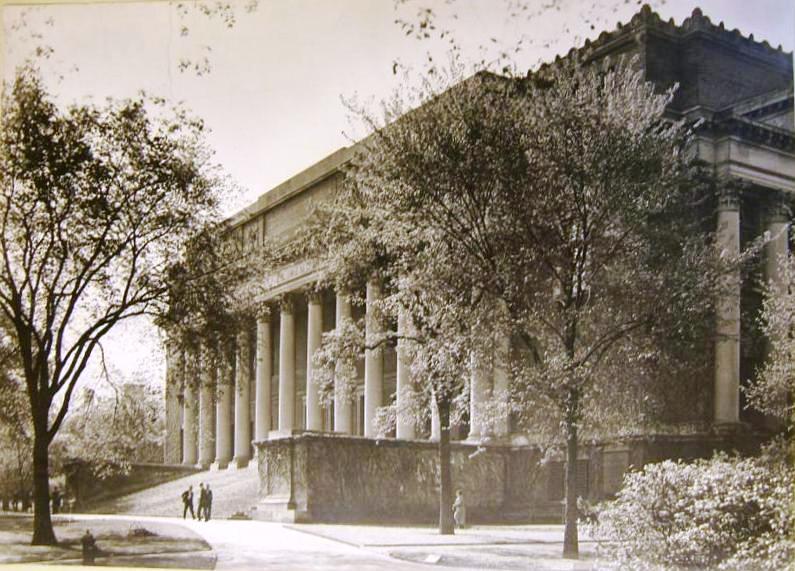
Widener Library http://mrmhadams.typepad.com/blog/2012/03/a-night-to-remember-titanics-monument-to-
Harvard consistently ranks among the top universities globally, recognized for its rigorous academic programs and distinguished faculty.

Houghton Library
Moreover, alumni include U.S. presidents, Nobel laureates, and leaders across various fields, underscoring its significant impact on both national and international stages.
Academic Excellence

Eliot House
Harvard Professor Alan Dershowitz Sits Down With Rebellion Research
The university offers a comprehensive range of programs across disciplines such as law, business, medicine, humanities, and sciences. Notably, its Department of History frequently cited as one of the premier institutions for the study of history.
Campus Culture and Political Climate

Arthur M. Sackler Museum
Harvard’s campus culture has become described as predominantly liberal.
Furthermore, a survey indicated that 82% of faculty identify as liberal or very liberal, while only 1% identify as conservative.
This ideological leaning has sparked discussions about the university’s commitment to free speech and diversity of thought!
In 2024, Harvard received an “Abysmal” rating for its speech climate, with students reporting discomfort in expressing controversial political views.
Recent Challenges

Fogg Museum
In 2023, Harvard faced criticism over its handling of campus protests related to the Israel-Hamas conflict. Thus, the administration’s response led to a significant drop in donations. As a result, contributions decreased by nearly 15% compared to the previous year.
These events have prompted internal discussions about the university’s communication strategies and its role in fostering inclusive dialogue.
Advantages of Attending Harvard

Semitic Museum
- Academic Resources: Access to extensive libraries, research centers, and funding opportunities.
- Networking Opportunities: Additionally, a vast and influential alumni network that can open doors in various industries.
- Prestige: A Harvard degree moreover, globally recognized. In addition enhances career prospects.
Potential Drawbacks
- Competitive Environment: The rigorous academic atmosphere can be challenging for some students.
- Cost: Despite substantial financial aid offerings, the cost of attendance remains high.
- Political Climate: The predominantly liberal environment may feel unwelcoming to those with differing viewpoints.
Data Table for Prospective Students
| Category | Data |
|---|---|
| Founded | 1636 |
| Location | Cambridge, Massachusetts |
| Total Enrollment | Approximately 25,000 students |
| Undergraduate Tuition | $57,246 per year (2024-2025) |
| Acceptance Rate | Approximately 3.4% |
| Student-Faculty Ratio | 7:1 |
| Notable Alumni | 8 U.S. presidents, 161 Nobel laureates, numerous industry leaders |
| Campus Size | 5,076 acres |
| Endowment | $53.2 billion (as of 2024) |
In conclusion, Harvard University offers unparalleled academic opportunities and resources. However, prospective students should carefully consider factors such as campus culture, financial commitments. And lastly, the competitive environment to determine if it aligns with their personal and academic goals.
Colleges Ranking Index by Rebellion Research
is Stanford or Berkeley Better?
wsj.com thefire.org .edu en the Har ata Is ha Wh st WH ls on ty l?
Wh ge Wh ty Ha y us Wh re Wh e? ll C? ws ca HE


