

Is Bradley University conservative or liberal?
Bradley University, located in Peoria, Illinois, is a private university that offers a range of undergraduate and graduate programs across several colleges and schools. While the university does not have an official political affiliation, it is important to examine the political climate on campus to determine whether the university leans conservative or liberal.
In terms of student political activism, Bradley University tends to be relatively moderate. While there are active political groups on campus, including the College Democrats and College Republicans, they do not typically engage in high-profile demonstrations or protests. In addition, while there may be occasional controversies or debates on campus regarding political issues, they are typically resolved in a civil and respectful manner.
One factor that may influence the political climate at Bradley University is its location in the state of Illinois. Illinois is generally considered to be a Democratic-leaning state, with a history of progressive policies on issues such as civil rights, labor rights, and environmental protection. However, Illinois is also a diverse state, with a mix of urban, suburban, and rural areas, as well as a significant conservative population.
is DePaul a good school?
Another factor that may influence the political climate at Bradley University is the makeup of its student body. While the university is known for its strong programs in areas such as engineering, business, and health sciences, it also attracts students from a wide range of backgrounds and political beliefs. This diversity may contribute to a relatively moderate political climate on campus.
It is worth noting that while Bradley University does not have an official political affiliation, the university does have a mission statement that emphasizes the importance of social justice and ethical leadership. This mission may resonate more strongly with students who hold liberal or progressive beliefs, although it is also compatible with conservative values such as personal responsibility and community service.

The logo of Bradley University – private university in Peoria, Illinois
Bradley University – https://www.bradley.edu/offices/marketing/identity/logo-downloads/
Overall, while Bradley University does not have a clear political affiliation, the university tends to be relatively moderate in terms of student political activism and campus politics. While there may be occasional controversies or debates on campus regarding political issues, they are typically resolved in a civil and respectful manner.

Is Bradley University conservative or liberal?
What GPA is required for DePaul?

DePaul University is a prestigious institution of higher education located in Chicago, Illinois, that offers a wide variety of undergraduate and graduate programs. If you are considering applying to DePaul, one of the most important things you will need to consider is the minimum GPA required for admission.

DePaul University, like many other universities, has a minimum GPA requirement for admission. However, the GPA requirement can vary depending on the program you are applying to, as well as other factors such as standardized test scores and extracurricular activities.
Is Northwestern an Ivy League school?

Chicago Daily News, Inc., photographer – This image from the American Memory Collections is available from the United States Library of Congress‘s National Digital Library Program under the digital ID ichicdn.n057293. This tag does not indicate the copyright status of the attached work. A normal copyright tag is still required. See Commons:Licensing for more information.
Exterior view of a DePaul University building in the Near North Side community area of Chicago, Illinois.
Public Domain
File:DePaul University 1911.jpg
Created: 1 January 1911
About Media Viewer
For undergraduate admission, DePaul typically requires a minimum cumulative GPA of 2.5 on a 4.0 scale for incoming freshmen. However, this requirement can vary depending on the specific program you are applying to. For example, some programs may require a higher GPA or additional requirements such as standardized test scores, letters of recommendation, or essays.
For transfer students, DePaul typically requires a minimum cumulative GPA of 2.0 on a 4.0 scale for admission. However, as with incoming freshmen, the GPA requirement can vary depending on the specific program you are applying to.
For graduate admission, DePaul typically requires a minimum cumulative GPA of 3.0 on a 4.0 scale for admission. However, as with undergraduate admission, the GPA requirement can vary depending on the specific program you are applying to. Some programs may require a higher GPA, standardized test scores, or other application materials.
It is important to note that while a minimum GPA may be required for admission to DePaul University, meeting this requirement does not guarantee admission. Admissions decisions at DePaul are based on a holistic review of the applicant, taking into consideration factors such as academic performance, test scores, extracurricular activities, and essays.
In addition to the minimum GPA requirement, DePaul also offers a range of scholarships and financial aid opportunities for students. These awards are typically based on a combination of academic merit and financial need.
In conclusion, the minimum GPA required for admission to DePaul University can vary depending on the program you are applying to, but typically ranges from 2.0 to 3.0 on a 4.0 scale. However, it is important to keep in mind that meeting the minimum GPA requirement does not guarantee admission, and admissions decisions are based on a holistic review of the applicant.
What GPA is required for DePaul?
Is Northwestern an Ivy League school?

Northwestern University seal
Northwestern University – “The Northwestern University seal… ‘It sure looks Greek to me'” and https://web.archive.org/web/20070609231405/http://www.northwestern.edu/univ-relations/publications/logo/downloads.html (download link)
Northwestern University is not an Ivy League school. The Ivy League is a sports conference consisting of eight private colleges and universities located in the Northeastern United States, including Harvard, Yale, Princeton, Columbia, Brown, Dartmouth, Cornell, and the University of Pennsylvania. While Northwestern is not a member of the Ivy League, it is often referred to as a near-Ivy League school due to its academic excellence, selectivity, and reputation as one of the top-ranked universities in the United States.

Greenstrat at English Wikipedia – Transferred from en.wikipedia to Commons.
Northwestern is a highly regarded private research university located in Evanston, Illinois, just outside of Chicago. It is a member of the prestigious Association of American Universities (AAU) and is consistently ranked among the top 20 universities in the United States by various ranking publications such as U.S. News & World Report, Forbes, and The Wall Street Journal. Northwestern is known for its strong programs in a variety of fields, including journalism, business, engineering, law, and medicine.
While Northwestern may not be a member of the Ivy League. Furthermore, shares many similarities with Ivy League schools in terms of its academic rigor, selectivity, and prestige. Northwestern is highly competitive to get into, with an acceptance rate of just under 8% for the Class of 2025. It also has a strong tradition of producing successful alumni, including Pulitzer Prize-winning journalists, Nobel Prize-winning scientists, and CEOs of major corporations.

In conclusion, while Northwestern is not technically an Ivy League school, it is often considered a near-Ivy League school due to its academic excellence, selectivity, and reputation as one of the top-ranked universities in the United States. Whether or not a school is a member of the Ivy League is not the only measure of its quality or prestige, and Northwestern is a highly regarded university that provides an exceptional educational experience to its students.
Is Northwestern an Ivy League school?
What GPA do you need to get into Northwestern?
Northwestern University is a highly selective private research university located in Evanston, Illinois, just outside of Chicago. As one of the top-ranked universities in the United States, Northwestern has a rigorous admissions process and requires students to meet certain academic and extracurricular standards to be considered for admission. In this essay, we will explore how hard it is to get into Northwestern and what type of scores and extracurricular achievements a student should expect to have in order to be admitted to this near Ivy League school.
Northwestern is considered a extremely selective university, with an acceptance rate of just under 8% for the Class of 2025. This means that out of over 46,000 applications received, only around 3,700 students were admitted. Northwestern’s high selectivity can be attributed to its reputation as a top-ranked university, as well as its location in a major metropolitan area that attracts a large number of applicants.
In order to be considered for admission to Northwestern, a student must have a strong academic record. While there is no official minimum GPA requirement, the average GPA of admitted students is around a 4.0 on a 4.0 scale. This means that a student should aim to have mostly A’s in challenging coursework, including Advanced Placement (AP) and Honors courses. In addition to strong grades, Northwestern also looks for high standardized test scores, with the average ACT score of admitted students being around 34 and the average SAT score being around 1530.
However, academic achievement alone is not enough to guarantee admission to Northwestern. The university also looks for well-rounded students who have demonstrated excellence in extracurricular activities, leadership, and community involvement. Applicants should be involved in a range of extracurricular activities, including athletics, music, volunteering, and leadership positions in clubs or organizations. Northwestern also values unique experiences or talents, such as international travel or artistic ability, that can contribute to the diversity of the student body.
It’s important to note that Northwestern’s admissions process is holistic, meaning that the university considers all aspects of a student’s application when making admissions decisions. While high academic achievement and impressive extracurricular activities are important, Northwestern also considers essays, recommendations, and other factors that can provide insight into a student’s character and potential to succeed at the university.
In conclusion, getting into Northwestern is no easy feat. With a highly selective admissions process, students should aim to have a strong academic record, with mostly A’s in challenging coursework, as well as high standardized test scores. On top of that, students should have a range of extracurricular activities that demonstrate leadership, community involvement, and unique talents or experiences. However, it’s important to remember that Northwestern’s admissions process is holistic, and the university considers all aspects of a student’s application when making admissions decisions. Students who are passionate about Northwestern and demonstrate a commitment to academic excellence and personal growth will have the best chance of being admitted to this near Ivy League school.
Is Amherst harder to get into than Williams?
Amherst and Williams are both highly selective liberal arts colleges located in Massachusetts. While both schools are prestigious and have similar admission rates, there are differences in their admissions processes and the types of students they typically admit.
In terms of admission rates, Amherst and Williams have similar rates of acceptance, with Amherst admitting 11.3% of applicants and Williams admitting 12.2% of applicants for the class of 2025. However, it’s worth noting that admission rates can vary from year to year and may not be the best indicator of how difficult it is to get into a particular school.
When it comes to the types of students who have better chances of being admitted to Amherst and Williams, both schools value academic achievement and intellectual curiosity. However, there are some differences in the qualities that each school looks for in applicants.
Amherst tends to prioritize students who have a strong academic background, but also have a demonstrated commitment to extracurricular activities and leadership. Amherst also places a strong emphasis on diversity and seeks to admit students who come from a wide range of backgrounds and experiences.
Williams, on the other hand, places a greater emphasis on intellectual curiosity and seeks to admit students who have a passion for learning and a willingness to explore new ideas. Williams also places a strong emphasis on character and seeks to admit students who have demonstrated integrity, compassion, and a commitment to serving others.
Compared to Harvard and Stanford, both Amherst and Williams are highly regarded institutions, but they are not on the same level of prestige as these two universities. Harvard and Stanford are both members of the Ivy League, which is a group of eight highly selective universities known for their academic excellence and storied histories. While Amherst and Williams are both highly selective and prestigious, they are not part of the Ivy League.
Overall, Amherst and Williams are both highly selective liberal arts colleges that offer a rigorous academic experience and a strong sense of community. While they may not be on the same level of prestige as Harvard and Stanford or the Ivy League schools, they are still highly regarded institutions that attract top students from around the world. Ultimately, the best fit for a student depends on their individual needs and preferences, as well as their academic and personal strengths.
Is Amherst harder to get into than Williams?
Is Williams College as good as Ivy?
Education
How does the amazing liberal arts school stack up against the famed Ivy League?
Williams College, a highly respected liberal arts college, consistently ranked among the top liberal arts colleges in the United States. While it is not technically part of the Ivy League, many people consider Williams College to be on par with Ivy League schools in terms of academic quality and prestige.
The Ivy League consists of a group of eight prestigious universities located in the northeastern United States. Furthermore, including Brown University, Columbia University, Cornell University, Dartmouth College, Harvard University.
In addition, the University of Pennsylvania, Princeton University, and Yale University. These universities became known for their academic excellence. Additionally, selective admissions process, and rich history and traditions.
While Williams College; moreover, not officially part of the Ivy League! Many still often compare Williams to these institutions for several reasons.
Firstly, Williams College boasts a highly selective class. Moreover, admitting only around 12% of applicants each year. As a result, which puts it on par with many Ivy League schools in terms of selectivity.
Additionally, Williams College became known for its rigorous academic program.

Unknown author – http://museums.fivecolleges.edu/detail.php?museum=&t=objects&type=all&f=&s=amherst&record=428; https://museums.fivecolleges.edu/detail.php?t=objects&type=ext&id_number=AC+POR.1833.1
Offering an amazing faculty-to-student ratio of 1:7!
Furthermore, a strong emphasis on critical thinking, writing, and research. These factors contribute to Williams College’s reputation as a highly respected institution of higher learning.

Scan by NYPL – https://digitalcollections.nypl.org/items/510d47da-8920-a3d9-e040-e00a18064a99
Williams College has also produced a number of notable alumni, including three Pulitzer Prize winners, four MacArthur Fellows, and several political leaders and public figures. The college has a strong track record of preparing its graduates for success in a wide range of fields, from academia and the arts to business and public service.
While there may become some differences between Williams College and Ivy League schools. Williams College stands as a highly respected institution. One that is on par with many Ivy League schools in terms of academic quality, prestige. And success in preparing its graduates for the future.

For many students, Williams College may be an excellent alternative to the Ivy League, offering a high-quality liberal arts education with a strong focus on critical thinking, writing, and research. Ultimately, the decision of whether to attend Williams College or an Ivy League school will depend on a variety of factors, including a student’s academic interests, career goals, and personal preferences.
But it sure does get lonely during winter!
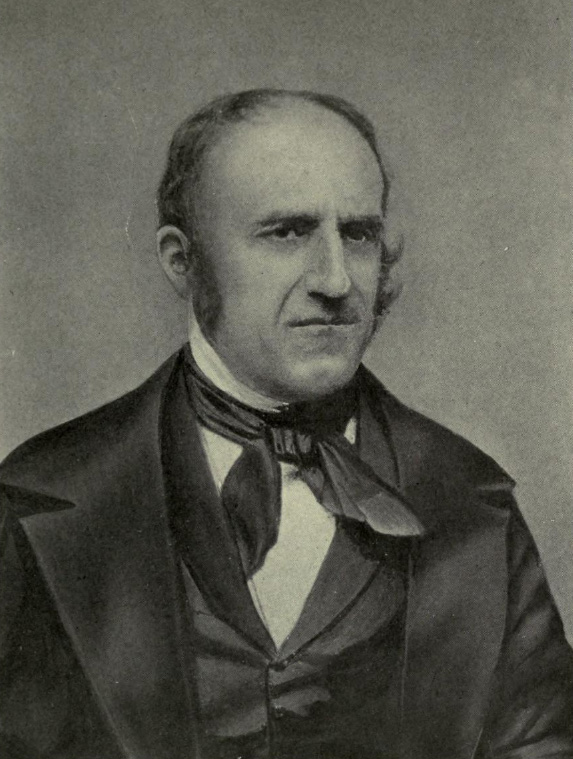
Unknown author – https://archive.org/stream/historyofwilliam00spririch#page/n178/mode/1up
Is Williams College as good as Ivy?
What is the history of Williams?
Williams College is a private liberal arts college located in Williamstown, Massachusetts. It was founded in 1793 and has a long and distinguished history as one of the leading institutions of higher learning in the United States.
The college was founded by Ephraim Williams Jr., a wealthy landowner and soldier who died in battle during the French and Indian War. In his will, Williams left a bequest of funds to establish a free school in his hometown of West Stockbridge, Massachusetts, with the condition that the school be named after him and that it be transformed into a college within four years of his death.
In 1793, the trustees of the Williams Free School opened the College of Williamstown, which was later renamed Williams College in honor of its founder. The college was originally a men’s college, but it became coeducational in 1970.
During its early years, Williams College struggled financially, and it was not until the early 19th century that the college began to gain a reputation as a leading institution of higher learning. In 1806, the college appointed its first president, Zephaniah Swift Moore, who transformed the college into a center of academic excellence. Moore emphasized the importance of classical education and established a rigorous academic program that focused on Greek and Latin literature, mathematics, and philosophy.
During the mid-19th century, Williams College continued to expand its academic program and facilities. In 1846, the college established a department of natural sciences, and in 1851, it opened a new building to house the college’s library and scientific collections. The college also added new courses in modern languages, literature, and history, and it began to attract students from across the United States.
In the 20th century, Williams College continued to grow and evolve. During World War II, the college established a naval training program, and it also began to offer programs in engineering and the sciences. In the postwar period, the college underwent a major expansion, with the construction of new academic buildings, residence halls, and athletic facilities.
Today, Williams College, widely regarded as one of the finest liberal arts colleges in the United States. The college has a student body of approximately 2,000 students. And a faculty of over 300 professors. And it offers more than 40 majors in a wide range of fields. Including the humanities, social sciences, natural sciences, and mathematics.
In conclusion, Williams College has a long and distinguished history as one of the leading institutions of higher learning in the United States. Founded in 1793, the college has evolved over time, expanding its academic program and facilities to become a center of academic excellence. Today, Williams College remains committed to providing its students with a rigorous and engaging liberal arts education that prepares them for success in a rapidly changing world.
Is Williams College as good as Ivy?
Babson College President talks with Rebellion Research
What GPA do you need to get into Amherst College?
Amherst College is a highly selective liberal arts college located in Amherst, Massachusetts, USA. It has a competitive admissions process, and the college evaluates a range of factors when considering applicants for admission, including academic achievement, extracurricular involvement, and personal qualities.
While Amherst College does not have a set minimum GPA requirement, the average GPA of admitted students is typically very high. According to the Amherst College Common Data Set for 2020-2021.
The average high school GPA for admitted students was 4.12 on a 4.0 scale, which is well above an A average.
However, essential to keep in mind that Amherst College uses a holistic admissions process. And takes a comprehensive approach in evaluating an applicant’s overall academic record and achievements.
Apart from academic records, the college also considers other factors such as personal essays, letters of recommendation, and standardized test scores (either the SAT or ACT) to determine admission eligibility. The college also looks for applicants who have demonstrated leadership, intellectual curiosity, and a commitment to their communities.
It’s important to note that although academic performance is a crucial factor in admissions decisions, it is not the only one. Amherst College seeks students who demonstrate a passion for learning and have a diverse range of interests and experiences. Therefore, applicants are encouraged to present themselves as well-rounded individuals with unique qualities, experiences, and perspectives that will add value to the college community.
In summary, there is no fixed GPA requirement for admission to Amherst College, but the admissions committee looks for highly motivated and academically talented individuals with a range of achievements and experiences. To increase your chances of admission, it’s essential to maintain a high GPA, take challenging courses, and showcase your unique qualities and experiences in your application.
What GPA do you need to get into Amherst College?
Amherst College Endowment : An Interview With Amherst College Endowment Chief Investment Officer Letitia Johnson

Amherst College Endowment : An Interview With Amherst College Endowment Chief Investment Officer Letitia Johnson : In today’s tangled global financial markets, Amherst College Chief Investment Officer (CIO) Letitia Johnson brings an international sensibility. Born in Singapore, her family shortly afterward moved to London. There she stayed until the age of 7 when, yet again, her family relocated to a new location: Japan. Letitia Johnson attended the American School in Japan, located in suburban Tokyo, before coming to the United States when she was 14.
Following the trend of many other school’s wealth management teams, the Amherst College Investment Office recently relocated to Boston from its former spot in Amherst, MA. There is no doubt Johnson has a strong understanding of Boston’s financial industry. All of Johnson’s experience in finance has taken place in Boston, though she has occasionally engaged in extensive travel for past jobs.
While talking to Johnson, the topic of the Amherst liberal arts curriculum came up. Johnson expressed strong support for the study of the liberal arts, arguing that studying a wide variety of subjects develops balanced thinking and reasoning skills. She urges all young students to first determine what their absolute must haves are, and then use that as a starting point to narrow down what career paths they might be interested in. After all, how can one know their most specific goals if they have not even resolved what their primary desires are?
Even the path Johnson took wasn’t exactly what she first predicted. In fact, Johnson didn’t find her career in institutional investing until after her time at Yale Business School. There introduced to the world of endowment management, she hasn’t looked back since.
What GPA do you need to get into Amherst College?
An International Eye : Profile of Investor Letitia Johnson
What is the Amherst Investment Office?

The Amherst Investment Office is a team of people. One that reports to an investment committee of the board. And to the Amherst Chief Financial Officer Kevin Weinman. Our primary responsibility is to manage Amherst College’s endowment. Our job includes reporting transactions and making sure cash goes to the right investments when we alter our portfolio. The Amherst Investment Office invests for the long run. We must ensure that we are investing our funds to meet school objectives over a long time period and growing our endowment in real terms.
Typically, the endowment supports roughly 50 to 60 percent of the College’s budget. Over time, it has outgrown other income streams. Ultimately, we aim to take 4-5% out of the endowment every year without digging into its principal so that it can continue to grow.
The Investment Office is responsible for managing the endowment, but this doesn’t mean we pick stocks on our own. Instead, much of what we do involves choosing third party fund managers. We put a lot of thought into who the partners who will manage the money for us are.
Currently, we are working with less than 40 managers. We even have a manager who we have been collaborating with for 20 years. We strive to pick a manager earlier in their career so that we can expand and evolve with them. This aligns with the Office’s very long-term outlook.
What is your process for picking managers?
A lot of it comes down to scrutinizing the people running the funds. We invest in people. Strategies can change over time, but hopefully the people we entrust our money to don’t. Do they have a cohesive strategy that makes sense and can endure in terms of adding value?
The quality of the manager trumps everything, including the strategy. We won’t pick a mediocre manager just because he’s in the right space and using a hot strategy—we stick with only A+ managers. I like managers who can write down and express the thesis of what they are doing—something stressed in an Amherst education. Skilled managers should be able to articulate what they are seeking to achieve.
We do think about portfolio balance. It’s important that we understand the mix of managers we have and what strategies they use. We’ll routinely check up on how our managers are doing, see if there is anything we need to worry about. Our team also performs a top-down sector and asset exposure analysis. That way, if things become too imbalanced, we can step in and make changes.
What is your investing philosophy (value investing, growth investing, etc)? How do you build a portfolio?
We don’t require our managers to have one single investing philosophy, we prefer to have a mix—though we do have views of which types of investing might be better suited to certain areas of the market. Our system emphasizes flexibility. Therefore, we don’t have asset allocation targets per se. Instead, we have ranges. A too rigid process can undo what managers do best. When we find good managers, we put some trust in them and regularly communicate with them.
Treasury rates have been rising recently, with the Fed slightly cutting back on measures in fear of inflation. Any downsides? How are you adjusting to this?
The rates question is this endless debate in the investing field. We in the Investment Office are not in the business of trying to figure out what’s going to happen and guess the Federal Reserve’s moves. We should not—and do not—make investment decisions on this basis. If rates spike, markets are likely to tend downward. We can also consider what parts of our portfolio might be more impacted. For example, typically, tech could fall considerably because it’s a long duration asset and is generally growth-oriented.
How do you deal with inflation?
Investors have spent a lot of time on the inflation question. Inflation is related to Fed rates, and unanticipated inflation can be quite harmful for bonds and stocks. We look back at the stagflation of the 1970s as a historical example and see how we could have protected against it. Unfortunately, protecting against inflation is extremely costly and highly unreliable.
Trying to defend against inflation through assets such as commodities and real estate can also be unreliable. Not to mention these asset classes can themselves be volatile and costly to hold relative to alternatives. What we’ve learned is that it’s better to concentrate on ensuring we can meet annual obligations and maintain good liquidity, through crisis planning. Today, we avoid holding long bonds. Other than that, we think about maintaining liquidity reserves and investing the rest in a balanced way.
Ultimately, equities serve as a pretty good inflation hedge. Inflation should eventually be reflected in earnings. It’s worth mentioning, though, that some equities have better inflationary sensitivity, like those with pricing power. We would want a manager that cared about things like that.
Our portfolio is very equity heavy.
How effective is gold as an inflation hedge?
Gold is not the reliable inflation hedge some people make it out to be. The truth is, there’s no good way to value it. How do you trade something you can’t value? How do you know when to hold, sell, or buy more? In that sense, it’s kind of like bitcoin (though we do like crypto generally!). It’s very hard to invest in gold well. The only ones who seem to get it right are families who stockpile it and forget about it.
Amherst College doesn’t need a store of value. It needs to make a set of balanced investments that grow over time, and gold isn’t right for this purpose.
Who picks the assets in the Investment Office?
Dawn Bates (Manager of Investment Operations) and Heather Heath (Operations Analyst) are in charge of running operations for our office. Every morning, the whole team meets together to talk about what’s on the docket for the day, debrief on the day prior, and so on. On the investment side of our office are Shane Levy (Investment Officer), Yunfei Liu (Investment Analyst), Adam McPherson (Investment Analyst), and myself, Letitia Johnson (Chief Investment Officer). Together, we all spend a lot of time evaluating managers and finding new ones.
In the Investment Office, we do comb over individual stocks. However, this isn’t to say that we select individual stocks to invest in. We find it’s helpful to have a good understanding of what our managers like. That way, we can better understand how they are developing and seeing the market change over time.
For example, we had a period in which the team did a lot of talking about automobiles—electric vehicles, manufacturing, dealerships, tech in autos, etc. This happened very organically, through talking to managers. We would speak to a number of our different managers about car dealerships, and then make connections and evaluations ourselves based on what they said. By focusing our discussion on one specific line of business, we got a lot smarter on the whole space and were able to better engage with our managers.
I don’t particularly like the traditional asset allocation framework, and prefer to think in terms of ecosystems. For example, using the label hedge fund isn’t particularly helpful. Instead, I would rather consider ecosystems like healthcare. This would include everything from early stage biotech venture capital to Big Pharma. As you would imagine, a whole range of overlapping companies, capital systems, and managers would fit into this ecosystem.
Ecosystems are a holistic category. Adam and his team spend a lot of time on the biotech ecosystem. Yunfei and his team spend a lot of time on the China ecosystem. Other ecosystems might include tech and value.
Amherst College Endowment : An Interview With Amherst College Endowment Chief Investment Officer Letitia Johnsonn Written by Ryan Cunningham
(The interview, conducted on Zoom on March 19, 2021, has been edited for length and clarity.)
Johnson, Letitia L. | Faculty & Staff | Amherst College
Amherst College Endowment : An Interview With Amherst College Endowment Chief Investment Officer Letitia Johnson
What GPA do you need to get into Amherst College?
Austin Sarat Amherst College – Rebellion Research
Is Amherst as good as Ivy League?
According to the rankings on Forbes.com, Amherst College is the 16th best school in the United States. At that spot, Amherst outdoes respected schools such as the University of Michigan and the University of Chicago, as well as Ivy League school Brown University.
Amherst College is a highly respected and prestigious liberal arts college in the United States. While it is not a member of the Ivy League, it is often considered to be on par with Ivy League schools in terms of academic rigor and selectivity.
In fact, Amherst College has consistently ranked among the top liberal arts colleges in the country in various college rankings, and its graduates have gone on to achieve success in a wide range of fields, including academia, business, law, and politics.
Ultimately, whether Amherst College is “as good as” Ivy League schools depends on a variety of factors and individual opinions. However, widely recognized as an outstanding institution of higher education and one that offers a world-class education to its students.
Amherst College is a private liberal arts college located in Amherst, Massachusetts, USA. Founded in 1821 as an attempt to provide a nonsectarian alternative to nearby Williams College. Which at the time boasted an affiliation with the Congregational Church.
Austin Sarat : Amherst College Dean & Law Professor
The idea for the college was first proposed by the Reverend Noah Porter, a Congregational minister in Connecticut, who suggested the creation of an institution “for the education of indigent young men of piety and talents for the Christian ministry.” The idea became well received. And a group of leading citizens in Amherst, including the town’s founder, General William Shepard, and the Congregational minister, Reverend Ebenezer Snell, began to raise funds for the college.
In 1825, the college admitted its first students, with an initial enrollment of 15. The first president of the college was Zephaniah Swift Moore, a Congregational minister and scholar who had previously served as president of Williams College.
The early years of Amherst College became defined by both challenges and triumphs.
Initially, the college struggled to attract students and secure funding, but over time it began to establish a reputation for academic excellence. In 1826, the college awarded its first degrees to three graduates, and by the mid-19th century it had become one of the most respected liberal arts colleges in the country.
During the latter half of the 19th century, Amherst College underwent a period of significant growth and expansion. Under the leadership of President Julius H. Seelye, the college constructed a number of new buildings, including Walker Hall, Converse Memorial Library, and the Pratt Museum of Natural History. These new facilities helped to establish Amherst as a modern, forward-thinking institution of higher education.
An Interview With Amherst College CIO
The early 20th century became marked by a number of important changes at Amherst College. Moreover, in 1915, the college became one of the first liberal arts colleges to establish a dedicated department of economics. The following year, Amherst College joined with Williams College and Wesleyan University to form the Little Three athletic conference.
During the mid-20th century, Amherst College underwent another period of significant growth and development. Furthermore, in the years following World War II, the college saw a surge in enrollment. In addition, several new buildings became constructed to accommodate the growing student body.
In conclusion, today it is one of the most respected schools in America.
Is Amherst harder to get into than Williams?
What GPA do you need to get into Amherst College?
Is Williams College as good as Ivy?
2022-2023 Best Colleges | College Rankings and Data | US News Education
Bradley University – Wikipedia
Compare Campus and Online Colleges, Universities & Career Schools | CompareTopSchools.com
Best Colleges 2023 | College Ranking List | The Princeton Review
Forbes America’s Top Colleges List 2022
Is Amherst harder to get into than Williams?
What GPA do you need to get into Amherst College?
Is Bradley University conservative or liberal?


