

How Does Refrigeration Work Step By Step?
Science
The science of refrigeration involves the transfer of heat from a space or object. To then become cooled in a separate space, where it is released into the environment. Performed by using a refrigerant. Which is a substance that has a low boiling point and can easily change between a liquid and a gas.

The refrigeration process involves several key components, including:
- Compressor: The compressor is a motor-driven device that compresses the refrigerant gas and raises its pressure and temperature.
- Condenser: The high-pressure, high-temperature refrigerant gas then flows into the condenser, where it is cooled down and condensed into a liquid by exchanging heat with the surrounding air or water.
- Expansion valve: The high-pressure liquid refrigerant then passes through the expansion valve, which is a small orifice that reduces its pressure and temperature.
- Evaporator: The low-pressure, low-temperature refrigerant liquid then flows into the evaporator, where it absorbs heat from the space or object to be cooled and changes back into a gas.
- Refrigerant cycle: The refrigerant then returns to the compressor and the cycle repeats.
In essence, refrigeration works by removing heat from a space or object and transferring it to the environment, allowing the space or object to become cooler.
The key to this process is the refrigerant, which is able to absorb and release heat as it changes between a liquid and a gas. This makes refrigeration an important technology for preserving food, cooling buildings and vehicles, and many other applications.
The history of refrigeration dates back thousands of years, with early civilizations using various cooling methods to preserve food and keep drinks cold. However, it wasn’t until the 18th and 19th centuries that modern refrigeration technology began to emerge.
In the early 1700s, William Cullen, a Scottish physician and chemist, demonstrated the first artificial refrigeration system using a pump to create a partial vacuum over a container of diethyl ether. This caused the ether to boil and evaporate, which thus produced a cooling effect.
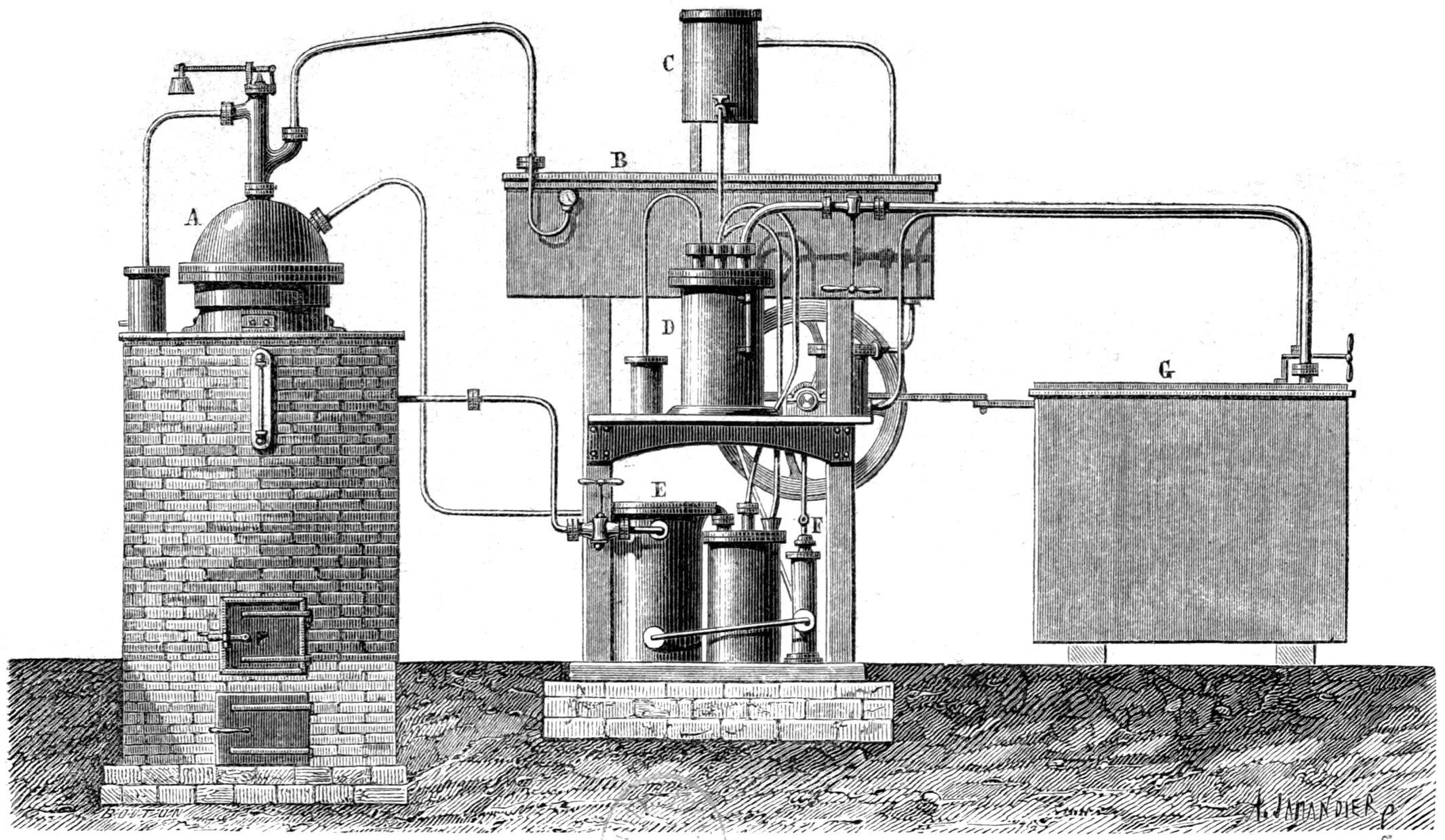
In the mid-1800s, Jacob Perkins, an American inventor, patented the first practical refrigeration system using a vapor compression cycle. However, it wasn’t until the 1870s that this technology began to become used commercially. With the development of refrigerated shipping and cold storage warehouses the economy benefited.
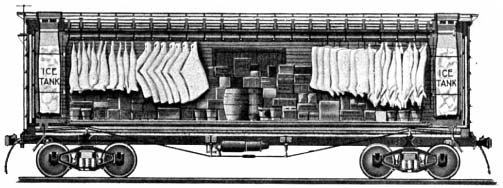
In 1913, refrigerators for home use became introduced by companies such as General Electric and Kelvinator.
Which used compressors and refrigerants to keep food and drinks cold. The introduction of home refrigeration led to significant changes in the way people stored and consumed food, as it allowed for greater convenience and longer shelf life of perishable items.
Throughout the 20th century, refrigeration technology continued to evolve, with the development of new refrigerants and more efficient systems.
However, concerns about the environmental impact of some refrigerants, such as chlorofluorocarbons (CFCs), led to the development of alternative refrigerants and stricter regulations on their use.
In conclusion, today, refrigeration technology finds itself used in a wide range of applications. From food preservation and storage to air conditioning and transportation of goods. Lastly, it continues to play a vital role in modern life. Furthermore, ongoing research and development focuses on making refrigeration more efficient, sustainable, and accessible.
How Does Refrigeration Work Step By Step?


