

How Can AI Be Applied in Manufacturing?

More than 500 top managers from the energy, manufacturing, infrastructure, transport, and heavy industry sectors took part in the survey on the development and implementation of artificial intelligence (AI). They concluded that in the next five years, the world will move to AI-based solutions for managing plants, devices, and machines.
The combination of human experience, insights, and AI techniques allows manufacturers to find new competitive advantages while optimizing costs and maintaining profits.
Benefits of AI in Manufacturing
Leading international enterprises and businesses looking to compete are focusing on artificial intelligence in manufacturing technologies. New system implementation, purchasing of hardware and software, and setting up a network requires money and resources but also has a number of advantages:
- Automation. Human involvement in simplified production processes can be minimal. Automating routine tasks can reduce production time and increase capacity.
- Data analysis. When processing a lot of data, AI does not get tired and is less likely to make mistakes, for instance, in accounting calculations.
- Robotization. Robots can drill, explore, identify, and test, as well as make constructions from various parts. There are already robots that can study employee behavior in the workplace and prevent mishaps.
AI technologies are most actively used in countries such as America, Japan, China, and Germany.
For example, Harley-Davidson, a well-known motorcycle manufacturer, has used smart technology to reduce motorcycle assembly time from 21 days to 6 hours. Samsung, a leading technology company, plans to convert one of its plants to AI-powered manufacturing in 2023.
Main Levels of Using AI in Manufacturing

- Design. AI increases the effectiveness of new product development, automates supplier assessment, and analyzes the part and spare part needs.
- Production. AI helps to enhance business procedures and synchronize various production systems. This streamlines the manufacturing process, decreases downtime during process changes, and reduces human error. Image recognition tools are used for quality assurance, equipment condition analysis, and movement analysis of personnel and moving objects. This can increase the level of security in the workplace.
- Promotion. Manufacturers use AI to forecast the number of support and maintenance services, as well as manage pricing.
- Service provision. AI-based solutions enhance fleet route planning, increase demand for fleet resources, and raise the standard of service engineer training. AI can help predict supply fluctuations before they happen. While interactive communication helps to build relationships with customers and suppliers.
Additionally, the implementation of AI does not require a radical revision of the enterprise’s business procedures.
The products available on the market today are beneficial because they allow companies to improve the performance of existing systems and make the quality better. The level of process control can be increased through the gradual integration and coordination of all new components of the production process in the monitoring and control circuit.
AI at the Heart of Real-Time Monitoring
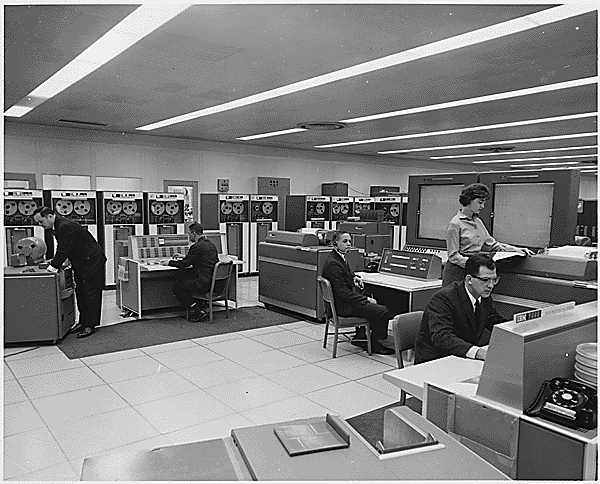
The many benefits of real-time monitoring include eliminating production bottlenecks, controlling scrap rates, meeting customer delivery deadlines, and more. It is an excellent source of contextually relevant data for machine learning models.
Machine learning algorithms, both supervised and unsupervised, can quickly analyze real-time data from multiple production shifts and reveal hidden patterns in procedures, goods, and process sequences.
For example, a video application developed by Nokia uses machine learning to notify an assembly line operator of workflow irregularities.
Real-time image analysis for product quality control in the automotive and consumer goods industries also helps manufacturers meet strict regulatory requirements.
High-resolution cameras are becoming cheaper as AI-based image recognition software and technology improve. These two factors and many more are contributing to the growing adoption of real-time production line monitoring.
A leader in the development of these methods is Audi, which has installed an image recognition system based on deep learning technologies in the stamping store at its plant in Ingolstadt.
Another example is Canon, which invented an advanced assisted defect detection system that has taken quality control in its manufacturing centers to a whole new level.
Apply AI to Optimize Your Industry
AI is different from humans: it does not become tired. Not influenced by emotions. In addition, it can process huge amounts of information in a short time. Many industries benefit from AI solutions because of these advantages.
The systems in use today employ a condensed “model of manufacturing processes” that has become predetermined. And is based on logic and exact calculations. With AI, organizations can operate continuously as they change control objectives, deal with unanticipated changes in the characteristics of a controlled item, or address environmental influences.
The system can alter the control algorithm and search for the best and most effective answers. Currently, AI is the main focus in developing control systems that can optimize existing industries and create new, more effective ones.
Lastly, with the ability to quickly and autonomously change production cycles and product lines, these companies will be able to produce goods at unprecedentedly low prices without sacrificing quality.
How Can AI Be Applied in Manufacturing?


