Has Brown Tied Yale In Prestige?
No, Brown has not tied Yale in prestige. While Brown is an elite Ivy League institution, Yale is generally considered more prestigious overall due to its history, selectivity, and influence.
Yale’s Prestige:
- Consistently ranked in the top 5 universities in the U.S. and globally.
- Has one of the most elite law schools (Yale Law School) and strong programs in humanities, social sciences, and public policy.
- Produces influential alumni, including U.S. Presidents, Supreme Court justices, and top business leaders.
- Known for its traditional, intellectual culture, rigorous academics, and deep-rooted prestige.
Brown’s Prestige:
- Highly respected but typically ranked below Yale in national and global rankings.
- Best known for its Open Curriculum, which attracts independent thinkers.
- Strong in humanities, social sciences, and creative arts but does not have the same institutional power as Yale.
- More laid-back culture compared to Yale’s academically intense environment.
Overall Verdict:
- Yale is more prestigious in terms of rankings, alumni influence, and institutional reputation.
- Brown has a unique appeal, especially for students who value flexibility and creativity.
- Brown is an elite school, but it has not reached Yale’s level of historical prestige or influence.
Comprehensive Report on Yale University for a Prospective Student

Harkness Tower with foliage
Yale University, founded in 1701, is an Ivy League institution located in New Haven, Connecticut. It is consistently ranked among the top universities in the world, known for its strong liberal arts focus, elite law and political science programs, and influential alumni network.

Connecticut Hall, Yale’s oldest surviving building
Yale offers a highly personalized and intellectually stimulating environment, making it a top choice for students interested in law, humanities, social sciences, and interdisciplinary research.
Best Parts of Attending Yale

Kline Biology Tower
1. Prestigious Academics
- Yale is a top-ranked university, offering strong programs across humanities, social sciences, STEM, and the arts.
- The faculty includes Nobel laureates, Pulitzer Prize winners, and top scholars.
- The small student-to-faculty ratio (6:1) ensures students get direct access to professors.
2. Residential College System

Environmental Science Center
- Students are randomly assigned to one of 14 residential colleges, creating a close-knit, supportive community within the larger university.
- Each college has its own dining hall, library, and traditions, fostering camaraderie and mentorship.
3. Global Alumni Network & Career Opportunities

Ingalls Rink
- Yale graduates have access to a powerful network of alumni in politics, business, law, and entertainment.
- Many U.S. Presidents, Supreme Court Justices, Fortune 500 CEOs, and Nobel laureates are Yale alumni.
- Yale’s Office of Career Strategy (OCS) connects students to top employers in law, finance, tech, and academia.
4. Strong Financial Aid

Malone Engineering Center
- Yale offers a need-based financial aid policy that meets 100% of demonstrated need.
- Over 50% of students receive financial aid, with an average award of $65,000 per year.
5. Research and Interdisciplinary Learning

Skull and Bones secret society tomb
- Yale encourages undergraduate research across disciplines, from neuroscience to public policy.
- Interdisciplinary centers like the Yale Institute for Global Affairs and the Yale School of the Environment allow students to explore topics beyond their major.
6. Ivy League Prestige

Scroll and Key secret society tomb
- The Yale name carries immense weight in job markets, grad school admissions, and professional networks worldwide.
Worst Parts of Attending Yale

Yale Law School
1. Competitive Admissions Process
- Acceptance rate is below 5%, making Yale one of the most selective schools in the world.
- Even students with perfect GPA and SAT/ACT scores may not get in as a result of the high emphasis on extracurriculars and essays.
2. High Cost of Attendance

29 ⁄ 54

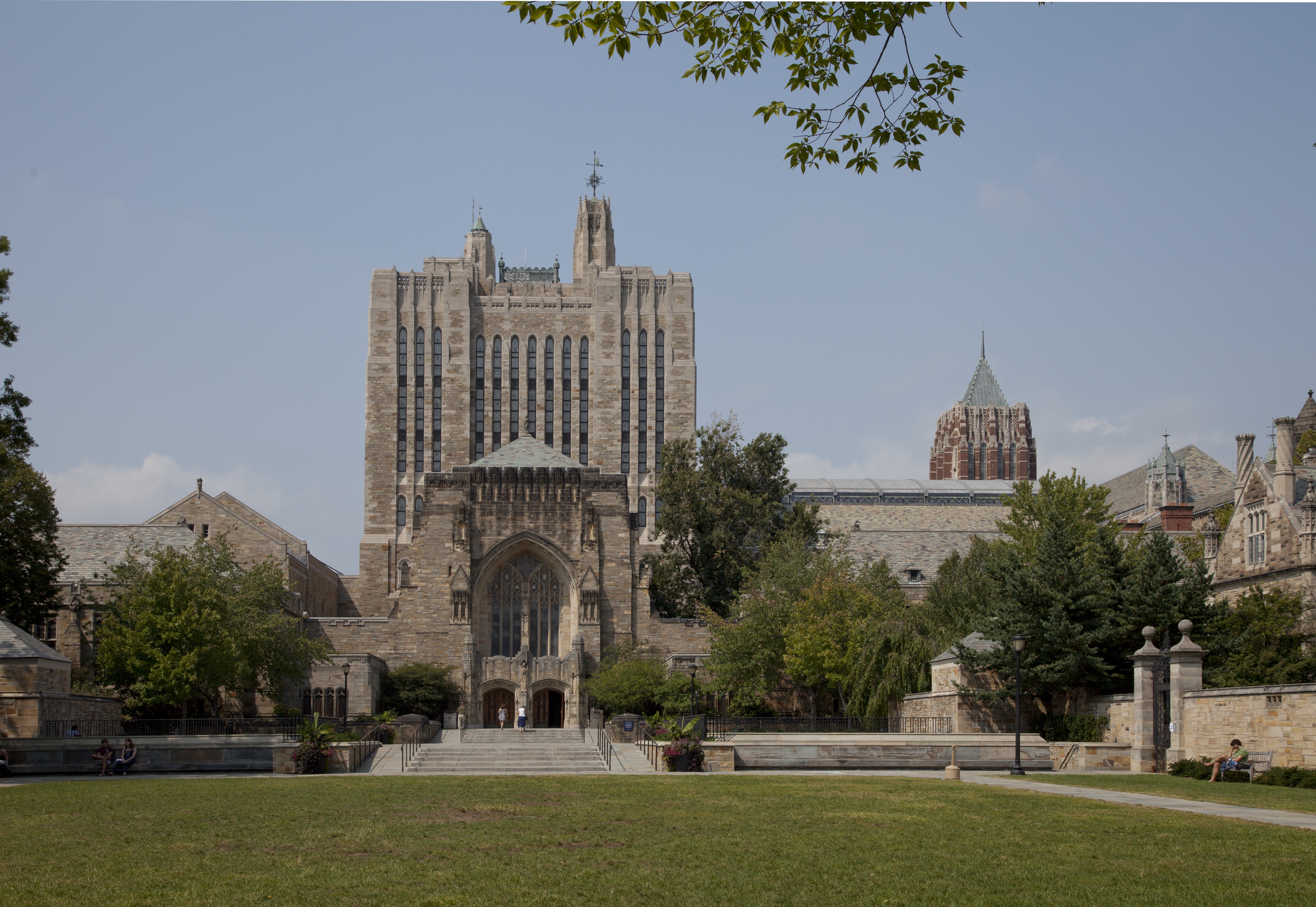
Front of Sterling Memorial Library
- Moreover, while Yale has generous financial aid, the sticker price exceeds $85,000 per year for tuition, room, board, and fees.
- Students from middle-class backgrounds may receive limited aid compared to low-income students.
3. Location: New Haven, Connecticut

The Irving S. Gilmore Music Library, in Sterling Memorial Library
- While culturally rich, New Haven has higher crime rates than other Ivy League towns.
- The city is not as vibrant as Boston, New York, or San Francisco in terms of tech, finance, or startup opportunities.
4. Weaker STEM and Business Presence

Beinecke Rare Book & Manuscript Library
- Yale excels in humanities, social sciences, and law, but engineering and tech programs are not as strong as MIT, Stanford, or Harvard.
- Unlike schools like Wharton (Penn) or Sloan (MIT), Yale does not have a dedicated undergraduate business school.
5. Intense Academic Pressure

The interior of the “Marble Cube,” Yale University’s Beinecke Rare Books and Manuscripts Library
- Furthermore, the rigorous curriculum and competitive environment can lead to high stress levels.
- Many students face pressure to succeed in law, consulting, or finance, even if their passions lie elsewhere.
Key Data Table: Yale University Overview

Cushing-Whitney Medical Library
| Category | Details |
|---|---|
| Location | New Haven, Connecticut, USA |
| Founded | 1701 |
| Ivy League | Yes |
| Acceptance Rate | ~4.5% |
| Total Enrollment | ~14,500 (undergrad + grad) |
| Undergraduate Students | ~6,500 |
| Student-to-Faculty Ratio | 6:1 |
| Most Popular Majors | Political Science, Economics, History, Psychology, Computer Science, Global Affairs |
| Tuition & Fees | ~$64,700 per year |
| Total Cost (w/ Room & Board) | ~$85,000 per year |
| Average Financial Aid Award | ~$65,000 per year |
| % of Students Receiving Aid | ~50% |
| SAT Middle 50% | 1470-1570 |
| ACT Middle 50% | 33-35 |
| Notable Alumni | Bill Clinton, George H.W. Bush, Hillary Clinton, Sonia Sotomayor, Paul Krugman, Meryl Streep, Anderson Cooper |
| Best Known For | Law, Political Science, Humanities, Economics, Global Affairs |
| Research Opportunities | Extensive, including undergrad research grants |
| Campus Setting | Urban, historic, and intellectual |
| Athletics | NCAA Division I (Ivy League) |
| Residential College System | Yes (14 colleges) |
| Graduate School Options | Yale Law, Yale School of Management, Yale School of Medicine |

The Peabody Museum of Natural History
In conclusion, Yale University stands a top-tier Ivy League institution. Moreover, known for its strong academics, world-class faculty, and global reputation. It is an outstanding choice for students interested in law, politics, humanities, economics, and research-driven careers.

Center panel of “Education” (1890), a stained glass window by Tiffany Studios, Linsley-Chittenden Hall
However, students seeking a business-heavy, engineering-dominant, or startup-driven environment may find MIT, Stanford, or Penn better suited to their interests. New Haven’s location and high costs may also be drawbacks for some students.

Lastly, for those who thrive in intellectual, interdisciplinary environments and value academic prestige, elite networking, and a historic liberal arts tradition, Yale remains one of the best choices in the world.

Elihu Yale, university namesake
Comprehensive Review of Brown University

Brown is one of the best universities in the world, especially for students who thrive in an open, self-directed academic environment.

The iconic Van Wickle Gates at Brown University, one of America’s prestigious “Ivy League” colleges, in Providence, the capital of, and largest city in, Rhode Island. The ornamental entrance to the main campus built with the bequest of graduate Augustus Stout Van Wickle, who was president of a bank and several coal corporations. Dedicated in 1901, the gates stand as a symbol for the campus and its long history.

Soldiers Memorial Gate, Brown University. Dedicated on April 6, 1921.
However, not as STEM-Focused as Some Ivies. Moreover, while strong in computer science and applied math, Brown became better known for liberal arts and social sciences.
Expensive – Tuition is high, though generous financial aid is available.
Lack of Structure – The open curriculum is great for independent learners, but students who prefer more structured coursework might struggle.

Who Should Choose Brown?
- ✅ Independent thinkers who want academic flexibility.
- ✅ Students interested in humanities, social sciences, or interdisciplinary studies.
- ✅ Those seeking a collaborative, creative, and non-competitive environment.
History and Background

The 1879 Brown baseball varsity, with W.E. White seated second from right. White’s appearance in an 1879 major league game may be the first person of color to play professional baseball, 68 years before Jackie Robinson.
Brown University, founded in 1764, is the seventh-oldest college in the United States and one of the eight Ivy League institutions. Originally known as the College in the English Colony of Rhode Island and Providence Plantations, it was the first college in the U.S. to accept students regardless of religious affiliation.

Brown’s Engineering building.
Furthemore, emphasizing its historical commitment to academic freedom. Over the centuries, Brown has evolved into a leading research university, blending liberal arts education with cutting-edge innovation.
Prestige and Respect

Brown is one of the most respected universities in the world. As an Ivy League school, it carries elite status, but it also stands out for its unique approach to education.

Brown’s School of Public Health.
Unlike more rigid academic institutions, Brown stands known for intellectual curiosity, creativity, and self-driven learning. It has consistently ranked among the top 20 universities globally, with particular strengths in computer science, economics, public health, political science, biomedical engineering, and literature.

Brown’s alumni include CEOs, politicians, Nobel Prize winners, Pulitzer Prize winners, and Hollywood figures, further cementing its reputation. It may not have the same Wall Street pipeline as Harvard or Wharton (Penn), nor the engineering reputation of MIT or Stanford, but it excels in producing creative thinkers, policy leaders, and entrepreneurs.
Brown Known For?

- Open Curriculum – Brown has no general education requirements, meaning students can design their own education. This attracts independent thinkers and innovators.
- Interdisciplinary Learning – Students often combine humanities, sciences, and social sciences in unique ways.
- Liberal & Progressive Culture – Brown is often called the “most liberal Ivy”, with a strong social justice and activist culture.
- Strong Computer Science & Economics Programs – While it has a reputation as a humanities-heavy school, Brown’s CS program is highly respected in Silicon Valley.
- Ivy League with an Artsy Vibe – Unlike the corporate feel of Wharton or Harvard, Brown embraces creativity, collaboration, and intellectual exploration.
- Biomedical Research & Public Health – The Warren Alpert Medical School is highly regarded, and Brown is a leader in health policy research.
Is Brown at the Bottom of the Ivy League?

Brown is not at the bottom of the Ivy League academically or in reputation. However, because it lacks a large engineering school or powerhouse business program, it sometimes ranks lower than Harvard, Yale, Princeton, Columbia, and Penn in overall prestige. Schools like Dartmouth and Cornell often ranked lower in general Ivy League comparisons, but all Ivies are top-tier institutions.

Brown’s Wall Street and consulting placement is weaker than Harvard, Penn, and Columbia, but its tech and creative industry placement is strong. In terms of student satisfaction, Brown often ranks near the top of the Ivy League due to its open curriculum and laid-back, collaborative environment.
How “Woke” is Brown?

Brown became widely considered the most progressive Ivy League school. It has a reputation for being:
- Highly activist-oriented – Many students involved in social justice movements, climate activism, and political causes.
- Strong LGBTQ+ and diversity initiatives – Brown was one of the first Ivy League schools to establish a Center for the Study of Race and Ethnicity in America and an LGBTQ+ resource center.
- Very liberal student body – The vast majority of students lean left politically, though there are some conservative and libertarian groups on campus.
- Student-driven activism – The university administration often responds to student demands, sometimes leading to controversial decisions regarding free speech and faculty policies.
If you are conservative or prefer a politically neutral campus, Brown may not become the best fit. Thus, as political discussions tend to lean heavily toward progressive and activist-driven narratives.
Drawbacks of Brown

Lack of Structure – The open curriculum is great for self-motivated students, but those who need guidance or structure may struggle.
Not a Business or Engineering Powerhouse – While it offers applied math and computer science, Brown lacks an undergraduate business school or strong traditional engineering programs.
Weaker Ivy League Recruiting in Finance & Consulting – Brown doesn’t have the same direct pipelines into Wall Street as Harvard, Wharton (Penn), or Columbia.
Highly Activist Culture – If you prefer a more politically neutral or balanced environment, Brown’s culture might feel overwhelming.
Location – Providence is Small – While charming, Providence isn’t a major city like New York (Columbia) or Philadelphia (Penn), limiting immediate job networking opportunities.
Reasons to Attend Brown

✅ You want academic freedom and flexibility. Brown is perfect for students who like to explore different subjects and avoid rigid course requirements.
✅ You value creativity and intellectual curiosity. If you love writing, music, coding, political theory, or philosophy, Brown encourages interdisciplinary thinking.
✅ You prefer a collaborative over competitive environment. Unlike Harvard or Yale, Brown is not cutthroat, and students help each other instead of competing.
✅ Interested in tech or public health. Brown’s computer science and medical programs are among the best in the country.
✅ You enjoy a socially conscious, progressive environment. If you want to be part of activism, climate change initiatives, or diversity programs. As a result, Brown is a great fit.
Reasons Not to Attend Brown
Firstly, you prefer a structured, traditional curriculum. If you like clear major requirements and predefined coursework, the open curriculum might be too loose.
Secondly, you’re looking for a business or engineering powerhouse. Schools like Penn (Wharton), MIT, or Columbia would be better for finance, business, or engineering.
Thirdly, you want a politically neutral environment. Brown is highly liberal, which may not suit students who prefer more politically diverse discussions.
Lastly, you want a big city experience. Providence is small compared to New York, Boston, or Philadelphia.
Is Providence Safe?

Providence is generally safe, but like any city, some areas are better than others.
✅ College Hill (where Brown is located) is very safe – Brown has its own security, and crime is low in this area.
✅ Downtown Providence is relatively safe, with a strong arts scene, restaurants, and nightlife.

🚫 Certain neighborhoods (South Providence, Olneyville) have higher crime rates, but students rarely go there.
🚫 Car break-ins and petty theft can happen, so students should still be cautious.
Overall, Providence is safer than many large cities, and Brown’s campus is very secure.
What Makes Brown Special?
- The Open Curriculum – No required courses, giving students the freedom to explore multiple interests.
- A Culture of Creativity – From tech startups to theater productions, Brown fosters out-of-the-box thinkers.
- A Collaborative & Non-Competitive Atmosphere – Unlike Harvard or Yale, Brown encourages intellectual curiosity without cutthroat competition.
Final Verdict: Is Brown a Good School?

Yes, Brown is an excellent university, known for academic freedom, creativity, and progressive values. It is not at the bottom of the Ivy League, but its lack of business and engineering focus makes it less appealing for certain career paths. If you want a structured environment, a politically neutral campus, or a strong finance/engineering school, Brown might not be the best fit. But if you are independent, creative, and curious, Brown is an outstanding choice.

Colleges Ranking Index by Rebellion Research
Sources: nU ta W Hi y? Br es ty Ho Br y r? ls Br RI ty To rs W r? y Br wn Br ty e? Br gs Ho
Colleges Ranking Index by Rebellion Research