

Harvard VS Stanford VS Princeton VS Yale
Comprehensive Comparison: Yale, Harvard, Stanford, and Princeton
Yale, Harvard, Stanford, and Princeton are among the most prestigious universities in the world, each offering elite academics, strong alumni networks, and exceptional career opportunities. However, they have different strengths, making them better suited for certain types of students depending on their academic focus, career goals, and campus culture.
1. Overview of Each University
Harvard University
- Founded: 1636 (Oldest university in the U.S.)
- Location: Cambridge, Massachusetts
- Best For: Business, Law, Government, Medicine, Economics, Public Policy
- Key Strengths:
- Largest endowment of any university (~$50B)
- Top-ranked business and law schools
- Global reputation, extremely strong alumni network
- Strong focus on politics, finance, consulting, and tech
- Campus Culture: More urban, competitive, highly ambitious student body
Stanford University
- Founded: 1885
- Location: Stanford, California (Silicon Valley)
- Best For: Engineering, Computer Science, Business, Entrepreneurship
- Key Strengths:
- #1 for tech and startup culture (Google, Yahoo, Instagram, and Tesla founders are alumni)
- Located in Silicon Valley, making it the best for entrepreneurship and venture capital
- Strong in STEM, business, and innovation
- More flexible curriculum compared to Ivy League schools
- Campus Culture: Collaborative, entrepreneurial, and tech-driven
Princeton University
- Founded: 1746
- Location: Princeton, New Jersey
- Best For: Mathematics, Physics, Public Policy, Humanities
- Key Strengths:
- Best undergraduate-focused Ivy with small class sizes and personal attention
- No professional schools (business, law, or medical), keeping focus on undergraduates
- Highest per-student endowment ($3.2M per student)
- Strong emphasis on undergraduate research and liberal arts
- Campus Culture: More traditional, close-knit, and intellectual
Yale University
- Founded: 1701
- Location: New Haven, Connecticut
- Best For: Law, Political Science, Humanities, Global Affairs
- Key Strengths:
- #1 Law School in the U.S.
- Residential College System (like Oxford and Cambridge)
- Strongest in humanities, political science, and arts
- Strong alumni network in government, journalism, and international relations
- Campus Culture: Intellectual, arts-driven, with strong tradition
2. Data Table: Key Metrics Comparison
| Category | Harvard | Stanford | Princeton | Yale |
|---|---|---|---|---|
| Location | Cambridge, MA | Stanford, CA | Princeton, NJ | New Haven, CT |
| Ranking (U.S. News 2024) | #3 | #3 | #1 | #5 |
| Acceptance Rate | ~3.4% | ~3.7% | ~4.3% | ~4.5% |
| Total Enrollment | ~31,000 | ~17,000 | ~8,500 | ~14,500 |
| Undergraduate Enrollment | ~7,000 | ~7,800 | ~5,400 | ~6,500 |
| Student-Faculty Ratio | 7:1 | 5:1 | 4:1 | 6:1 |
| Tuition & Fees | ~$64,000 | ~$63,000 | ~$62,000 | ~$64,000 |
| Average Financial Aid Award | ~$63,000 | ~$60,000 | ~$65,000 | ~$65,000 |
| Endowment | ~$50B | ~$36B | ~$37B | ~$40B |
| Top Programs | Business, Law, Gov | CS, Engineering, Startups | Math, Physics, Public Policy | Law, Political Science, Arts |
| Best For | Finance, Law, Consulting | Tech, AI, Business | Research, Academics | Law, Politics, Journalism |
| Athletics | NCAA Division I (Ivy) | NCAA Division I (Pac-12) | NCAA Division I (Ivy) | NCAA Division I (Ivy) |
| Alumni Impact | Presidents, CEOs, Global Leaders | Tech founders, Innovators | Nobel Laureates, Scholars | Politicians, Supreme Court Justices |
3. Strengths and Weaknesses Comparison
| University | Best Aspects | Worst Aspects |
|---|---|---|
| Harvard | Strongest alumni network, top law and business programs, high job placement in finance and consulting | Highly competitive, can feel impersonal, intense academic pressure |
| Stanford | Best for tech, startups, and engineering, strong entrepreneurial culture, direct access to Silicon Valley | Weaker humanities programs, more STEM-focused, very expensive to live in California |
| Princeton | Best for undergraduates, highest faculty engagement, top math and physics programs | No business or law school, smaller alumni network compared to Harvard or Stanford |
| Yale | Best law and political science program, strongest residential college system, elite humanities and arts | New Haven’s location and safety concerns, weaker STEM and business offerings |
4. Choosing the Best University Based on Interests
| Field of Study | Best Choice |
|---|---|
| Business & Finance | Harvard (Best for finance, consulting, and MBA pipeline) |
| Entrepreneurship & Startups | Stanford (Located in Silicon Valley, best tech network) |
| Engineering & Computer Science | Stanford (Best for AI, software, and innovation) |
| Law & Political Science | Yale (Best law school, strong international relations) |
| Mathematics & Physics | Princeton (Top theoretical research programs) |
| Humanities & Arts | Yale (Best for arts, literature, and history) |
| Medical School Preparation | Harvard (Best connections to Harvard Medical School) |
5. Final Verdict: Which University is Best?
- Best Overall Prestige: Harvard
- Best for Tech & Startups: Stanford
- Best for Undergraduate Focus & Research: Princeton
- Best for Law, Politics & Journalism: Yale
Each of these universities is elite, and the best choice depends on your career goals and personality. Harvard is the best all-around, Stanford dominates in tech, Princeton is the best for deep academic focus, and Yale is unmatched for law and humanities.
Comprehensive Report on Yale University for a Prospective Student

Harkness Tower with foliage
Yale University, founded in 1701, is an Ivy League institution located in New Haven, Connecticut. It is consistently ranked among the top universities in the world, known for its strong liberal arts focus, elite law and political science programs, and influential alumni network.

Connecticut Hall, Yale’s oldest surviving building
Yale offers a highly personalized and intellectually stimulating environment, making it a top choice for students interested in law, humanities, social sciences, and interdisciplinary research.
Best Parts of Attending Yale

Kline Biology Tower
1. Prestigious Academics
- Yale is a top-ranked university, offering strong programs across humanities, social sciences, STEM, and the arts.
- The faculty includes Nobel laureates, Pulitzer Prize winners, and top scholars.
- The small student-to-faculty ratio (6:1) ensures students get direct access to professors.
2. Residential College System

Environmental Science Center
- Students are randomly assigned to one of 14 residential colleges, creating a close-knit, supportive community within the larger university.
- Each college has its own dining hall, library, and traditions, fostering camaraderie and mentorship.
3. Global Alumni Network & Career Opportunities

Ingalls Rink
- Yale graduates have access to a powerful network of alumni in politics, business, law, and entertainment.
- Many U.S. Presidents, Supreme Court Justices, Fortune 500 CEOs, and Nobel laureates are Yale alumni.
- Yale’s Office of Career Strategy (OCS) connects students to top employers in law, finance, tech, and academia.
4. Strong Financial Aid

Malone Engineering Center
- Yale offers a need-based financial aid policy that meets 100% of demonstrated need.
- Over 50% of students receive financial aid, with an average award of $65,000 per year.
5. Research and Interdisciplinary Learning

Skull and Bones secret society tomb
- Yale encourages undergraduate research across disciplines, from neuroscience to public policy.
- Interdisciplinary centers like the Yale Institute for Global Affairs and the Yale School of the Environment allow students to explore topics beyond their major.
6. Ivy League Prestige

Scroll and Key secret society tomb
- The Yale name carries immense weight in job markets, grad school admissions, and professional networks worldwide.
Worst Parts of Attending Yale

Yale Law School
1. Competitive Admissions Process
- Acceptance rate is below 5%, making Yale one of the most selective schools in the world.
- Even students with perfect GPA and SAT/ACT scores may not get in as a result of the high emphasis on extracurriculars and essays.
2. High Cost of Attendance

29 ⁄ 54

Front of Sterling Memorial Library
- Moreover, while Yale has generous financial aid, the sticker price exceeds $85,000 per year for tuition, room, board, and fees.
- Students from middle-class backgrounds may receive limited aid compared to low-income students.
3. Location: New Haven, Connecticut

The Irving S. Gilmore Music Library, in Sterling Memorial Library
- While culturally rich, New Haven has higher crime rates than other Ivy League towns.
- The city is not as vibrant as Boston, New York, or San Francisco in terms of tech, finance, or startup opportunities.
4. Weaker STEM and Business Presence

Beinecke Rare Book & Manuscript Library
- Yale excels in humanities, social sciences, and law, but engineering and tech programs are not as strong as MIT, Stanford, or Harvard.
- Unlike schools like Wharton (Penn) or Sloan (MIT), Yale does not have a dedicated undergraduate business school.
5. Intense Academic Pressure

The interior of the “Marble Cube,” Yale University’s Beinecke Rare Books and Manuscripts Library
- Furthermore, the rigorous curriculum and competitive environment can lead to high stress levels.
- Many students face pressure to succeed in law, consulting, or finance, even if their passions lie elsewhere.
Key Data Table: Yale University Overview

Cushing-Whitney Medical Library
| Category | Details |
|---|---|
| Location | New Haven, Connecticut, USA |
| Founded | 1701 |
| Ivy League | Yes |
| Acceptance Rate | ~4.5% |
| Total Enrollment | ~14,500 (undergrad + grad) |
| Undergraduate Students | ~6,500 |
| Student-to-Faculty Ratio | 6:1 |
| Most Popular Majors | Political Science, Economics, History, Psychology, Computer Science, Global Affairs |
| Tuition & Fees | ~$64,700 per year |
| Total Cost (w/ Room & Board) | ~$85,000 per year |
| Average Financial Aid Award | ~$65,000 per year |
| % of Students Receiving Aid | ~50% |
| SAT Middle 50% | 1470-1570 |
| ACT Middle 50% | 33-35 |
| Notable Alumni | Bill Clinton, George H.W. Bush, Hillary Clinton, Sonia Sotomayor, Paul Krugman, Meryl Streep, Anderson Cooper |
| Best Known For | Law, Political Science, Humanities, Economics, Global Affairs |
| Research Opportunities | Extensive, including undergrad research grants |
| Campus Setting | Urban, historic, and intellectual |
| Athletics | NCAA Division I (Ivy League) |
| Residential College System | Yes (14 colleges) |
| Graduate School Options | Yale Law, Yale School of Management, Yale School of Medicine |

The Peabody Museum of Natural History
In conclusion, Yale University stands a top-tier Ivy League institution. Moreover, known for its strong academics, world-class faculty, and global reputation. It is an outstanding choice for students interested in law, politics, humanities, economics, and research-driven careers.

Center panel of “Education” (1890), a stained glass window by Tiffany Studios, Linsley-Chittenden Hall
However, students seeking a business-heavy, engineering-dominant, or startup-driven environment may find MIT, Stanford, or Penn better suited to their interests. New Haven’s location and high costs may also be drawbacks for some students.

Lastly, for those who thrive in intellectual, interdisciplinary environments and value academic prestige, elite networking, and a historic liberal arts tradition, Yale remains one of the best choices in the world.

Elihu Yale, university namesake
Comprehensive Review of Stanford University

1. History of Stanford University
Founded in 1885 by Leland and Jane Stanford, Stanford University became established in memory of their only son, Leland Stanford Jr., who died of typhoid fever at age 15.

Campus statue of the Stanfords
The university officially opened in 1891 with the goal of advancing education, particularly in the sciences and engineering.

Center of the campus in 1891
Over time, Stanford became one of the world’s leading research institutions, playing a pivotal role in Silicon Valley’s rise and shaping industries such as technology, business, and medicine.
2. Reputation and Global Standing

The new Stanford Stadium, site of home football games
Stanford University is one of the most prestigious institutions in the world, consistently ranked in the top 3-5 universities globally. Furthermore, often seen as a direct rival to Harvard, MIT, and Oxford, especially in science, engineering, and business.

Green Library
The school became known for its elite faculty, world-class research. Additionally, deep ties to industry, particularly in technology, finance, and entrepreneurship.
Respect and Influence

Stanford campus from above
- Silicon Valley & Entrepreneurship – Stanford is the epicenter of tech innovation. Companies like Google, Instagram, LinkedIn, HP, in addition, Nvidia became founded by Stanford alumni.
- Elite Business and Law Schools – The Stanford Graduate School of Business (GSB) often ranked #1 in the world, and Stanford Law School is a top-tier legal institution.
- High Research Impact – With Nobel laureates, Turing Award winners, and Fields Medalists among its faculty, Stanford is a leader in cutting-edge research.
- Highly Selective Admissions – With an acceptance rate under 4%, gaining admission to Stanford, thus, considered a major academic achievement.
3. Word on the Street – What People Say About Stanford

- Pros:
- “If you want to work in tech, there is no better place than Stanford.”
- “Unparalleled access to venture capital and startup culture.”
- “Beautiful campus and great weather all year round.”
- “Extremely flexible curriculum with world-class professors.”

- Cons:
- “The social scene stands super weak compared to Ivy League schools.”
- “Super competitive and intense—everyone here is an overachiever.”
- “It can feel isolating if you’re not into tech or startups.”
- “The administration is slow and unresponsive to student concerns.”
4. Known For

- Technology & Engineering: One of the world’s best programs in AI, Computer Science, and Robotics.
- Business & Entrepreneurship: The most VC-backed startup founders come from Stanford.
- Medicine & Biomedical Sciences: Home to Stanford Medicine, one of the top research hospitals.
- Political Science & Public Policy: Produces many CEOs, government officials, and Supreme Court clerks.
- Elite Athletics: A dominant force in college sports, especially in Olympic sports.
5. Reasons to Go to Stanford

Firstly, Top-Tier Academics: Ranked among the best for nearly every major field.
Secondly, Unrivaled Access to Silicon Valley: Endless networking, internships, and job opportunities.
Thirdly, Great Weather & Beautiful Campus: Unlike the Ivy League, Stanford offers year-round sun and palm trees.

Fourthly, Flexibility in Majors: Stanford encourages students to explore interdisciplinary studies.
Lastly, Strong Alumni Network: Graduates have easy access to funding, mentorship, and elite job placements.
6. Reasons Not to Go to Stanford

Firstly, Hyper-Competitive Environment: Students feel pressure to always excel, making it mentally exhausting.
Secondly, Weak Social Scene: Compared to Ivy League schools, Stanford lacks a strong party culture.
Thirdly, Startup or Bust Culture: If not interested in tech or entrepreneurship, you may feel out of place.

Fourthly, Expensive Cost of Living: Palo Alto and the Bay Area are some of the most expensive places in the U.S.
Lastly, Bureaucratic Administration: Students complain that the administration is slow to address issues.
7. Downsides of Attending Stanford

- Intense Peer Pressure – The student body is full of high achievers, leading to a culture of overwork and stress.
- Grade Deflation in Certain Majors – Engineering and science courses can be brutal, with tough grading curves.
- Lack of Diversity in Career Paths – The school skews heavily toward tech and startups, thus, making it less appealing for students interested in humanities, arts, or traditional corporate jobs.
- Isolation from Big Cities – Unlike Harvard (Boston) or Columbia (New York), Stanford is in Palo Alto, quiet and expensive with limited nightlife.
8. Key Data Table for Prospective Students

| Category | Stanford University Data |
|---|---|
| Location | Stanford, California, USA |
| Founded | 1885 |
| Acceptance Rate | ~3.9% (Class of 2027) |
| Undergraduate Enrollment | ~7,700 |
| Total Enrollment | ~17,000 |
| Tuition & Fees | ~$62,484 per year |
| Average Financial Aid | Covers ~70% of undergrads (need-based) |
| Median Starting Salary | ~$100,000 (Tech and Business fields) |
| Top Majors | Computer Science, Engineering, Business, Economics, Political Science |
| Student-Faculty Ratio | 5:1 |
| Athletic Conference | Pac-12 (soon to join ACC in 2024) |
| Campus Size | ~8,180 acres (one of the largest in the U.S.) |
| Weather | Mediterranean climate (warm, sunny year-round) |
| Social Scene | Weak compared to Ivy League schools |
| Greek Life | Present but not dominant (~25% participation) |
| Notable Alumni | Elon Musk (Tesla, SpaceX), Larry Page (Google), Peter Thiel (PayPal), Sandra Day O’Connor (Supreme Court Justice) |
Final Verdict: Should You Go to Stanford?

✅ Go if passionate about technology, business, medicine, or research. In addition, want to become surrounded by the best minds in the world.
❌ Don’t go if you prioritize a strong social scene, arts and humanities focus, or dislike high-pressure environments.
In conclusion, Stanford is an amazing school, but it is not for everyone. If you thrive in competitive, fast-paced, and innovation-driven settings, as a result, one of the best places in the world. However, if you prefer a more balanced college experience. Lastly, you might be happier at a school with a stronger social culture, like Harvard, Duke, or USC.

Comprehensive Review of Harvard University

Harvard University, established in 1636, is the oldest institution of higher education in the United States.

Langdell Hall
Over nearly four centuries, it has evolved into one of the world’s most prestigious universities, known for its academic excellence, influential research, and notable alumni.
Reputation and Prestige
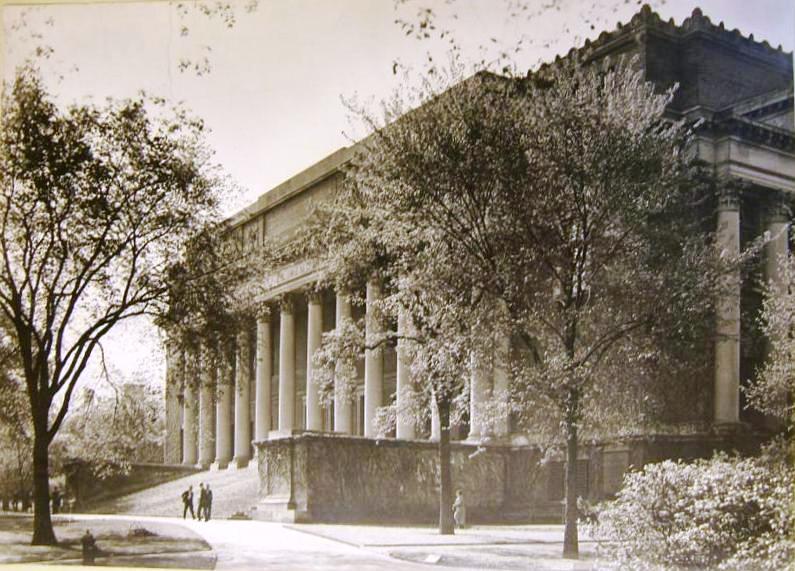
Widener Library http://mrmhadams.typepad.com/blog/2012/03/a-night-to-remember-titanics-monument-to-
Harvard consistently ranks among the top universities globally, recognized for its rigorous academic programs and distinguished faculty.

Houghton Library
Moreover, alumni include U.S. presidents, Nobel laureates, and leaders across various fields, underscoring its significant impact on both national and international stages.
Academic Excellence

Eliot House
Harvard Professor Alan Dershowitz Sits Down With Rebellion Research
The university offers a comprehensive range of programs across disciplines such as law, business, medicine, humanities, and sciences. Notably, its Department of History frequently cited as one of the premier institutions for the study of history.
Campus Culture and Political Climate

Arthur M. Sackler Museum
Harvard’s campus culture has become described as predominantly liberal.
Furthermore, a survey indicated that 82% of faculty identify as liberal or very liberal, while only 1% identify as conservative.
This ideological leaning has sparked discussions about the university’s commitment to free speech and diversity of thought!
In 2024, Harvard received an “Abysmal” rating for its speech climate, with students reporting discomfort in expressing controversial political views.
Recent Challenges

Fogg Museum
In 2023, Harvard faced criticism over its handling of campus protests related to the Israel-Hamas conflict. Thus, the administration’s response led to a significant drop in donations. As a result, contributions decreased by nearly 15% compared to the previous year.
These events have prompted internal discussions about the university’s communication strategies and its role in fostering inclusive dialogue.
Advantages of Attending Harvard

Semitic Museum
- Academic Resources: Access to extensive libraries, research centers, and funding opportunities.
- Networking Opportunities: Additionally, a vast and influential alumni network that can open doors in various industries.
- Prestige: A Harvard degree moreover, globally recognized. In addition enhances career prospects.
Potential Drawbacks
- Competitive Environment: The rigorous academic atmosphere can be challenging for some students.
- Cost: Despite substantial financial aid offerings, the cost of attendance remains high.
- Political Climate: The predominantly liberal environment may feel unwelcoming to those with differing viewpoints.
Data Table for Prospective Students
| Category | Data |
|---|---|
| Founded | 1636 |
| Location | Cambridge, Massachusetts |
| Total Enrollment | Approximately 25,000 students |
| Undergraduate Tuition | $57,246 per year (2024-2025) |
| Acceptance Rate | Approximately 3.4% |
| Student-Faculty Ratio | 7:1 |
| Notable Alumni | 8 U.S. presidents, 161 Nobel laureates, numerous industry leaders |
| Campus Size | 5,076 acres |
| Endowment | $53.2 billion (as of 2024) |
In conclusion, Harvard University offers unparalleled academic opportunities and resources. However, prospective students should carefully consider factors such as campus culture, financial commitments. And lastly, the competitive environment to determine if it aligns with their personal and academic goals.
Comprehensive Report of Princeton University

Princeton University is one of the most prestigious universities in the world, known for its academic excellence, distinguished faculty, and strong research programs. Founded in 1746, it is an Ivy League institution located in Princeton, New Jersey, and consistently ranks among the top universities in the United States.
Academic Excellence

The Princeton University Class of 1879, which included Woodrow Wilson, Mahlon Pitney, Daniel Barringer, and Charles Talcott
Princeton offers undergraduate and graduate programs in a variety of disciplines, including humanities, social sciences, natural sciences, and engineering. The university places a strong emphasis on independent research, requiring all undergraduates to complete a senior thesis or project.

Rankings and Reputation
- Ranked #1 in the U.S. by U.S. News & World Report multiple times.
- Consistently in the top 10 globally in QS World University Rankings and Times Higher Education.
- Recognized for excellence in economics, public policy, mathematics, physics, and engineering.
Admission and Selectivity

Princeton is highly selective, with an acceptance rate of approximately 4-5%. Undergraduate admissions are need-blind, meaning students are admitted regardless of their financial situation.
Financial Aid and Affordability

Princeont’s Shea Rowing Center
Princeton has one of the most generous financial aid programs in the world. It offers a no-loan policy, meaning financial aid packages consist of grants instead of loans, allowing most students to graduate debt-free.
Campus Life and Student Experience

Princeton’s Denunzio pool
Princeton’s beautiful Gothic-style campus offers a vibrant student life with over 300 student organizations, NCAA Division I athletics, and residential colleges that foster a close-knit community. The university also provides numerous research opportunities for students across disciplines.
Alumni Network and Career Opportunities

Princeton’s Football stadium.
Furthermore, Princeton has a strong alumni network that includes U.S. presidents, Supreme Court justices, Nobel laureates, and Fortune 500 CEOs. As a result, graduates often secure top positions in finance, government, academia, and technology.
Data Table for Prospective Students

Dillon Gym
| Category | Details |
|---|---|
| Founded | 1746 |
| Location | Princeton, New Jersey, USA |
| Type | Private Ivy League Research University |
| Undergraduate Enrollment | ~5,540 |
| Graduate Enrollment | ~3,100 |
| Acceptance Rate | ~4-5% |
| Student-to-Faculty Ratio | 4:1 |
| Average Class Size | ~15 students |
| Annual Tuition | ~$59,710 (before aid) |
| Financial Aid | Generous grants, no loans |
| Campus Size | 600 acres |
| Popular Majors | Economics, Public Policy, Engineering, Computer Science, Mathematics, Physics |
| Athletics | NCAA Division I, Ivy League |

In conclusion, Princeton University stands out for its rigorous academics, research opportunities, and strong financial aid support. Its commitment to undergraduate education, distinguished faculty, and historic campus make it an attractive option for high-achieving students worldwide. However, its highly competitive admissions process means prospective students must demonstrate exceptional academic and extracurricular achievements to gain acceptance.

Yale vs. Princeton, 1904.
Colleges Ranking Index by Rebellion Research
Sources: ls d? ta Wh ty gs l? y? Pr ar l? ty Be Is A ng 30 Pr r? ty on ty Pr gs Wh I gs ty ty HE
Colleges Ranking Index by Rebellion Research
is Stanford or Berkeley Better?
wsj.com thefire.org .edu en the Har ata Is ha Wh st WH ls on ty l?
Wh ge Wh ty Ha y us Wh re Wh e? ll C? ws ca HE
Is UC Berkeley better than UCLA?
Colleges Ranking Index by Rebellion Research
Sources: ls ta d? y? St ty Op ty Sta ity ty St ws St u? Wh ty Ho ity?
d? To ty St ws Wh ew St om On ng Wh hy
Colleges Ranking Index by Rebellion Research


