

Harvard vs Stanford vs Princeton
Comparison: Harvard vs. Stanford vs. Princeton
Harvard, Stanford, and Princeton are three of the most prestigious universities in the world. Each has unique strengths in academics, research, and career opportunities. The best choice depends on a student’s academic interests, career goals, and preferred campus environment.
General Overview
| Category | Harvard University | Stanford University | Princeton University |
|---|---|---|---|
| Founded | 1636 | 1885 | 1746 |
| Location | Cambridge, Massachusetts | Stanford, California | Princeton, New Jersey |
| Type | Private Ivy League | Private Research University | Private Ivy League |
| Campus Size | 209 acres | 8,180 acres | 600 acres |
| Student Population | ~21,000 (UG: ~7,200) | ~17,000 (UG: ~7,800) | ~8,600 (UG: ~5,540) |
| Acceptance Rate | ~3.5% | ~4% | ~4-5% |
| Student-Faculty Ratio | 7:1 | 5:1 | 4:1 |
| Annual Tuition (Before Aid) | ~$59,000 | ~$62,500 | ~$59,710 |
| Financial Aid | Need-based, no loans | Need-based, no loans | Need-based, no loans |
Academic Strengths
| Field | Harvard | Stanford | Princeton |
|---|---|---|---|
| Business & Economics | Excellent (Harvard Business School) | Excellent (Silicon Valley connections) | Strong |
| Engineering & Technology | Strong | Best for tech, AI, and startups | Good but not a focus |
| Law & Public Policy | Harvard Law School is world-renowned | Strong | Excellent (Public Policy & SPIA) |
| Sciences & Research | Exceptional | Exceptional | Exceptional (Physics, Math) |
| Humanities & Social Sciences | Very strong | Strong | Best for theoretical research |
| Computer Science & AI | Very strong | Best for AI & startups | Strong but smaller program |
Stanford leads in technology and entrepreneurship, Harvard is best for law, business, and global influence, and Princeton is renowned for research in theoretical sciences and public policy.
Campus Culture & Environment
| Aspect | Harvard | Stanford | Princeton |
|---|---|---|---|
| Campus Setting | Urban | Suburban, near Silicon Valley | Suburban, historic |
| Residential System | House system (like Hogwarts) | Flexible housing | Residential colleges |
| Extracurriculars | Politics, journalism, student activism | Startups, tech, sports | Close-knit intellectual community |
| Athletics | Ivy League, strong rowing and hockey | NCAA Division I, strong in football | Ivy League, strong in fencing and rowing |
| Weather | Cold winters, mild summers | Sunny and warm year-round | Cold winters, pleasant fall/spring |
Harvard has a historical, traditional Ivy League culture, Stanford is more entrepreneurial and laid-back, while Princeton offers a tight-knit, academically rigorous environment.
Career & Alumni Network
| Factor | Harvard | Stanford | Princeton |
|---|---|---|---|
| Alumni Network | Strongest in business, law, government | Strongest in tech, startups | Strong in academia, public service |
| Placement in Top Companies | Finance, consulting, government, law | Tech (Google, Apple, Tesla), venture capital | Public policy, research, finance |
| Startups & Entrepreneurship | Strong but more finance-driven | Best for startups (Silicon Valley access) | Less entrepreneurial, more research-driven |
| Graduate School Pathways | Top choice for law, business, Ph.D. | Engineering, business, tech Ph.D. | Academia, public policy, Ph.D. programs |
Stanford is best for tech and startups, Harvard for law, finance, and government, and Princeton for academia, public policy, and theoretical sciences.
Which One Should You Choose?
- Choose Harvard if you are interested in law, government, business, or a traditional Ivy League experience.
- Choose Stanford if you want to start a tech company, work in Silicon Valley, or pursue AI and engineering.
- Choose Princeton if you prefer a smaller, academically intense environment with a strong research focus in public policy, math, and physics.
Each university is exceptional, but the right choice depends on personal interests, career goals, and preferred campus culture.
Comprehensive Review of Harvard University

Harvard University, established in 1636, is the oldest institution of higher education in the United States.

Langdell Hall
Over nearly four centuries, it has evolved into one of the world’s most prestigious universities, known for its academic excellence, influential research, and notable alumni.
Reputation and Prestige
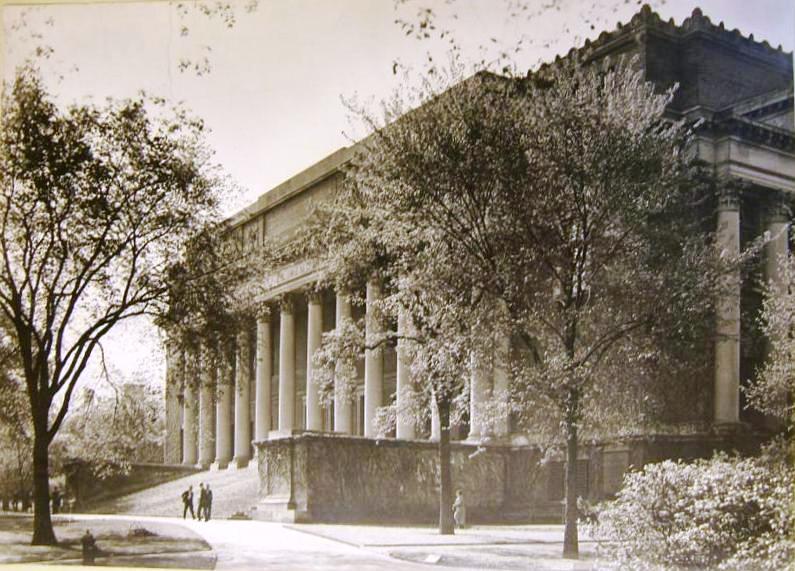
Widener Library http://mrmhadams.typepad.com/blog/2012/03/a-night-to-remember-titanics-monument-to-
Harvard consistently ranks among the top universities globally, recognized for its rigorous academic programs and distinguished faculty.

Houghton Library
Moreover, alumni include U.S. presidents, Nobel laureates, and leaders across various fields, underscoring its significant impact on both national and international stages.
Academic Excellence

Eliot House
Harvard Professor Alan Dershowitz Sits Down With Rebellion Research
The university offers a comprehensive range of programs across disciplines such as law, business, medicine, humanities, and sciences. Notably, its Department of History frequently cited as one of the premier institutions for the study of history.
Campus Culture and Political Climate

Arthur M. Sackler Museum
Harvard’s campus culture has become described as predominantly liberal.
Furthermore, a survey indicated that 82% of faculty identify as liberal or very liberal, while only 1% identify as conservative.
This ideological leaning has sparked discussions about the university’s commitment to free speech and diversity of thought!
In 2024, Harvard received an “Abysmal” rating for its speech climate, with students reporting discomfort in expressing controversial political views.
Recent Challenges

Fogg Museum
In 2023, Harvard faced criticism over its handling of campus protests related to the Israel-Hamas conflict. Thus, the administration’s response led to a significant drop in donations. As a result, contributions decreased by nearly 15% compared to the previous year.
These events have prompted internal discussions about the university’s communication strategies and its role in fostering inclusive dialogue.
Advantages of Attending Harvard

Semitic Museum
- Academic Resources: Access to extensive libraries, research centers, and funding opportunities.
- Networking Opportunities: Additionally, a vast and influential alumni network that can open doors in various industries.
- Prestige: A Harvard degree moreover, globally recognized. In addition enhances career prospects.
Potential Drawbacks
- Competitive Environment: The rigorous academic atmosphere can be challenging for some students.
- Cost: Despite substantial financial aid offerings, the cost of attendance remains high.
- Political Climate: The predominantly liberal environment may feel unwelcoming to those with differing viewpoints.
Data Table for Prospective Students
| Category | Data |
|---|---|
| Founded | 1636 |
| Location | Cambridge, Massachusetts |
| Total Enrollment | Approximately 25,000 students |
| Undergraduate Tuition | $57,246 per year (2024-2025) |
| Acceptance Rate | Approximately 3.4% |
| Student-Faculty Ratio | 7:1 |
| Notable Alumni | 8 U.S. presidents, 161 Nobel laureates, numerous industry leaders |
| Campus Size | 5,076 acres |
| Endowment | $53.2 billion (as of 2024) |
In conclusion, Harvard University offers unparalleled academic opportunities and resources. However, prospective students should carefully consider factors such as campus culture, financial commitments. And lastly, the competitive environment to determine if it aligns with their personal and academic goals.
Comprehensive Review of Stanford University

1. History of Stanford University
Founded in 1885 by Leland and Jane Stanford, Stanford University became established in memory of their only son, Leland Stanford Jr., who died of typhoid fever at age 15.

Campus statue of the Stanfords
The university officially opened in 1891 with the goal of advancing education, particularly in the sciences and engineering.

Center of the campus in 1891
Over time, Stanford became one of the world’s leading research institutions, playing a pivotal role in Silicon Valley’s rise and shaping industries such as technology, business, and medicine.
2. Reputation and Global Standing

The new Stanford Stadium, site of home football games
Stanford University is one of the most prestigious institutions in the world, consistently ranked in the top 3-5 universities globally. Furthermore, often seen as a direct rival to Harvard, MIT, and Oxford, especially in science, engineering, and business.

Green Library
The school became known for its elite faculty, world-class research. Additionally, deep ties to industry, particularly in technology, finance, and entrepreneurship.
Respect and Influence

Stanford campus from above
- Silicon Valley & Entrepreneurship – Stanford is the epicenter of tech innovation. Companies like Google, Instagram, LinkedIn, HP, in addition, Nvidia became founded by Stanford alumni.
- Elite Business and Law Schools – The Stanford Graduate School of Business (GSB) often ranked #1 in the world, and Stanford Law School is a top-tier legal institution.
- High Research Impact – With Nobel laureates, Turing Award winners, and Fields Medalists among its faculty, Stanford is a leader in cutting-edge research.
- Highly Selective Admissions – With an acceptance rate under 4%, gaining admission to Stanford, thus, considered a major academic achievement.
3. Word on the Street – What People Say About Stanford

- Pros:
- “If you want to work in tech, there is no better place than Stanford.”
- “Unparalleled access to venture capital and startup culture.”
- “Beautiful campus and great weather all year round.”
- “Extremely flexible curriculum with world-class professors.”

- Cons:
- “The social scene stands super weak compared to Ivy League schools.”
- “Super competitive and intense—everyone here is an overachiever.”
- “It can feel isolating if you’re not into tech or startups.”
- “The administration is slow and unresponsive to student concerns.”
4. Known For

- Technology & Engineering: One of the world’s best programs in AI, Computer Science, and Robotics.
- Business & Entrepreneurship: The most VC-backed startup founders come from Stanford.
- Medicine & Biomedical Sciences: Home to Stanford Medicine, one of the top research hospitals.
- Political Science & Public Policy: Produces many CEOs, government officials, and Supreme Court clerks.
- Elite Athletics: A dominant force in college sports, especially in Olympic sports.
5. Reasons to Go to Stanford

Firstly, Top-Tier Academics: Ranked among the best for nearly every major field.
Secondly, Unrivaled Access to Silicon Valley: Endless networking, internships, and job opportunities.
Thirdly, Great Weather & Beautiful Campus: Unlike the Ivy League, Stanford offers year-round sun and palm trees.

Fourthly, Flexibility in Majors: Stanford encourages students to explore interdisciplinary studies.
Lastly, Strong Alumni Network: Graduates have easy access to funding, mentorship, and elite job placements.
6. Reasons Not to Go to Stanford

Firstly, Hyper-Competitive Environment: Students feel pressure to always excel, making it mentally exhausting.
Secondly, Weak Social Scene: Compared to Ivy League schools, Stanford lacks a strong party culture.
Thirdly, Startup or Bust Culture: If not interested in tech or entrepreneurship, you may feel out of place.

Fourthly, Expensive Cost of Living: Palo Alto and the Bay Area are some of the most expensive places in the U.S.
Lastly, Bureaucratic Administration: Students complain that the administration is slow to address issues.
7. Downsides of Attending Stanford

- Intense Peer Pressure – The student body is full of high achievers, leading to a culture of overwork and stress.
- Grade Deflation in Certain Majors – Engineering and science courses can be brutal, with tough grading curves.
- Lack of Diversity in Career Paths – The school skews heavily toward tech and startups, thus, making it less appealing for students interested in humanities, arts, or traditional corporate jobs.
- Isolation from Big Cities – Unlike Harvard (Boston) or Columbia (New York), Stanford is in Palo Alto, quiet and expensive with limited nightlife.
8. Key Data Table for Prospective Students

| Category | Stanford University Data |
|---|---|
| Location | Stanford, California, USA |
| Founded | 1885 |
| Acceptance Rate | ~3.9% (Class of 2027) |
| Undergraduate Enrollment | ~7,700 |
| Total Enrollment | ~17,000 |
| Tuition & Fees | ~$62,484 per year |
| Average Financial Aid | Covers ~70% of undergrads (need-based) |
| Median Starting Salary | ~$100,000 (Tech and Business fields) |
| Top Majors | Computer Science, Engineering, Business, Economics, Political Science |
| Student-Faculty Ratio | 5:1 |
| Athletic Conference | Pac-12 (soon to join ACC in 2024) |
| Campus Size | ~8,180 acres (one of the largest in the U.S.) |
| Weather | Mediterranean climate (warm, sunny year-round) |
| Social Scene | Weak compared to Ivy League schools |
| Greek Life | Present but not dominant (~25% participation) |
| Notable Alumni | Elon Musk (Tesla, SpaceX), Larry Page (Google), Peter Thiel (PayPal), Sandra Day O’Connor (Supreme Court Justice) |
Final Verdict: Should You Go to Stanford?

✅ Go if passionate about technology, business, medicine, or research. In addition, want to become surrounded by the best minds in the world.
❌ Don’t go if you prioritize a strong social scene, arts and humanities focus, or dislike high-pressure environments.
In conclusion, Stanford is an amazing school, but it is not for everyone. If you thrive in competitive, fast-paced, and innovation-driven settings, as a result, one of the best places in the world. However, if you prefer a more balanced college experience. Lastly, you might be happier at a school with a stronger social culture, like Harvard, Duke, or USC.

Comprehensive Report of Princeton University

Princeton University is one of the most prestigious universities in the world, known for its academic excellence, distinguished faculty, and strong research programs. Founded in 1746, it is an Ivy League institution located in Princeton, New Jersey, and consistently ranks among the top universities in the United States.
Academic Excellence

The Princeton University Class of 1879, which included Woodrow Wilson, Mahlon Pitney, Daniel Barringer, and Charles Talcott
Princeton offers undergraduate and graduate programs in a variety of disciplines, including humanities, social sciences, natural sciences, and engineering. The university places a strong emphasis on independent research, requiring all undergraduates to complete a senior thesis or project.

Rankings and Reputation
- Ranked #1 in the U.S. by U.S. News & World Report multiple times.
- Consistently in the top 10 globally in QS World University Rankings and Times Higher Education.
- Recognized for excellence in economics, public policy, mathematics, physics, and engineering.
Admission and Selectivity

Princeton is highly selective, with an acceptance rate of approximately 4-5%. Undergraduate admissions are need-blind, meaning students are admitted regardless of their financial situation.
Financial Aid and Affordability

Princeont’s Shea Rowing Center
Princeton has one of the most generous financial aid programs in the world. It offers a no-loan policy, meaning financial aid packages consist of grants instead of loans, allowing most students to graduate debt-free.
Campus Life and Student Experience

Princeton’s Denunzio pool
Princeton’s beautiful Gothic-style campus offers a vibrant student life with over 300 student organizations, NCAA Division I athletics, and residential colleges that foster a close-knit community. The university also provides numerous research opportunities for students across disciplines.
Alumni Network and Career Opportunities

Princeton’s Football stadium.
Furthermore, Princeton has a strong alumni network that includes U.S. presidents, Supreme Court justices, Nobel laureates, and Fortune 500 CEOs. As a result, graduates often secure top positions in finance, government, academia, and technology.
Data Table for Prospective Students

Dillon Gym
| Category | Details |
|---|---|
| Founded | 1746 |
| Location | Princeton, New Jersey, USA |
| Type | Private Ivy League Research University |
| Undergraduate Enrollment | ~5,540 |
| Graduate Enrollment | ~3,100 |
| Acceptance Rate | ~4-5% |
| Student-to-Faculty Ratio | 4:1 |
| Average Class Size | ~15 students |
| Annual Tuition | ~$59,710 (before aid) |
| Financial Aid | Generous grants, no loans |
| Campus Size | 600 acres |
| Popular Majors | Economics, Public Policy, Engineering, Computer Science, Mathematics, Physics |
| Athletics | NCAA Division I, Ivy League |

In conclusion, Princeton University stands out for its rigorous academics, research opportunities, and strong financial aid support. Its commitment to undergraduate education, distinguished faculty, and historic campus make it an attractive option for high-achieving students worldwide. However, its highly competitive admissions process means prospective students must demonstrate exceptional academic and extracurricular achievements to gain acceptance.

Yale vs. Princeton, 1904.
Colleges Ranking Index by Rebellion Research
Sources: ls d? ta Wh ty gs l? y? Pr ar l? ty Be Is A ng 30 Pr r? ty on ty Pr gs Wh I gs ty ty HE
Is UC Berkeley better than UCLA?
Colleges Ranking Index by Rebellion Research
Sources: ls ta d? y? St ty Op ty Sta ity ty St ws St u? Wh ty Ho ity?
d? To ty St ws Wh ew St om On ng Wh hy
Colleges Ranking Index by Rebellion Research
is Stanford or Berkeley Better?
wsj.com thefire.org .edu en the Har ata Is ha Wh st WH ls on ty l?
Wh ge Wh ty Ha y us Wh re Wh e? ll C? ws ca HE


