

Did US and Soviet soldiers ever fight?
During the Cold War, the United States and the Soviet Union were engaged in a tense geopolitical struggle that extended to various areas, including air combat. Although the two superpowers did not engage in a direct military confrontation, they did face each other in several proxy wars. However, there is no official record of a direct air combat engagement between the US and the Soviet Union.
Where is the Russian Army? The deployed Russian Army in Ukraine is some 190,000 strong, so where are the remaining 800,000 or so active and reserve personnel?
The most notable air-to-air combat engagements between the US and the Soviet Union during the Cold War occurred during the Korean War and the Vietnam War. In both conflicts, Soviet pilots flew alongside North Korean and North Vietnamese pilots, providing training, equipment, and tactical support. The US and Soviet pilots engaged in several dogfights, but none of them involved direct engagement between US and Soviet pilots.
During the Korean War, which took place between 1950 and 1953, Soviet pilots flew MiG-15 fighters in support of North Korea. The US Air Force, which had superior fighters like the F-86 Sabre, engaged the North Korean and Soviet pilots in numerous dogfights. However, the US and Soviet pilots never engaged in direct combat. And no US pilots killed or captured by the Soviets. Officially!
Similarly, during the Vietnam War, which lasted from 1955 to 1975, Soviet pilots flew MiG-17 and MiG-21 fighters in support of North Vietnam. US Air Force pilots, flying F-4 Phantom and F-105 Thunderchief fighters, engaged the North Vietnamese and Soviet pilots in air-to-air combat. However, there is no official record of a direct air combat engagement between US and Soviet pilots.
There were also several incidents during the Cold War in which US and Soviet aircraft came close to engaging each other. One of the most notable incidents occurred on September 1, 1983, when a Soviet Su-15 fighter shot down a Korean Air Lines passenger plane that had strayed into Soviet airspace. The incident heightened tensions between the US and the Soviet Union and raised concerns about the risk of accidental nuclear war.
Another incident occurred on April 10, 1972, when a US Navy EC-121 reconnaissance plane became shot down by North Korean fighters. Although the incident did not involve direct engagement between US and Soviet pilots, it was significant in that it highlighted the risks of engaging in proxy wars with the Soviet Union.
In conclusion, while there were several instances of air-to-air combat engagements between US and Soviet-aligned forces during the Cold War, there is no official record of a direct air combat engagement between US and Soviet pilots. The closest the two superpowers came to direct engagement was in the numerous proxy wars in which they supported opposing sides. However, the potential for direct engagement was always present, and the tensions between the US and the Soviet Union during the Cold War contributed to a constant state of military preparedness on both sides.
Did US and Soviet soldiers ever fight?
Has the US ever shot down a MiG?
Has the US ever shot down a MiG?
Modern Military
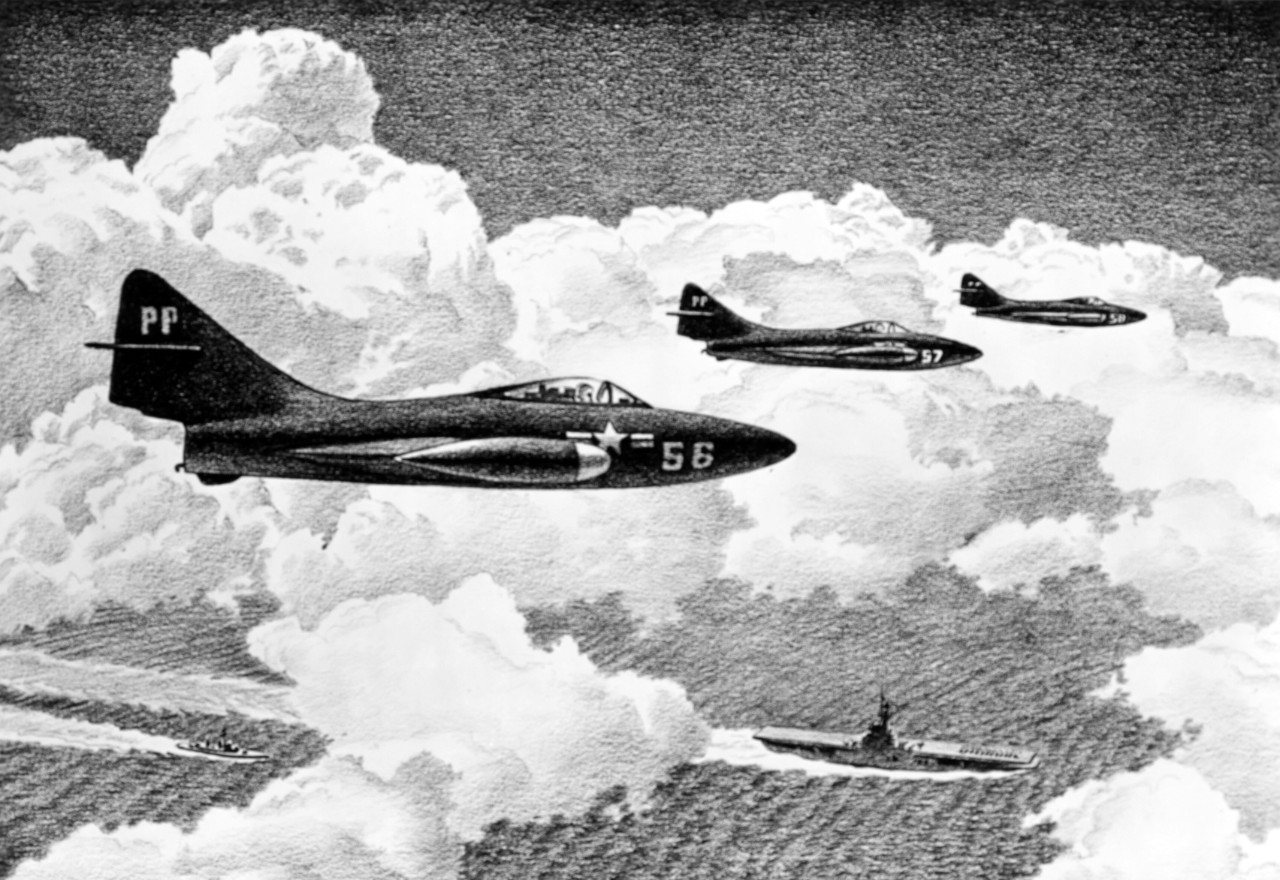
On the morning of 18 November 1952, the three U.S. fleet carriers of Task Force 77 were operating in the Sea of Japan, closer to Vladivostok than ever before (about 80 nautical miles southward), striking targets in and around the North Korean port of Hoeryong.
Previouslyd the port ha become a sanctuary for North Korean forces as it was right across the border from the Soviet Union. Early that afternoon, seven Soviet MiG-15s, in two divisions, subordinate to Soviet air defense forces, launched from Unashi Airfield near Vladivostok and were vectored by their ground-controlled interception (GCI) controller to interdict and attack U.S. Navy aircraft operating in vicinity of the carriers.
Note that during the first years of the Korean War, Soviet “volunteer” pilots were secretly flying MiG-15s with North Korean markings from sanctuary bases in Chinese Manchuria!

However, these engagements became confined to an overland strip in western North Korea—“MiG Alley”—along the Yalu River, and rarely involved Navy aircraft. In fact, these aircraft were under orders not to cross over United Nations lines, or fly over water, out of concern a downed or captured Soviet pilot would blow the secrecy of the operation.

Triggerhappy (original) / Howard61313 (derivative work) – This file was derived from: MiG Alley Map.JPG
However, the aircraft that engaged U.S. Navy aircraft that day were unequivocally Soviet. In addition, flying from a Soviet airfield, under Soviet control. And with orders to attack U.S. Navy aircraft.
In response to radar warning of approaching aircraft, four F9F-5 Panther straight-wing jet fighters of VF-781 were launched in foul weather from carrier Oriskany (CVA-34) to intercept. Although the “-5” was latest and greatest Navy jet fighter, it was still outclassed by the faster (by 100 knots), faster rate-of-climb, more maneuverable, and heavier-armed swept-wing MiG-15. The Panther’s advantage was its better gunsight system.
After breaking through the thick overcast at about 12,000 feet into clear air mass, all four aircraft sighted seven contrails of the Soviet jets. However, the division leader, Lieutenant Claire Elwood, experienced a fuel pump warning light. Furthermore, he and his wingman, Lieutenant (j.g.) John Middleton, were ordered to return and orbit over the carrier.
Lieutenant E. Royce Williams continued to climb along with his wingman, Lieutenant (j.g.) Dave Rowlands, temporarily losing sight of the MiGs as the Soviet aircraft descended from contrail altitude. With no further warning, Williams and Rowlands were jumped from the right by an echelon of four MiG-15s on a firing pass, while three other MiGs approached from the left. Williams immediately maneuvered and hit the trailing MiG (Rowlands’s guns never fired). Rowlands chose to follow the damaged MiG down. And out of the battle just as the three other MiG-15s joined in the fight. This left Williams alone against six adversaries.
His only hope of survival was to fly tight level-altitude turns (if he had tried to climb or dive, or steady up on a MiG, the other MiGs would have nailed him). In the process of constant turns, Williams took brief shots at any MiG that crossed his sights, expending all 760 20mm rounds and hitting at least two more MiGs and probably a third.
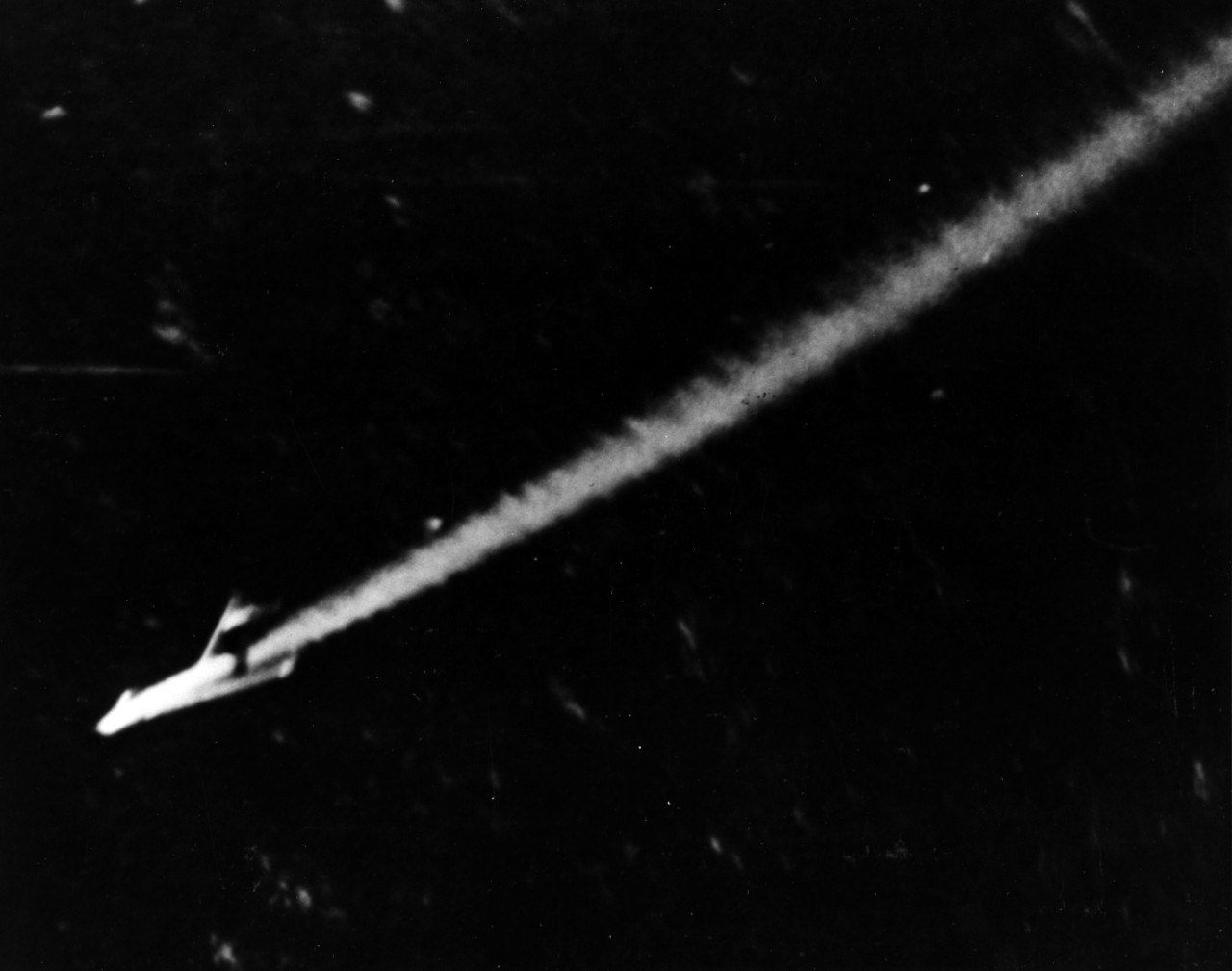
Finally, a MiG hit Williams with a 37mm cannon round that blew a big hole in his wing root and perforated the jet with over 250 smaller shrapnel holes (had the hit been a few inches in either direction, it would have been fatal). As Williams dove for the cloud deck and temporary safety, Rowlands rejoined the fight (without guns). Middleton climbed back into the engagement to down one MiG, or more likely, finish off one already damaged by Williams since that MiG was already smoking and barely maneuvering and the Russian pilot immediately ejected.
Williams then had to get his badly damaged jet onto the carrier or into the frigid Sea of Japan.
He subsequently became fired upon briefly by U.S. destroyers, however, not hit. To maintain control of his aircraft, he could not drop below 170 knots (normal recovery speed for an F9F was 105 knots). On the heaving deck, he still hit the 3-wire, a near-perfect landing. (His damaged plane not dumped over the side as stated in some accounts. But repaired and returned to service).
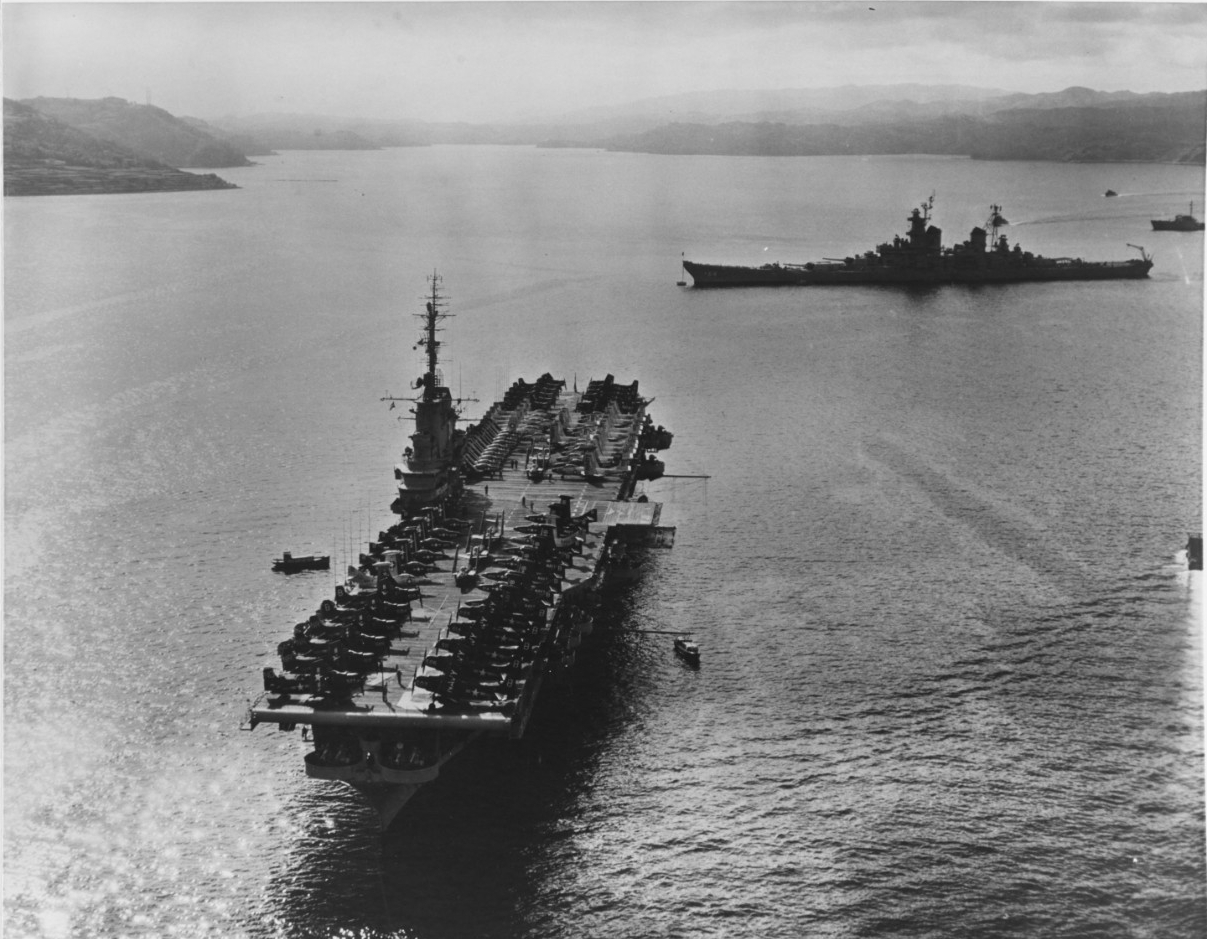
Oriskany (CVA-34) moored at Sasebo, Japan, on 27 October 1953—nearly a year after the events described here. She has a deckload of aircraft, including AD Skyraiders, F9F-5 Panthers, F9F-6 Cougars, and F2H-3/4 Banshees. Note some planes painted light grey. Wisconsin (BB-64) is in the background (80-G-642739).

The fact of this engagement was not a secret. In fact, there were confidential ONI Intelligence reports and even a reasonably accurate public account in Stag magazine (in 1953, written by the VF-781 skipper), but all referred to “enemy” aircraft or just “MiGs.”
What remained top secret for decades: the confirmation by a National Intelligence Agency (NSA) radio intelligence detachment secretly embarked on heavy cruiser Helena (CA-75) that in fact Soviet air defense force jets, under Soviet GCI guidance. Moreover, ordered to attack U.S. aircraft, and that at least three and probably four Soviet jets were lost.*

USN – U.S. Navy Naval Aviation News December 1951 [1]
Williams became officially given credit for one down, one damaged. Middleton became credited with one down. Additionally, Rowlands became credited with one damaged—without firing a shot.
It wasn’t until the end of the Cold War that Russian sources. Which are not prone to exaggerate their own losses! Moreover, revealed that at least four and possibly five Soviet pilots died in the engagement. In addition, at least three during the fight and one while trying to get his damaged jet back to base.
Neither the top secret radio intelligence, nor the Russian information, was available to the drafters of Williams’s Silver Star citation. Like many combat awards (including Butch O’Hare’s Medal of Honor in 1942), Williams’s award citation is historically inaccurate. This usually occurred because the awarding authority didn’t have the enemy side of the story. So, instead of becoming recognized as the most successful carrier jet fighter pilot of the Korean War. Thus, Williams remains just one of 221 U.S. Navy personnel awarded a Silver Star during the conflict.
Captain Royce Williams, USN (Ret.), is still alive at age 97, with a memory that is still clear as a bell. It was an honor and a delight to speak with him a few months ago as I continued research on this event.
Lastly, the account above is my best assessment of what happened. There are inconsistencies among U.S. after-action reports, award citations, intelligence reports, Williams’s own account, outside accounts, and Russian accounts that make this a complex sequence of events to recount accurately.
Written by US Navy Admiral Sam Cox
Come learn from Admiral Cox at the Future Of War Conference this October in Washington, DC!
____________
* NSA established on 4 November 1952. Described as the first such “NSA” operation. Moreover, probably carried out by Naval Security Group personnel in a detachment from Kamiseya, Japan, under a (new) NSA hat. This would not the first radio intelligence operation conducted from a ship.
Has the US ever shot down a MiG?
Air-to-air combat losses between the Soviet Union and the United States – Wikipedia
The last time a Russian jet shot down by a NATO jet in 1952 – The Washington Post
US drone: Russian jet forces down MQ-9 Reaper over Black Sea | CNN Politics
U.S. Downplays Russian Plane Shoot-Down, Vows To Continue Fight Against IS (rferl.org)
Did US and Soviet soldiers ever fight?


