

Could Constantinople Have Been Saved? Could Byzantium have survived 1453?
Roman Empire
Introduction

The fall of Constantinople to the Ottoman Turks in 1453 was a turning point in European history, marking the end of the Byzantine Empire and the beginning of the Ottoman Empire. The prelude to this event was a complex mix of political, economic, and military factors that had been building for centuries.
One of the key factors in the lead-up to the Turkish invasion of Constantinople was the weakening of the Byzantine Empire itself. By the 14th century, the empire was in a state of decline, with a weakened economy, a corrupt bureaucracy, and internal divisions. This made it increasingly vulnerable to external threats, such as the Ottoman Turks who were steadily expanding their territory in Anatolia.
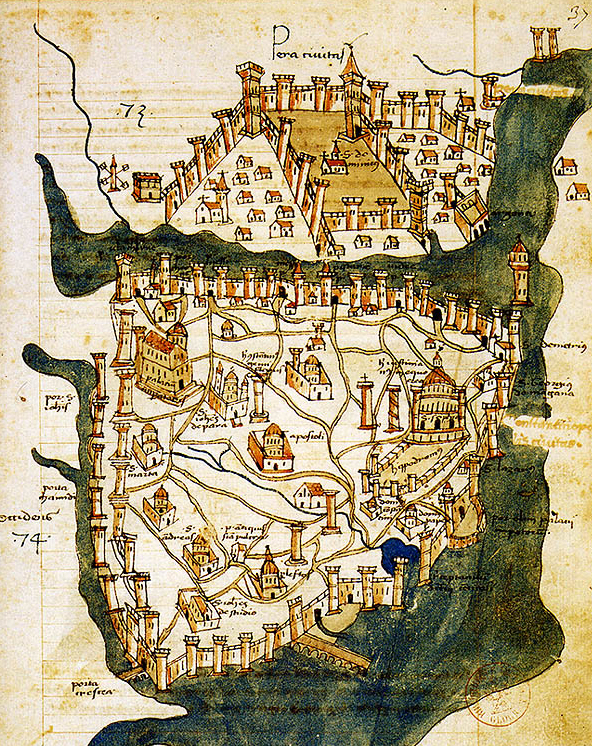
Another important factor was the shifting balance of power in Europe. The Byzantine Empire had traditionally relied on alliances with Western powers, particularly Venice and Genoa, to maintain its position in the region. However, by the 15th century, these powers were beginning to decline, and new players such as the Ottoman Turks were emerging as major regional powers. This left the Byzantine Empire increasingly isolated and vulnerable.
The Ottoman Turks themselves were also a significant factor in the prelude to the invasion. Under the leadership of Mehmed II, they were a formidable military force that had already conquered much of Anatolia and the Balkans. Mehmed II became determined to capture Constantinople and saw it as a symbol of his power and prestige. To achieve this goal, he assembled a massive army and invested heavily in advanced siege technology such as cannons and artillery.
The political situation in Constantinople also played a role in the lead-up to the invasion.
In 1453, the city was ruled by Emperor Constantine XI, who was facing significant challenges both from within and outside the city. The city’s defenses fell in a state of disrepair. And its population had become depleted by years of war and disease. Moreover, the emperor faced opposition from within his own court, with many of his advisors advocating surrender to the Ottomans.
Despite these challenges, Constantine XI was determined to defend the city.

He sought help from Western powers and ordered repairs to the city’s defenses, but these efforts were ultimately insufficient to withstand the Ottoman attack. In May 1453, Mehmed II launched a massive assault on the city, using advanced siege technology to breach the city’s walls and capture the city.
In conclusion, the prelude to the Turkish invasion of Constantinople was a complex mix of political, economic, and military factors that had been building for centuries. The decline of the Byzantine Empire, the shifting balance of power in Europe, the rise of the Ottoman Turks, and the political situation in Constantinople all contributed to the city’s ultimate fall.
Could Constantinople Have Been Saved? Could Byzantium have survived 1453?
Moreover, the city withstood sieges by various enemies for over a thousand years, but it was ultimately unable to withstand the Ottoman Turks. However, the question remains: was there a way that Constantinople could have withstood the Turks? In this essay, we will explore the factors that led to the fall of Constantinople and consider whether there were any strategies that could have prevented it.
Firstly, it is important to note that Constantinople was facing a formidable opponent in the Ottoman Turks.
The Ottomans had a powerful army and were experienced in siege warfare. They also had access to advanced siege technology, such as cannons and artillery, which gave them a significant advantage over the defenders of Constantinople. Moreover, the Ottomans had a leader in Mehmed II, determined to capture the city at any cost.
One possible strategy that Constantinople could have employed was to strengthen its defenses. The city was surrounded by massive walls and fortifications, but these had not been maintained or upgraded in centuries. If the Byzantine Empire had invested in repairing and upgrading its defenses, it could have made it much more difficult for the Ottomans to breach the city’s walls. However, even with stronger defenses, Constantinople would still have been vulnerable to the Ottomans’ advanced siege technology, and it is unlikely that this strategy alone would have been enough to prevent the city’s fall.
Another strategy that Constantinople could have employed was to seek allies to help defend the city. The Byzantine Empire was not without allies in Europe, and if it had been able to secure the support of countries like Hungary or Venice, it might have been able to repel the Ottoman attack. However, the Byzantine Empire was weakened by internal divisions and political instability, which made it difficult to form alliances or even to mobilize its own forces effectively.

A third strategy that Constantinople could have employed was to negotiate a peace agreement with the Ottomans.
Mehmed II was known to be a pragmatic ruler who was willing to negotiate with his enemies. If the Byzantine Empire had been willing to cede some territory to the Ottomans or pay a ransom, it might have been able to avoid a full-scale siege of Constantinople. However, negotiating with the Ottomans would have required a significant amount of political skill and diplomatic finesse. Which the Byzantine Empire did not have a reputation for at the time.
Ultimately, it is difficult to say whether any of these strategies would have been enough to save Constantinople. The Ottomans were a formidable enemy, and they had a significant advantage in terms of military technology and resources. Moreover, the Byzantine Empire became weakened by internal divisions and political instability. As a result, making it difficult to mount an effective defense.
In conclusion, the fall of Constantinople was a significant event in the history of the Byzantine Empire, and it is a question that has fascinated historians and scholars for centuries. While there were certainly strategies that Constantinople could have employed to strengthen its defenses or seek allies, it is unlikely that any of these strategies would have been enough to prevent the city’s fall. The Ottoman Empire was simply too powerful and determined, and the Byzantine Empire was too weakened by internal divisions to mount an effective defense. Nonetheless, the legacy of Constantinople lives on, and the city’s rich cultural heritage continues to inspire and captivate people around the world.
The Final Death Of The Roman Empire
Siege & Fall Of Constantinople Constantinople was the capital of the Byzantine Empire, heavily defended with the Theodosian Walls, which were at the time some of the best defensive systems on the globe. In the year 1453, the Ottoman Empire laid siege to the city on the 6th of April and captured it after 53 days.

The Ottoman army, led by Mehmed II (pictured below), comprised of 75,000 soldiers and Janissaries accompanied with siege weapons, 1,500 Serbian cavalry, and 100 ships. After the betrayal by the west which resulted in the Battle of Varna, the Sultan was out for general revenge and conquer of the Christians.

What is notable about the Ottoman’s weapons was that their cannons and bombards relied on the use of gunpowder, a relatively new aspect of warfare. Previously throughout Medieval history castle sieges could last for very long periods of time, but now with the ability to literally blow away the walls, medieval combat tactics were evolving to modern warfare.
These forces heavily outnumbered the defenders of Constantinople which were 10,000 men strong with 26 ships. Constantine XI, the final emperor of the Byzantine Empire, led his forces against the invading force.

The Byzantine Empire in the first half of the 15th century
The Ottomans captured Thessaloniki in 1430. A few islands in the Aegean and the Propontis remained under Byzantine rule until 1453 (not shown on the map).
The city of Constantinople itself was in poor shape. The Black Death had halved the population just a century ago. And the waning influence of the Byzantine Empire meant that the inhabitants of the city continued to decline.

Siege of Constantinople
Preceding the siege, Mehmed II made many preparations to ensure a successful outcome. Two fortresses became built to block vital sea routes that Constantine XI’s allies were sending vital support to the city. Additionally, the roads to Constantinople were improved such that the Ottoman’s power siege weapons could be transported effectively. Mehmed II’s fleet also encircled the city from the sea.
Battle Of Actium

Although Constantinople featured some of the best defensive walls at the time, the defending force only had enough troops to man the outer wall.

However, many believed that with their own naval force the city would be able to hold out until help arrived. The Byzantines also had cannons in their arsenal, but they weren’t nearly as powerful as those the Ottomans brought along with them.
Siege of Constantinople

The siege began when Mehmed sent his fleet to capture smaller Byzantine strongholds and ordered them to open fire on the walls with the cannons.

This didn’t turn out too well for the Ottomans, as not only did their fleet fail to capture the Byzantine castle at Studius, but also the cannons also were doing minimal damage to the Theodosian Walls. Eventually, the Ottoman fleet broke into Byzantine lines, causing heavy casualties.

Mehmed II, having failed in his attempt to break the Golden Horn Chain that guarded the Byzantine harbor with brute force, instead used the same tactic as the Rus’ Khaganate’s siege of Constantinople in 860 AD, towing his ships across Galata over greased logs and into the estuary.

On land, the Ottomans attempted many unsuccessful frontal charges, which ended in heavy casualties on their part. Eventually, after the Byzantine emperor rejected a surrender offer, Mehmed prepared for a final all-out assault on the city.
On the 29th of May, the offensive began, and a damaged section of the wall at Blacheranae was targeted.
Siege of Constantinople

Maintaining Historic Ships With Historian Ryan Szimanski
Ottoman forces managed to break through this section of the wall, and invading forces rushed into the city. Heavily outnumbered, Byzantine defenders couldn’t stop the waves of Ottomans rushing into the city and the situation devolved into chaos. Constantine XI and his men fought the Ottomans in the streets, but the defense quickly collapsed. Constantine would perish in the final fight for the city. Although some civilians were able to escape the doomed city. Most were trapped as Constantinople fell to the Ottomans.

In conclusion, after three days of plundering and rape. Mehmed ordered his troops to stand down. In addition, he ordered that any local of Constantinople who returned to their houses would be safe. However, there were few citizens alive.
Siege & Fall Of Constantinople
Could Constantinople Have Been Saved? Could Byzantium have survived 1453?


