

Battle of Titans : How Milken’s Junk Debt Brought Icahn and Lebow From Bitter Corporate Raider Enemies To Best Friends
Business
In the 1980s, Wall Street was a veritable battleground of corporate raiders, notorious for their strategic moves in acquiring control of companies through purchasing significant equity stakes.
Among the most formidable of these raiders were Carl Icahn and Bennett LeBow, two figures who were known to play for keeps. Their common weapon of choice: junk bonds, high-yield debt instruments pioneered by Michael Milken.
A ‘junk bond’ refers to a high-yield or non-investment grade bond with a rating of ‘BB’ or lower by Standard & Poor’s, or ‘Ba’ or below by Moody’s. Junk bonds have a higher risk of default compared to other bonds, but provide a higher yield to compensate for that risk.
Milken, an American financier and philanthropist known for his role in the development of the market for high-yield bonds during the 1980s, and for his subsequent conviction and sentence for securities fraud. He was dubbed the ‘junk bond king’ during his time at investment bank Drexel Burnham Lambert, where he pioneered the use of these instruments in corporate finance. His parties at the Beverly Hills Hotel became a thing of legend. Including the likes of Saul Steinberg, Ivan Boesky, T Boone Pickens and many other legendary raiders. Boesky’s wife owned the hotel. Boesky would go on to pay a record $100 million fine.
Milken himself is a living legend and if you haven’t read Predator’s Ball, well its a must read. An amazing account of the corporate raider era. Furthermore, the book’s title is a nod to Milken’s parties.
Drexel Burnham Lambert was a major Wall Street investment banking firm, which was forced into bankruptcy in February 1990 due to its involvement in illegal activities in the junk bond market. The firm was known for its aggressive business style and for creating markets in high-yield bonds. Under Milken’s leadership, Drexel became one of the fastest-growing and most profitable firms in the United States.
Milken joked about being able to “tee up GM” or any company they wanted using junk debt.
A ‘junk bond’ refers to a high-yield or non-investment grade bond with a rating of ‘BB’ or lower by Standard & Poor’s, or ‘Ba’ or below by Moody’s. Junk bonds have a higher risk of default compared to other bonds. However, provide a higher yield to compensate for that risk.
Back to our story!
LeBow, already an established business magnate with multiple holdings, had set his eyes on Western Union, the famed telecommunication company.
The firm, while having a glorious past, was then in financial distress. LeBow saw an opportunity to resurrect its fortune. Using the junk bonds financed by Milken, LeBow started buying significant stakes in Western Union, asserting control. But he wasn’t the only shark in the water. Carl Icahn, another influential corporate raider of the time, was closely watching LeBow’s moves. Icahn, always one for a good challenge, saw an opportunity to engage in a high-stakes financial tug-of-war. He started purchasing Western Union’s debt. As he bought more and more, he threatened to topple LeBow’s control over the company.
As a result, a tense face-off ensued!
Both tycoons utilized every resource at their disposal, from boardroom tactics to leveraging media, to gain the upper hand. The future of Western Union hung in the balance. However, as the power struggle intensified, something unexpected happened. Instead of driving Icahn and LeBow apart, their battle led to an unanticipated camaraderie.
Both recognized in the other a worthy opponent!
Moreover, someone who could match them in cunning and tenacity. Their rivalry morphed into mutual respect, and soon, they found themselves sharing war stories over scotch and cigars. The animosity faded, replaced by an uncommon friendship that transcended their corporate battles. Their common ground – a deep understanding of corporate power dynamics, a shared love for high-stakes challenges, and a mutual respect for each other’s strategic acumen – served as the foundation of their unlikely bond. Their friendship surprised many, given their infamous battle for Western Union.
But it was perhaps their shared experiences in the ruthless world of corporate raiding that cemented their bond. As the years passed, LeBow and Icahn were often seen together at public events. Their most notable appearances were at the rallies of Donald Trump when he was running for President. These two former bitter rivals stood side by side, their past battles a shared history that only strengthened their bond. And so, the story of Icahn and LeBow is a testament to how the most bitter of enemies can become the closest of friends.
Today Icahn’s holding company Icahn Enterprises L.P., IEP holds a market capitalization of $10 billion, while Lebow’s Vector Group, VGR is worth $2 billion.

The Carl C. Icahn Center for Science at Choate Rosemary Hall. is Choate a good school?

The Icahn Medical Institute at 1425 Madison Avenue. Beyond My Ken – Own work
The Icahn Medical Institute of the Mt. Sinai School of Medicine, located at 1425 Madison Avenue between East 98th and 99th Streets in the East Harlem neighborhood of Manhattan, New York City. Furthermore, built in 1997 and designed by Davis Brody Bond. Moreover, the building takes up the full block to Park Avenue, and connected to the rest of the Mt. Sinai complex by a tunnel. (Source: AIA Guide to NYC (5th ed.))
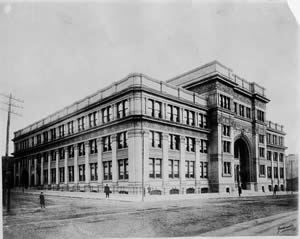
Lebow donated $45 million to name Drexel University‘s business school after him. Drexel University. Drexel Announces Its Largest Single Gift Ever: $45 Million Toward a New Building for LeBow College | Drexel University’s LeBow College of Business.
is Drexel University A Good School?
In conclusion, their bond, forged in the fiery corporate raider battleground of the 1980s Wall Street; sealed with Milken’s junk bonds, stands as a testament to the strange ways in which friendships form. Even in the most unlikely of circumstances. Their story remains one of the most fascinating chapters in the annals of American corporate history.
Battle of Titans : How Milken’s Junk Debt Brought Icahn and Lebow From Bitter Corporate Raider Enemies To Best Friends
What happened to Milken?
By the late 1980s, however, the bubble had burst. Drexel filed for bankruptcy, and in 1989, Milken was indicted on 98 counts of racketeering and securities fraud as part of an insider trading investigation. Milken served 22 months in prison and was permanently barred from the securities industry.
Since then, Milken has re-emerged as a philanthropist, focused primarily on medical research, education, and public health. Nevertheless, his role in the heady finance world of the 1980s continues to be the subject of debate and study. Well you might have heard of the Milken Institute!
Battle of Titans : How Milken’s Junk Debt Brought Icahn and Lebow From Bitter Corporate Raider Enemies To Best Friends

Silicon Valley Bank Blinders
The Silicon Valley Bank failure strikes me as a colossal failure of bank regulation, and instructive on how rotten the whole edifice is. I write this post in an inquisitive spirit. I don’t know the details of how SVB was regulated, and I hope some readers do and can chime in.
As reported so far by media, the collapse was breathtakingly simple. SVB paid a bit higher interest rates than the measly 0.01% (yes) that Chase offers. It attracted large deposits from venture capital backed firms in the valley. Crucially, only the first $250,000 become insured, so most of those deposits are uninsured. The deposits are financially savvy customers who know they have to get in line first should anything go wrong. SVB put much of that money into long-maturity bonds, hoping to reap the difference between slightly higher long-term interest rates and what it pays on deposits. But as we’ve known for hundreds of years, if interest rates rise, then the market value of those long-term bonds fall. Now if everyone comes asking for their money back, the assets are not worth enough to pay everyone back.
In sum, you have “duration mismatch” plus run-prone uninsured depositors.
We teach this in the first week of an MBA or undergraduate banking class. This isn’t crypto or derivatives or special purpose vehicles or anything fancy.
Where were the regulators? The Dodd Frank act added hundreds of thousands of pages of regulations, and an army of hundreds of regulators. The Fed enacts “stress tests” in case regular regulation fails. How can this massive architecture fail to spot basic duration mismatch and a massive run-prone deposit base? It’s not hard to fix, either. Banks can quickly enter swap contracts to cheaply alter their exposure to interest rate risk without selling the whole asset portfolio.
Michael Cembalist assembled numbers. This wasn’t hard to see.

Even Q3 2022 — a long time ago — SVB was a huge outlier in having next to no retail deposits (vertical axis, “sticky” because they are insured and regular people), and a huge asset base of loans and securities.
Michael then asks
.. how much duration risk did each bank take in its investment portfolio during the deposit surge, and how much was invested at the lows in Treasury and Agency yields? As a proxy for these questions now that rates have risen, we can examine the impact on Common Equity Tier 1 Capital ratios from an assumed immediate realization of unrealized securities losses … That’s what is shown in the first chart: again, SVB was in a duration world of its own as of the end of 2022, which is remarkable given its funding profile shown earlier.

Battle of Titans : How Milken’s Junk Debt Brought Icahn and Lebow From Bitter Corporate Raider Enemies To Best Friends
Again, in simpler terms. “Capital” is the value of assets (loans, securities) less debt (mostly deposits). But banks are allowed to put long-term assets into a “hold to maturity” bucket, and not count declines in the market value of those assets. That’s great, unless people knock on the door and ask for their money now, in which case the bank has to sell the securities, and then it realizes the market value. Michael simply asked how much each bank was worth in Q42002 if it actually had to sell its assets. A bit less in each case — except SVB (third from left) where the answer is essentially zero. And Michael just used public data. This is not a hard calculation for the Fed’s team of dozens of regulators assigned to each large bank.
Perhaps the rules are at fault?
If a regulator allows “hold to maturity” accounting, then, as above, they might think the bank is fine. But are regulators really so blind? Are the hundreds of thousands of pages of rules stopping them from making basic duration calculations that you can do in an afternoon? If so, a bonfire is in order.
This isn’t the first time. Notice that when SBF was pillaging FTX customer funds for proprietary trading, the SEC did not say “we knew all about this but didn’t have enough rules to stop it.” The Bank of England just missed a collapse of pension funds who were doing exactly the same thing: borrowing against their long bonds to double up, and forgetting that occasionally markets go the wrong way and you have to sell to make margin calls. (That’s week 2 of the MBA class.)
Ben Eisen and Andrew Ackerman in WSJ ask the right question (10 minutes before I started writing this post!) Where Were the Regulators as SVB Crashed?
“The aftermath of these two cases is evidence of a significant supervisory problem,” said Karen Petrou, managing partner of Federal Financial Analytics, a regulatory advisory firm for the banking industry. “That’s why we have fleets of bank examiners, and that’s what they’re supposed to be doing.”
The Federal Reserve was the primary federal regulator for both banks.
Notably, the risks at the two firms were lurking in plain sight. A rapid rise in assets and deposits was recorded on their balance sheets, and mounting losses on bond holdings were evident in notes to their financial statements.
moreover,
“Rapid growth should always be at least a yellow flag for supervisors,” said Daniel Tarullo, a former Federal Reserve governor who was the central bank’s point person on regulation following the financial crisis…
In addition, nearly 90% of SVB’s deposits were uninsured, making them more prone to flight in times of trouble since the Federal Deposit Insurance Corp. doesn’t stand behind them.
90% is a big number. Hard to miss. The article echoes some confusion about “liquidity”
SVB and Silvergate both had less onerous liquidity rules than the biggest banks. In the wake of the failures, regulators may take a fresh look at liquidity rules,…
This is absolutely not about liquidity.
SBV would have been underwater if it sold all its securities at the bid prices. Also
Silvergate and SVB may have been particularly susceptible to the change in economic conditions because they concentrated their businesses in boom-bust sectors…
That suggests the need for regulators to take a broader view of the risks in the financial system. “All the financial regulators need to start taking charge and thinking through the structural consequences of what’s happening right now,” she [Saule Omarova] said
Absolutely not! I think the problem may be that regulators are taking “big views,” like climate stress tests. This is basic Finance 101 measure duration risk and hot money deposits. This needs a narrow view!
There is a larger implication. The Fed faces many headwinds in its interest rate raising effort. For example, each point of higher real interest rates raises interest costs on the debt by about $250 billion (1 percent x 100% debt/GDP ratio). A rate rise that leads to recession will lead to more stimulus and bailout, which is what fed inflation in the first place.
But now we have another. If the Fed has allowed duration risk to seep in to the too-big to fail banking system, then interest rate rises will induce the hard choice between yet more bailout and a financial storm. Let us hope the problem is more limited – as Michael’s graphs suggest.
Why did SVB do it?
How could they be so blind to the idea that interest rates might rise? Why did Silicon Valley startups risk cash, that they now claim will force them to bankruptcy, in uninsured deposits? Well, they’re already clamoring for a bailout. And given 2020, in which the Fed bailed out even money market funds, the idea that surely a bailout will rescue us should anything go wrong might have had something to do with it.
(On the startup bailout. It is claimed that the startups who put all their cash in SVB will now be forced to close, so get going with the bailout now. It is not startups who lose money, it is their venture capital investors, and it is they who benefit from the bailout.
Let us presume they don’t suffer sunk cost fallacy. You have a great company, worth investing $10 million. The company loses $5 million of your cash before they had a chance to spend it. That loss obviously has nothing to do with the company’s prospects. What do you do? Obviously, pony up another $5 million and get it going again. And tell them to put their cash in a real bank this time.)
How could this enormous regulatory architecture miss something so simple?
This is something we should be asking more generally. 8% inflation. Apparently simple bank failures. What went wrong? Everyone I know at the Fed are smart, hard working, honest and dedicated public servants. It’s about the least political agency in Washington. Yet how can we be seeing such simple o-ring level failures?
I can only conclude that this overall architecture — allow large leverage, assume regulators will spot risks — is inherently broken. If such good people are working in a system that cannot spot something so simple, the project is hopeless. After all, a portfolio of long-term treasuries is about the safest thing on the planet — unless it is financed by hot money deposits. Why do we have teams of regulators looking over the safest assets on the planet? And failing? Time to start over, as I argued in Towards a run free financial system
Or… back to my first question, am I missing something?
****
Updates:
A nice explainer thread (HT marginal revolution). VC invests in a new company. SVB offers an additional few million in debt, with one catch, the company must use SVB as the bank for deposits. Furthrmore, SVB invests the deposits in long-term mortgage backed securities. SVB basically prints up money to use for its investment!
“SVB goes to founders right after they raise a very, very expensive venture round from top venture firms offering:
– 10-30% of the round in debt
– 12-24 month term
– interest only with a balloon payment
– at a rate just above prime
For investors, it also seems like a no-downside scenario for your portfolio: Give up 10-25 bps in dilution for a gigantic credit facility at functionally zero interest rate.
If your PortCo doesn’t need it, the cash just sits. If they do, it might save them in a crunch. The deals typically have deposit covenants attached. Meaning: you borrow from us, you bank with us.
And everyone is broadly okay with that deal. It’s a pretty easy sell! “You need somewhere to put your money. Why not put it with us and get cheap capital too?”

Written by Stanford Professor John H. Cochrane
John H. Cochrane is a senior fellow at the Hoover Institution. He is also a research associate of the National Bureau of Economic Research and an adjunct scholar of the CATO Institute.
Before joining Hoover, Cochrane was a Professor of Finance at the University of Chicago’s Booth School of Business, and earlier at its Economics Department. Cochrane earned a bachelor’s degree in physics at MIT and his PhD in economics at the University of California at Berkeley. He was a junior staff economist on the Council of Economic Advisers (1982–83).
Cochrane’s recent publications include the book Asset Pricing and articles on dynamics in stock and bond markets.
In addition, the volatility of exchange rates, the term structure of interest rates, the returns to venture capital, liquidity premiums in stock prices, the relation between stock prices and business cycles, and option pricing when investors can’t perfectly hedge. His monetary economics publications include articles on the relationship between deficits and inflation, the effects of monetary policy, and the fiscal theory of the price level. He has also written articles on macroeconomics, health insurance, time-series econometrics, financial regulation, and other topics. He was a coauthor of The Squam Lake Report. His Asset Pricing PhD class is available online via Coursera.
Cochrane frequently contributes editorial opinion essays to the Wall Street Journal, Bloomberg.com, and other publications. Lastly, he maintains the Grumpy Economist blog.
The Grumpy Economist: Silicon Valley Bank Blinders (johnhcochrane.blogspot.com)
How Did Silicon Valley Bank Fail?
Battle of Titans : How Milken’s Junk Debt Brought Icahn and Lebow From Bitter Corporate Raider Enemies To Best Friends
US bank trouble heralds end of dollar reserve system –


