

are fungi eukaryotic
Science

George Chernilevsky
Yes, fungi are eukaryotic organisms. This means that their cells have a nucleus enclosed within a membrane, as well as other membrane-bound organelles such as mitochondria and Golgi apparatus. Eukaryotes also have complex cellular structures and can exhibit multicellularity, which fungi often do in the form of multicellular filaments called hyphae.
Fungi are distinct from prokaryotic organisms such as bacteria, which lack a nucleus and other membrane-bound organelles.
Fungi are a diverse group of organisms that play important roles in the natural world. They are eukaryotic organisms, meaning they have cells with a nucleus and other membrane-bound organelles. In this essay, we will explore the science behind fungi and what eukaryotic organisms are.

Eukaryotic organisms become characterized by having cells that contain a nucleus, which houses the organism’s genetic material in the form of DNA.
The nucleus becomes separated from the rest of the cell by a membrane, which helps to regulate the flow of materials in and out of the nucleus. Other membrane-bound organelles found in eukaryotic cells include mitochondria. Which are responsible for energy production, and the endoplasmic reticulum and Golgi apparatus, which are involved in protein synthesis and transport.

Fungi are a diverse group of eukaryotic organisms that include yeasts, molds, and mushrooms. Additionally, they play important roles in the natural world as decomposers, breaking down organic material and returning nutrients to the soil. Some fungi also form mutualistic relationships with other organisms, such as mycorrhizal fungi that form associations with plant roots to help them absorb nutrients from the soil.
The basic structure of a fungal cell consists of a cell wall, plasma membrane, cytoplasm, and a nucleus. Some fungi, such as yeasts, are unicellular, while others, such as molds, are multicellular and form long filaments called hyphae. The cell walls of fungi become made up of chitin, a tough, structural polysaccharide that provides support and protection.

Hardyplants – Own work
Fungi reproduce through both sexual and asexual reproduction.
In sexual reproduction, two haploid cells (cells with only one set of chromosomes) fuse to form a diploid cell (cell with two sets of chromosomes), thus which then undergoes meiosis to produce haploid spores. Asexual reproduction involves the production of spores without the fusion of gametes.

George Chernilevsky
Fungi are important in many areas of science!
Moreover, including medicine, biotechnology, and ecology. Some fungi produce compounds that have medicinal properties. Such as the antibiotic penicillin, while others become used in the production of food and beverages, such as bread and beer. Furethermore, fungi are also important in soil ecology, where they play a crucial role in nutrient cycling and plant growth.
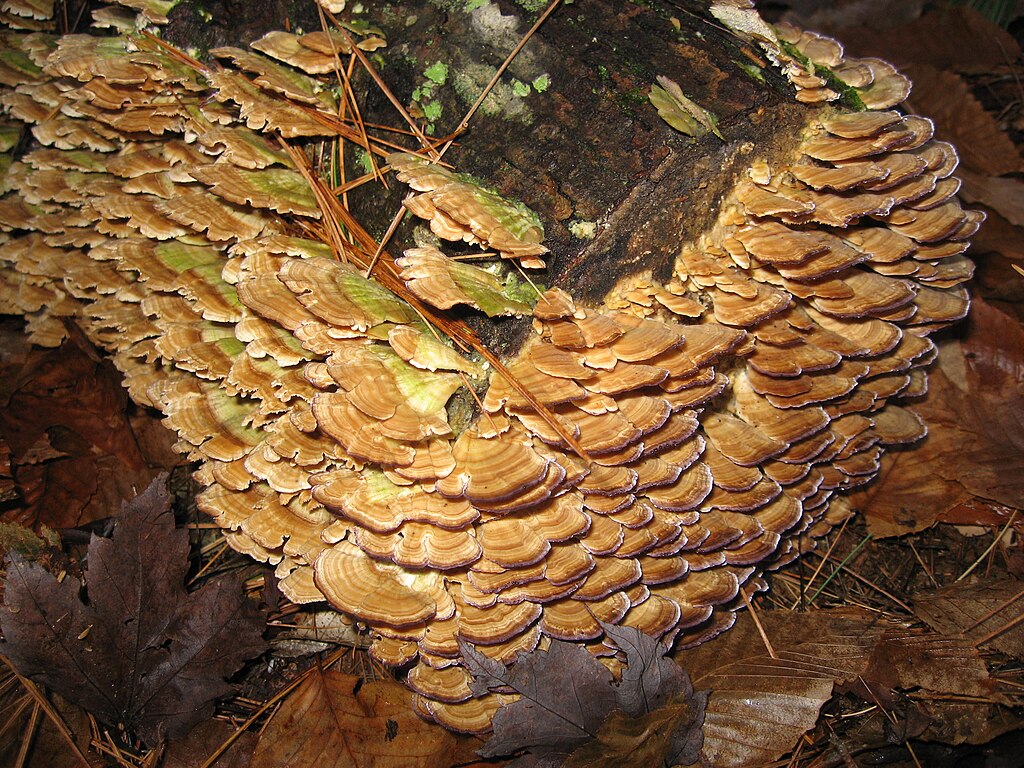
In conclusion, fungi are eukaryotic organisms that play important roles in the natural world. They have complex cellular structures and reproduce through both sexual and asexual reproduction. Lastly, fungi are important in many areas of science. In addition, their study has led to many important discoveries and applications.

are fungi eukaryotic
- “Pleurotus nebrodensis ssp. nebrodensis“ IUCN Red List of Threatened Species doi:10.2305/IUCN.UK.2016-3.RLTS.T61597A102952148.en.
- “A Humongous Fungus Among Us”, furthermore Dinosaur in a Haystack, Harvard University Press, 1995, pp. 335–343, doi:10.4159/harvard.9780674063426.c38, ISBN 978-0-674-06342-6
- “And the Humongous Fungus Race Continues”
- “Mushroom as a product and their role in mycoremediation”
- doi:10.1186/s13568-014-0029-8. PMC 4052754. PMID 24949264.
- “Gene-edited CRISPR mushroom escapes US regulation” 293. Bibcode:2016Natur.532..293W. doi:10.1038/nature.2016.19754. ISSN 1476-4687. PMID 27111611. S2CID 4447141


